Flooring The Consumer on Simple Marketing Now

Please visit Flooring The Consumer's new home on SimpleMarketingNow.com where you can subscribe to receive updates to blog articles in real time!
Showing posts sorted by relevance for query "lifestyle centers". Sort by date Show all posts

Friday, April 13, 2007

Southlake Town Square - A Lifestyle Center

I'm a city girl at heart -- which is why I'm so intrigued with Lifestyle Centers and on a quest to experience more of them.

Malls serve a purpose, but the buzz you get from city stores make them pale in comparison. Others must feel similarly, otherwise we wouldn't be seeing Lifestyle Centers - an evolution in the retail experience, a step beyond the traditional enclosed mall retail concept, and an attempt at recapturing urban magic - generating so much interest and attention.

I located my latest Lifestyle Center on the outskirts of Dallas, TX, in a place called Southlake Town Square.

[Previous postings on Lifestyle Centers include Atlanta's Atlantic Station - A Lifestyle Center, and, with Scott Moore's expert perspective, An Architect's View of Better Lifestyle Centers.]

Southlake Town Square is this development's official website. On the map above, the main highway appears at the top of the image, parallel to these words. Across that highway [and not part of the development] is a more traditional strip mall with fancy grocery store and other amenities. Some of the photos below I took from that vantage point.

The development occupies 130 acres and intermingles shopping, eating, working and living in a very attractive layout organized around local county government and public spaces. This large formal building on the right is the Town Hall and provides not only a destination, but also a sense of place.

It opened in March 1999 and currently includes 10 city blocks over 54 acres, with a next phase of development underway that brings movie theaters, a Hilton hotel, additional retailers and more townhouses.

According to Great Public Spaces, which includes Southlake Town Square [site includes some nice photos and details], the development "demonstrates the successful application of key smart growth principles including a mix of land uses, compact building design, creation of a walkable environment with a distinct sense of place, and involving citizen and stakeholder participation in development decisions".

Furthermore, "the project's historic downtown grid pattern embodies the traditions of a Texas courthouse downtown. An interconnected network of streets, short blocks, and buildings at the sidewalk all create a compact, pedestrian-scaled public realm."

The inclusion of municipal/civic buildings [rather than department stores] [e.g., post office, library and courthouse] as anchors significantly affected my perception of Southlake Town Square. [This Jan/Feb 2006 article from The NAWIC Image titled Shop 'til you Drop specifically references Southlake Town Center and how it has "brought the town square back to life."]

Yes, it's new. Yes, it's planned. But, it doesn't feel as unnatural as Atlantic Station felt. Although it's chock full of retail options [check out the retail guide] including some surprises like Coldwater Creek - The Spa!, the stores look better distributed around the complex [retail in map above is dark brown]. Parking also seemed less sparse, with more diagonal spots vs. parallel parking spots only at Atlantic Station.

An observation: when I motor through the suburbs, I depend on signage to signal specific retail establishments. This is not the case here where I spotted no overt retailer signs. The website carries information. The brochure I had details most of the website information. Other than via those two tools [which don't really work when you're driving], it's difficult to appreciate all of the options available without walking by or driving through every street. For example, there is a Container Store. Unless I know to turn onto North Carroll Avenue [on the right hand side above], I would never chance upon it.

Not a big deal. Simply a paradigm shift in suburban shopping patterns. Especially when compared to strip malls which have become more popular as we've become more time stressed. They allow us to efficiently get in/out of specific stores. They can be spotted from a distance. They tend not to be about lingering.

Lifestyle Centers, in contrast, pull us back into another zone, where time pressures are suspended; the best experience truly is on foot, and ideally you're from the neighborhood, and return frequently.

Now, as with Atlantic Station and IKEA, Southlake Town Square does accommodate destination stores [e.g., The Container Store] with dedicated parking, but in a more integrated manner. Streets are similarly narrow with many one way streets. Traffic jams will absolutely happen while people are pulling in/out of parking spaces. However, retail spaces seem spread out over a larger area, and congestion possibly less intense.

Other observations: the variety of architectural elements is fun as you can see from the corner turret in the photo above. The public spaces truly engage, with wonderful painted cows strewn about.... The last time I saw such fun cows was in Denver [see Mooving On To Greatness] last August.

In its write-ups, Southlake Town Square makes a big deal about its traditions which contribute to creating a sense of place and community:
+ Art in the Square at the end of April
+ July 3rd Independance Day Fireworks Show
+ Oktoberfest in early October
+ Mid-November through December: Home for the Holidays

This article from the August 2006 issue of Urban Land titled The life in lifestyle centers. What are the ingredients for a successful lifestyle center? by Jeff Gunning examines 4 projects to better understand characteristics and success factors:

+ Kierland Commons, Scottsdale, AZ;
+ The Grove, in Hollywood, CA;
+ Legacy Town Center, Plano, TX [I wish I had known about that one while in Dallas!];
+ The Market Common, in Clarendon, VA [note to self: visit on next DC trip].

From the article:
- All four "capture the vitality of a traditional main street through some replication of organic growth, urban density and a mix of uses."
- They "position shopping as less of a destination-focused errand and as more of a leisure activity."
- "The integration of residential space appears to be a component more likely to make or break a project."
--> creates buzz and sense of security.
- "Most important... is a design that maximizes accessibility. Accessibility focuses on creating connections .... and seamless access to businesses."
- "A lifestyle center depends on a balanced choreography of its users and the individual creative identities of its tenants to shape its image and atmosphere."
- "The sense of place created by a lifestyle center.. offers its own distinct ... flavor. The layout of a lifestyle center is often focused inward, enclosing a hub of activity that appears to have little visible relation to the surrounding architectural context."
- Building heights and street widths "shape a simple, human-scaled atmosphere where tenants function as individual building blocks..."
- "Landscaping as a unifying element."


And, a fascinating observation: "..on one level, the streamlined architecture of all four projects seems to function as the brick-and-mortar answer to online shopping, a technological innovation that has contributed to the decline of the traditional mall. In a lifestyle center, visitors are not required to pass through layers of thematic elements before they can connect with retailers and brands - further removing barriers between customers and the products they desire." I hadn't thought of it that way.

This 2003 article by Charles C. Bohl titled The Second Coming of the American Town Center examines the evolution of the town center starting in the 1980s, the drivers [demographics, retail innovations, public policies] and the benefits. It mentions and how well town center stores perform. In addition to record opening-day sales at several Southlake Town Square national retailers, it has "provided a once centerless suburban community with a home for its City Hall, government offices and post office, and quickly become a popular setting for community events. Over 6,000 residents turned out for the first Fourth of July celebration and over 20,000 for the second; and an estimated 25,000 people attended a weekend Art in the Square festival the first year, and with 40,000 the following year."

Note in the conclusion: "...Nothing can substitute for good site location, a sound market analysis, and a carefully designed tenant mix and leasing strategies, but town centers have an additional dimension that boils down to 'Walt Disney World 101.' After decades of painstaking surveys and analysis, Disney's management team discovered that it was not the 'attractions' that were fueling the repeat business that is absolutely essential to the economic success of the company's theme parts -- it was the overall quality of the built environment and the pleasure people receive from strolling, sitting and enjoying the place itself. The same is true for town centers and main streets."

Finally, this presentation includes references to a multitude of other Lifestyle Centers around the country. If you've experienced any of these, please do share your impressions. I'm intrigued with the possibilities that Lifestyle Centers [or the next evolution] hold for us as consumers, as marketers, as retailers in general, and as flooring retailers specifically.

Added 8/8/08: Two days in Stepford -- Town Square, Southlake, Texas from Forrester's Groundswell blog offers a visitor's perspective.

Technorati Tags: , , ,

Monday, May 11, 2009

Injecting New Life Into Dead Malls

What to do with a dead mall? It's increasingly a relevant question as the economic downturn precipitates a dramatic increase in retail vacancies. How to inject new life into otherwise dead malls?

A while back, I wrote several posts on the subject of Lifestyle Centers as the next evolution in the traditional mall concept. Intuitively, Lifestyle Centers make sense to me. Wouldn't we rather find a place to live close to where we might shop and possibly even work? It's the ultimate in walkable neighborhoods.

As opposed to the traditional mall accessible only by car.

PSFK.com published What Can Be Done With Dead Malls? on 4/6/09 which led me to 101 Uses for a Deserted Mall from the 4/4/09 New York Times' Room for Debate Blog. Did you see it? The post features perspective from six experts.

+ Ellen Dunham-Jones and June Williamson, authors of “Retrofitting Suburbia: Urban Design Solutions for Redesigning Suburbs.” They say "Depending on the specifics of each site, we can expect to see future failed malls re-inhabited, re-greened, or retrofitted" and offer interesting examples. They feel that dead malls offer communities an opportunity to better serve their needs.

+ Helene Klodawsky is director of the film Malls R Us which documents the story of the American shopping mall and its translation into related concepts around the world. The movie features Peter Blackbird, founder of deadmalls.com who says "going forward, suburban planners need to recognize that the shopping mall of the future can’t simply be a nucleus of stores surrounded by a sea of asphalt with a ring of highway around it. They need to encourage shopping centers that are woven into the fabric of the community, close to where people live and, therefore, easy for pedestrians to access. Developers should also strive to create malls that offer a place for people to socialize, not simply to buy."

[Subscribers, please click on the link to YouTube for a Malls R Us film clip.]


+ James J. Farrell, author of “One Nation Under Goods: Malls and the Seductions of American Shopping, states that "Shopping centers have also served as cultural indicators of American assumptions about need and sufficiency, status and class, race and gender. And they are a showcase for how Americans work and play." He sees that although some malls will die, and others be repurposed for homes, community centers or workspaces, most malls will need to fit into a business model that recognizes both the globe's and consumers' finite resources.

+ Joel Kotkin, author of “The City: A Global History," sees dead malls offering communities opportunities to reinvent themselves. They can easily be recycled: "Essentially malls can be repositioned into what a community needs. They have the advantages of an already existing infrastructure and usually are located on major transportation routes. The key thing is not to let them stay underused or fallow for too long. They should be regarded as a potential asset, much as you would look at well-located unimproved land, or a deserted warehouse or office district in a city center."

Have you come across interesting examples of otherwise dead malls successfully reinventing themselves? How did they do it? What appeals to you most?

On 4/26/09, ChicagoTribune.com published Empty boxes. Mounting number of vacancies leave huge holes to fill in the retail landscape by Sandra M. Jones. Although more about vacant big boxes rather than just malls, the problem is similar. What comes next? What to do with all of that empty space -- more than 100 million square feet of it?

Given enough creativity, the possibilities are endless: county courthouse, indoor raceway, museum, library, charter school, senior center, chapel....

Given enough creativity, the possibilities also suggest opportunities for strengthening community and making better use of resources.

What do you think?

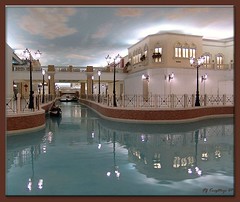
Photo credit: Overland Park, KS Metcalf South Shopping Center (a dead mall) escalators and fountains originally uploaded by army.arch. Note: please read the notes to this photo.

Related Articles from Flooring The Consumer:
+ Atlanta's Atlantic Station - A Lifestyle Center
+ An Architect's View of Better LifeStyle Centers
+ Southlake Town Square - A Lifestyle Center
+ A. Alfred Taubman: Overcoming Threshold Resistance


Technorati Tags: Del.icio.us Tags:

Monday, October 23, 2006

Atlanta's Atlantic Station - A Lifestyle Center

Atlantic Station originally uploaded by wizum.
After hearing so much about them, I have finally experienced a Lifestyle Center, this one in Atlanta - the new Atlantic Station which the website describes as a live/work/play community in midtown Atlanta.

The 9/25/06 issue of Ad Age features an article titled "If You Shopped Here, You'd Be Home By Now, FIRST IN A SERIES: Yaromir Steiner is Convinced the Future of America is the Shopping Mall" by Greg Lindsay. It defines lifestyle center as "a real-estate industry term for the upscale, open-air malls that eschew both the department-store anchors of traditional malls and big-box behemoths with acres of parking." This article and its companion piece from the 10/2/06 issue titled "Say Goodbye to the Mall SECOND IN A SERIES: Regional Plazas Face Extinction Thanks to Growth of Mixed-Use 'Lifestyle Centers'" provide a fascinating glimpse on how this new phenomenon differs from the traditional mall.

In case you weren't aware, the traditional mall is a thing of the past. No new malls are scheduled for development for the foreseeable future. Instead, we'll see approx. 60 new lifestyle centers going up between now and 2008. The reason? "It's a couple of things," said Michael Kercheval, CEO of the ICSC. "One is recognizing that the baby boomers will respond ideally to something that recalls their pasts. The second is that it's much easier these days to win approvals from cities, towns and their mayors to build a mixed-use development with trees and fountains than a mall, when the outside of most malls resembles a prison surrounded by a sea of asphalt." [grim description!]

Lifestyle centers -like Atlantic Station- recreate the feel of an urban center, with streets and traffic and stores mixed in with restaurants and movie theaters, offering convenience, camaraderie and entertainment on a human scale. Retailers generally feel that the centers "actually liberate and empower their brands in a manner the typical enclosed mall never could."

They break with traditional malls on several fronts: no department store anchors and plenty of 'barriers' to fully engage shoppers in the experience [e.g., streets to cross, traffic to watch out for, no piped-in music, unexpected weather...]. In integrating living with shopping and working, they represent the "holy grail" of New Urbanism, "the movement of urban planners and architects working to reintroduce the human scale and layouts of traditional towns to the snarled development of sprawl."

To get a big picture perspective of Atlantic Station, I purposely stayed in the car [I was also really tired!]. Next time, I'll go for the pedestrian approach.

Atlantic Station is still a work in progress, but as part of a large sprawling city like Atlanta, it is widely touted as an excellent example where living, working, shopping are fully integrated in a more holistic manner. [See Atlantic Station Delivers by Suzanne Marques from the 10/19/2005 issue of 11Alive.com.]

It's a massive project with 3000 to 5000 residential units [10,000 people expected to live there eventually]. IKEA anchors one end of the 138 acre environmental redevelopment and reclamation of the former Atlantic Station Steel Mill. It will include 15 million square feet of retail, office and residential and hotel space broken down as 11 acres of public parks, 2 million square feet of retail space, and 1000 hotel rooms. Just staggering, and equivalent to creating a small city [it even has its own zip code]!

As of October 2006, the core shopping district is mostly complete [Target has yet to be built]. In many ways, it resembles a traditional mall laid out in an urban grid complete with streets and parallel parking spots [time to polish those skills!]. Ample parking is available underground and subway-like stairways take you above ground to the shopping.

A surprise: a supermarket amidst the Studio D, Victoria's Secret, Abercrombie and other stores, restaurants, and movie theaters. Kind of neat - if you don't mind shlepping your grocery bags around.

Although some of the retail spaces will have living spaces above them, I was disappointed that the townhouses/condos weren't better integrated with the shopping/dining/entertaining areas. Living, although compact, is still separate from the rest and has a suburban feel [except for those few who live immediately adjacent to the action]. If I assume that a lifestyle center wants to create an urban area similar to a NYC or a San Francisco or a Paris where neighborhoods have distinct personalities resulting from the neighboring resources, then I would expect flower shops and corner grocers interspersed amidst the buildings in the 'Home Park' and the 'Commons'. Where are those 3rd places [as described by Ray Oldenburg in his book "The Great, Good Place"] that create community? I hope they're coming.

I was also surprised at the potential for intense traffic jams within the 'District'. On the plus side, it allowed me to gawk from my car and experience the big picture! Rereading the Ad Age articles, though, I appreciate that the congestion is part of the experience!

That said, I'm interested in watching how this develops. I'm excited about the concept of lifestyle centers. These are models for smart growth and sustainable development. They are also about retail experience and integrating that experience into our work/live/play lives, creating an environment that fights urban sprawl, attempts to recreate urban town centers, and certainly addresses the flaws of the mall model [Have you read Paco Underhill's "Call of the Mall"? See recommended reading section/retail trends].

Lifestyle centers represent a fascinating opportunity for retailers, too. Especially those wanting to test new formats and approaches that mesh more fully into their target audiences' lives. What an opportunity for a carpet or flooring store to reinvent the store model -- maybe as a "flooring cafe" as suggested by John Jantshch from Duct Tape Marketing in this post titled The Return of the Department Store -- in a format that could create that 3rd place, and establish itself fully into the day-to-day lives of the consumers of this mini-city! It's ripe for the picking for retailers with the right level of passion! If you aren't convinced that some get it, read Atlantic Station broadens retail base from the 10/5/06 issue of TheStoryGroup.com.

Technorati Tags: , , ,

Monday, January 14, 2008

Authenticity At Retail

Istambul Grand Bazaar originally uploaded by karusel.
Do you follow Anthony Bourdain's No Reservations [and the wiki]? It's a fascinating glimpse into foreignness - foreign lands, cultures and foods - from New Jersey to Korea via Brazil and everywhere in between.

I love how real and authentic a perspective Tony shares with his viewers - none of it rehearsed. In fact, some of it can be uncomfortably foreign. Yet, he experiences it without letting any personal biases interfere. This is not a genteel cookie-cutter view on travel or food, but rather a celebration of what makes places truly unique, memorable and buzz-worthy.

Do you remember when shopping had a sense of adventure and uniqueness to it? When the stores or restaurants you encountered in Decatur, Alabama had nothing to do with what you might encounter in Paramus, New Jersey? When you looked forward to bagels or cheesecake available only in New York City? And barbecue unique to Memphis?

And now, where ever you go, you find the same Macy's, Abercrombie & Fitch and Applebee's.

In some cases, encountering the same captures comfort. I count on the consistency of my Starbucks venti non-fat latte. It's not the same elsewhere. And the Starbucks vibe, with unexpected tunes, both soothes and energizes.

Anthropologie I count on for being consistently different and magical wherever I go. In fact, it's a delight to discover how each store differs from location to location.

But, most other places leave me bored and unimpressed. Who needs them unless perhaps for commodity replenishment? They do nothing to help anchor a sense of Place and explain why I have trouble remembering many cities and airports I've been to.

So how might we recapture that buzz-worthy uniqueness?

Old Istanbul on the fringes of the Grand Bazaar by Rick Steves describes the first mall ever built. Can you imagine? "...It still has virtually tourist-free nooks and crannies that offer an insightful glimpse into the real Istanbul."

I love the glimpse into how this shopping mecca came to be:

"In its day, this was the "world trade center" for the entire Ottoman Empire -- locked down and guarded by more than a hundred soldiers every night. The Grand Bazaar remained Turkey's commercial hub through the 1950s, its 4,000 shops bursting with both practical and exotic wares.

But then the Grand Bazaar was discovered by travelers seeking the ultimate "Oriental market" experience. Prodded by shopaholic tourists with fat wallets, prices and rents skyrocketed, and soon small shopkeepers and manufacturers were shoved to the fringes of the market, crowded out by souvenir and carpet shops."

Interestingly, the Bazaar organized itself around like products [something I've also observed in Tokyo]. So you would have the hatmaker's street filled with hatmakers. What seems to make the Bazaar particularly unique and authentic is its mix of shops and workshops located side-by-side, something that may soon be gone forever. Says Steves: "Without both shops and workshops, the Grand Bazaar will eventually become a shopping mall only for tourists."

Think about that... I shun places just for tourists when I travel. Why? Because that's not where I find the authentic stuff. I don't want the same old t-shirts.... think parts of Duval Street in Key West, where the cruise ship folks shop. Ugh. [I just found this cool site with live web cams on Duval Street!]

But, that's a challenge we increasingly face as we become over-retailed.

Anchors away as malls take a dive. Lifestyle-Focused, Open-Air Shopping Formats Are Replacing Enclosed Retail Centers by Karla Ward addresses the shift from malls to lifestyle centers and places where people want to do more than just shop; they want to spend leisure time. I've touched on lifestyle centers. This example fascinates as it's not about a brand new lifestyle center, but rather a traditional mall trying to reinvent itself.

This statement caught my attention: "... malls that lose a department store anchor will replace it with a big box retailer such as Best Buy... mall owners appreciate that model because they are able to charge more rent from the big boxes." That made me think of Istanbul and the transition underway in the Grand Bazaar. Does the reliance on big boxes create too much uniformity and not enough connection to a unique place? Or can big boxes figure out how to customize to meet the needs of unique locations and blend in with specialty stores that offer authentic experiences?

One big box retailer that seems to have come up with a solution is Costco. Retail Marketer Of The Year: Costco by Sarah Mahoney from 1/2/2008 describes what makes Costco unusual: "it's a brand that built its reputation by word-of-mouth." The Costco 'mystique' consists of "a kind of 'treasure hunt' atmosphere for shoppers, where consumers can stumble upon anything from chic diamond earrings to a great deal on a laptop to a five-year supply of Cheerios" [or grand pianos and caskets...] all in a no-frills 'industrial warehouse' environment.

I can almost picture Costco as the modern day embodiment of Istanbul's Grand Bazaar: great deals, somewhat gritty backdrop, filled with adventure and unexpected finds. Certainly authentic in its focus on delivering to customers [members] an authentic Costco experience.

[BTW, isn't it interesting that Target's yearly home decor extravaganza is called Global Bazaar?]

So, how do we bring more of that to our retail landscape?

Technorati Tags: Del.icio.us Tags:

Monday, February 23, 2009

Oh Malls, Where Art Thy Retail Experiences?

Doha-Mall originally uploaded by knightoyo.
From previous posts you may recall that mall construction is down and being replaced with 'lifestyle centers.'

However, per Knowledge@Wharton's The Mall Pall: Have America's Biggest Shopping Centers Lost Their Allure?, the most recent Verde Group study on customer dissatisfaction indicates that neither the traditional mall nor the new lifestyle format thrills shoppers. Are you surprised? I'm not.

Here are the complaints: "consumers are aggravated and uninspired by the sameness and predictability of shopping malls."

Furthermore, "the two most frequent complaints cited in the survey are first, a lack of anything new or exciting at the mall and second, a limited selection of restaurants. These criticisms were each cited by 35% of those surveyed. The third most-mentioned problem, cited by 28% of respondents, was that too many of the stores carry the same merchandise. Parking was the fourth most frequently mentioned problem, with 25% of shoppers experiencing trouble in mall parking lots. While mentioned less frequently than sameness as a problem, survey respondents told researchers they feel parking is the most serious problem they face on a visit to the mall."

This goes for traditional and open-air lifestyle centers.

Imagine, shoppers all around aren't inspired by the sameness of choices available. They regret the lack of a sense of discovery. Does it bring to mind some of what I discussed in Consumer Choices And The Retail Experience?

Note the comments about comfort and cleanliness. Please, make sure your bathrooms are spotless!

Interesting to note the observations relating to loyalty and how much time is spent: "those who spend more than two hours in a mall are more loyal, visit the most stores, report a better shopping experience and spend more money."

Note, too, the information relating to shopper gender differences: "Men say they experience more problems than women, have more trouble parking and finding their way around the mall, and are more turned off by the sameness of malls than women. But while men have more problems, women are more likely to tell others about it. Working women were more dissatisfied than other women with malls, complaining about a poor selection of restaurants, and a lack of interesting shops and special events."

What that reinforces is that meeting the higher standards and better articulated needs of women shoppers serves a dual purpose by also satisfying the needs of men shoppers.

Extrapolating from this research to apply to individual retail stores, I suggest looking at common areas. Are there ways to collaborate with other retailers to create common spaces for events, thereby drawing in shoppers to relax and interact with? What about showcasing product in combination or juxtaposed with unexpected items? Say carpet with shoes and handbags?

Another suggestion states that "malls create more environmental, educational and entertainment programming." I consider this an area of exciting opportunity. If consumers are to be enticed away from their homes and other activities, what better way to do so than by developing programs and activities that rise above simple purchases? Imagine creating a forum for discussing how to help eradicate poverty in the community, or expose children to visual and performing art?

What other thoughts come to mind that would help re-inject discovery and adventure into the retail shopping experience?


Previous posts relating to malls and the retail experience:
+ Atlanta's Atlantic Station - A Lifestyle Center
+ An Architect's View of Better LifeStyle Centers
+ Southlake Town Square - A Lifestyle Center
+ Authenticity At Retail
+ A. Alfred Taubman: Overcoming Threshold Resistance
+ Book Review: Threshold Resistance by A. Alfred Taubman

Technorati Tags: Del.icio.us Tags:

Monday, November 13, 2006

An Architect's View of Better LifeStyle Centers

I am thrilled to share the following guest post from Scott Moore, a.k.a. WiZuM, whose photo of Atlantic Station anchors Atlanta's Atlantic Station - A Lifestyle Center. Scott, a-soon-to-be-architect, is a designer and project manager for an architectural firm in the Atlanta area. He made insightful comments [see Atlanta's Atlantic Station - A Lifestyle Center comments] about how Atlantic Station falls short in terms of fully integrating life/play/work and suggested better examples. I invited him to share these with us.

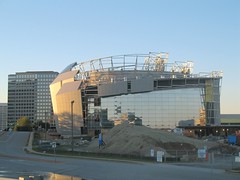
Cobb Energy Performing Arts Center originally uploaded by Wizum.
As I mentioned before, I am an architect-in-training, and have a passion for the built environment. I don't know why, but I do. I have a passion for design, and creating places for people to live, work, play, and worship.

Atlantic Station [AS] originally intrigued me. But, as you can read from my comments to the post, I eventually became disappointed with it once I had a chance to really check the place out. So here are a couple of "lifestyle center" type developments that do a much better job.

Smyrna's Market Village - GA
I live only about a mile from the "Market Village" located in Smyrna, GA and was fortunate enough to actually work on this project's master plan with architect Mike Sizemore, founding principle of Sizemore Group. Unlike what happened with AS, this one was built following the master plan to almost perfection (and that doesn't always happen). What is nice about the Village is that it is very intimate and pedestrian friendly. It doesn't compare in size to AS but it works much better.

Another big difference compared to AS is that there are no department stores or places like that. There are several places to eat, from a Moe's to a nice Italian joint to a sushi restaurant, and many small shops that range in products and things with apartments/townhomes ABOVE the stores. This whole development has a very traditional aesthetic and is part of the City of Smyrna's "downtown" redevelopment [i.e., the "city complex"], which is where City Hall, the city Library, community center, and police station are all located. Since all this has been built the market in the city has been incredible and some wonderful places are being designed and developed right around the Village area. It has acted like a rock being thrown in a pond: the ripple effect is just beginning to really take hold. You can get a visual feel for it here.

The Market Village definitely represents a "New Urbanist" development, representing a collaboration between the city, a private developer, and several architects and builders, with a focus on having housing be within walking distance from the village resources. Also check out the Smyrna Market Village website.

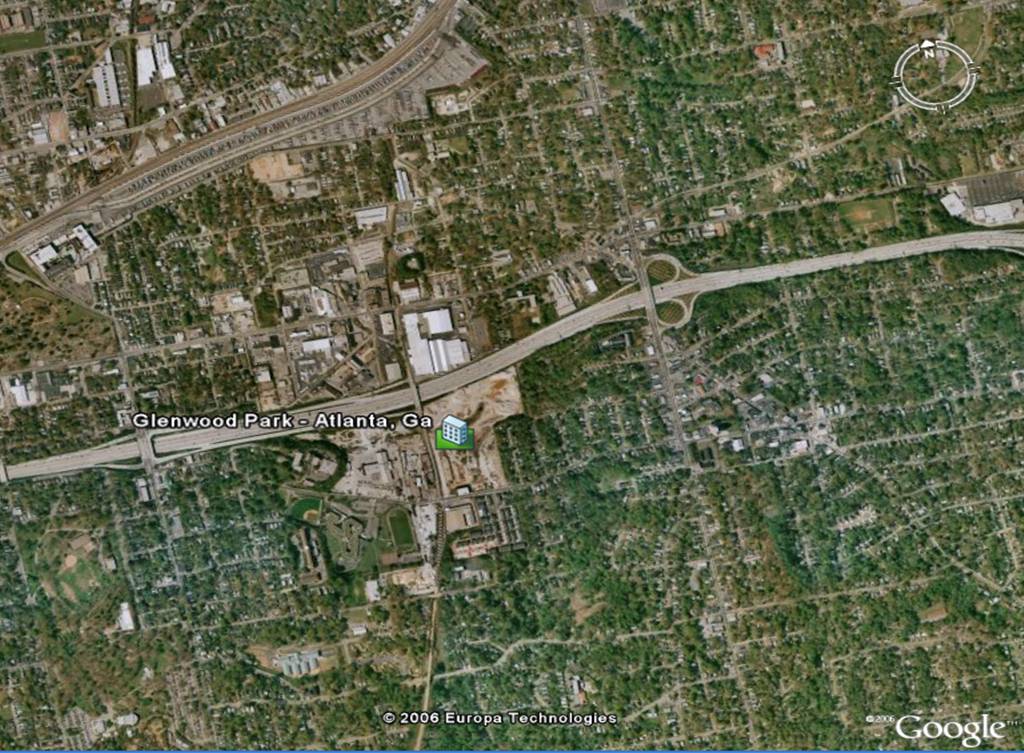
Glenwood Park, GA
Another interesting lifestyle center type development is Glenwood Park which is being developed and funded by former Mindspring Founder Charles Brewer. Since leaving Mindspring, after the Earthlink merger, he has started a residential development company dedicated to "walkable communities" based upon the principals of New Urbanism. In other words, "smart" and "green friendly" urban design. The development just recently opened and is only about 50 - 60 % completed and I don't think any of the commercial or retail space has opened yet. But this development has promise and hopefully will have the same type of "ripple effect" that the Smyrna Market Village has had.

Now, to be clear, these 2 examples are significantly smaller in scale than Atlantic Station and that's an important point. Atlantic Station is much larger than the Market Village and about twice the size of the Greenwood Park development. It has two high rise buildings and a third one under construction. Following those, there are plans for at least two or 3 more high rise buildings to be completed once the whole AS project is 100% done.

From a retail perspective, it comes down to the scale issue again. AS is a huge development and the retail/commercial parts of it are like a outdoor mall, but in a very urban center. Also, the kinds of stores at AS are different from those in Smyrna's Market Village and possibly from what Greenwood will eventually have. AS has national chain stores and franchises where Smyrna & Greenwood have more local retail representation.

Despite the difference in scale, these two examples are still much better places [i.e., think of Ray Oldenburg's 3rd places from his book "The Great, Good Place"] and were better executed in their planning and design.

-----------------------

As a new retail format, lifestyle centers are definitely worth watching. Given that they are about better integrating the various aspects of our living activities, they should represent fascinating opportunities to better integrate shopping experiences into our lives. The flip side is that the traditional shopping experience must be reinvented to fit more holistically into the world of New Urbanism....

To learn more, visit the New Urbanism website or visit Wikipedia, where the entry on New Urbanism says:

"New urbanist neighborhoods are walkable, and are designed to contain a diverse range of housing and jobs. New urbanists support regional planning for open space, appropriate architecture and planning, and the balanced development of jobs and housing. They believe these strategies are the best way to reduce the time people spend in traffic, to increase the supply of affordable housing, and to rein in urban sprawl. Many other issues, such as historic preservation, safe streets, green building, and the renovation of brownfield land are also covered in the Charter of the New Urbanism, the movement's seminal document. Because new urbanist designs include many of the features (like mixed use and emphasis on walkability) which characterized urban areas in the pre-automobile age, the movement is sometimes known as Traditional neighborhood design."

Technorati Tags: , ,

Wednesday, May 16, 2007

Book Review: Chocolates On The Pillow Aren't Enough

How seriously committed are you to reinventing your customer experience? If you aren't, you may want to reconsider as Jonathan Tisch's latest book titled Chocolates on the Pillow Aren't Enough: Reinventing The Customer Experience offers many compelling reasons to do so.

"Today's consumers are looking for something more - a relationship with an organization that will truly enrich their lives." That means providing them with experiences that are "unique, memorable, delightful, comfortable and deeply rewarding" - something that an accomplished hotelier like Tisch is committed to!

We've certainly heard before how many of the tried and true ways of doing business just don't work anymore. We live in a world where consumers feel diminishing loyalty towards many brands, increased price sensitivity, and innumerable choices. Furthermore, she's newly empowered, armed with information and greatly suspicious. No more taking customers for granted. No more assuming they will be satisfied. No more assuming they will stay with us 'til death do us part!

Not only does traditional mass advertising no longer work, but our traditional methods of keeping track of our customers' attitudes [i.e., intrusive surveys, focus groups and diaries] are simply ignored. After all, who has the time?

However, IF we craft customer experiences of such caliber and amazement that our consumers willingly return for more and zealously promote us via word-of-mouth recommendations, they will then generously offer their opinions, suggestions and attitudes. So why not focus on creating better experiences to forge stronger and longer lasting ties with our customers?

So explains Tisch using a multitude of wide-ranging examples.

Tisch refers to Proctor & Gamble's efforts to better understand how consumers live, and identify their frustrations/irritants. Armed with that information, they can develop products that absolutely delight consumers. This article from the May/June 2007 issue of THE HUB titled Moments of Truth focuses on Dina Howell at P&G, and the company’s shopper marketing efforts. It discusses efforts to not only understand how people live, but also how they use products. Note the reference to 'shopper marketing'.

Tisch's emphasis on the total consumer experience delights me. If you refer back to STORY Brings Brands to Life, and the statement 'it may not be my fault, but it is my problem', you start to capture the mindset that the book describes. Refer, too, to Stephanie Weaver and Customer Experience Definitions - Finale. The opportunity is to transform the thinking about customers into considering them as guests. Which means that we need to act like HOSTS and welcome our guests at every opportunity.

As I read the book, I can't help but have flashes of Paco Underhill's insights... Luckily, Tisch refers specifically to Paco in a section about the Art of the Welcome. However, before that section he makes points about the need to be a consumer [or a retail anthropologist for that matter] and pay attention to how you interact with your experiences. In other words, become totally customer-centric; understand every aspect of your experience, including those of your employees. After all, they are the ones to deliver the experience to customers.

Here is the wide range of companies that Tisch highlights: In N Out Burger, Dell Computers, Tufts University, Sephora, and Commerce Bank. He touches on the reinventation taking place via Lifestyle Centers and the influence of New Urbanism [see Southlake Town Center: A Lifestyle Center, Atlanta's Atlantic Station - A Lifestyle Center and An Architect's View of Better Lifestyle Centers]. He addresses healthcare transformation with new models like Virgin Life Care, and Revolution Health that borrow successfully from hospitality to offer patients a more holistic approach.

He considers spaces that welcome referring to Morris Lapidus and the Fontainebleau Hotel in Miami Beach. Here is how Tisch codifies Lapidus' rules:
- eliminate corners
- use sweeping lines
- create unusual effects with light
- use plenty of color [my personal favorite]
- create a sense of drama
- keep changing the floor levels
- keep people moving
- remember that people are attracted to light [the moth complex]

About Paco Underhill he says: he captures the "fascination with the challenge of creating great public spaces and an intense curiosity about people, their emotions and behaviors." Tisch brings up: Urban Outfitters, Anthropologie, and Free People all retail environments that are "less about selling to customers than about welcoming them and enveloping them in a world that is relaxing, engrossing, surprising, and rich."

He examines the news world, made familiar through his experience with Open Exchange. CNN has successfully challenged viewer assumptions. The Harrisburg International Airport, Target with their new approach to prescription drug packaging, and Microsoft's focus on security have all successfully anticipated users' needs.

EZ Pass, NYC 311, TripAdvisor, and FlyerTalk represent examples of organizations that not only facilitate the dissemination of information, but also are transparent in how they make information available. In fact, the transparency eases the dissemination.

Examples of companies that have embraced customization include Tc2 or Textile Clothing Technology Corporation, Land's End and My Virtual Model, PhotoStamps, and Build-A-Bear Workshop. In so doing, they delight their customers.

Models for community building [which by the way leads to unbelievable loyalty and word-of-mouth endorsements] include Harley-Davidson and its HOG members, eBay and PayPal, MySpace, and politics as exemplified by Howard Dean and the Democratic Party's site.

Tisch talks about the publishing industry and it just so happens that the New York Times ran this article titled The Greatest Mystery: Making A Best Seller By SHIRA BOSS on 5/13/2007. There's an opportunity waiting to be discovered!

The museum industry also represents opportunity to redefine the customer experience The Children's Museum of Manhattan [interestingly, in the Tisch building], as do Starbucks and HearMusic.

Here are some of the followup questions I submitted to Mr. Tisch. I will post his responses when I receive them.

+ How has the book affected the evolution of the Loew's customer experience? Did some examples/cast studies hit home more than others? Which ones?

+ Re: the chapter on diversity. Some hotels have made a big effort in recognition of women's changing roles in business [and increasing work-related travels] to attract them. How is Loew's reacting? Has that caused any friction and how have you addressed that? What about other non-traditional groups?

+ Consumers' value equations are changing across categories including hospitality. They expect more for less money, and are getting it. How is Loew's reacting?

+ What are the various tools that Loew's uses to monitor consumers and changes in the marketplace? Which are most valuable? How do you manage all of these tools? How do you transfer the insights to the organization? How do you keep the process fresh?

The book title generates discussion. When I brought it with me to a dentist appointment, I wound up in an intense discussion with my dentist's sister who had been an avid viewer of Now Who's Boss? [this is a program transcript CRM Mastery E-Journal].

Chocolates on the Pillow is an excellent read, filled with non-traditional and wide-ranging examples that will definitely get you thinking about the customer experience in general, and your customer experience specifically.

For other perspectives on the book consider the following:
+ Customers Rock! Are Chocolates On The Pillow Enough?
+ Customers Are Always Jonathan Tisch Helps Reinvent
+ Experience Manifesto's Chocolates On The Pillow and Amazon.com: Chocolates on the Pillow
+ Converstations' Review Chocolates On The Pillow
+ The Orlando Sentinel Chocolates On The Pillow
+ Ad Age's Bookstore Review of Chocolates On The Pillow.

Finally, this Forbes Magazine from 2004 provides a background on Tisch's previous book, "The Power of We".

Disclosure - I received a free review copy of this book.

Technorati Tags: , , ,

Saturday, June 27, 2009

Flooring The Consumer: Three Years Old!

The Magic of Number Three - A Visual Puzzle originally uploaded by Kornel Mezo.
Blogging continues to inspire and amaze me, particularly as I reach the three year anniversary of Flooring The Consumer.

I can document my reasons for getting started, but that doesn't adequately capture my rich and rewarding personal journey where I have encountered so many unexpected wonderful friends, new perspectives and intriguing possibilities....

As I begin my fourth year, I thought it would be interesting to look back and share with you the posts that have attracted the most interest:

Top 2009 Stories
+ Getting Ahead By Being Local
+ Martin Linstrom's Buyology
+ Social Media, Marketing, Retail & Customers
+ 16 Social Media Tips Relating to Listening
+ Retail Experience Of the Future

Top 2008 Stories
+ A. Alfred Taubman: Overcoming Threshold Resistance
+ Retail Window Displays Matter
+ Meet Kim Gavin Editor, Floor Covering Weekly
+ How Might Flooring Displays Tell Better Stories?
+ Jon Trivers: How To Create Your Own Flooring Empire

Top 2007 Stories
+ Wal-Mart Plano - Like No Other Store!
+ A Store That Floors: Aggieland Carpet One Floor & Home
+ Bathroom Brand Manifestations: Bass Pro Shops
+ How Do You Define Customer Experience?
+ Brand Manifestations in the Bathroom: Advertising

Top 2006 Stories
+ Dove: What is Real Beauty?
+ Atlanta's Atlantic Station - A Lifestyle Center
+ Shelly Lazarus on the Future of Advertising & Marketing
+ An Architect's View of Better Lifestyle Centers
+ Hallowe'en Bathroom Horror Stories

All Time Top Stories [which deliberately do not overlap with links above]:
+ Trader Joe's - Where Values Drive The Brand
+ Southlake Town Square - A Lifestyle Center
+ Hall of Shame Inductee: LabCorp
+ "Sorry Pumpkin" - The LabCorp Saga Continues
+ Engaging The Consumer... Via Store Windows

I'm so very excited about this next year, and I thank all of you who have joined me over these past three years.

A big thank you, too, to those who have taken part in my Social Media Series: Bridging New & Old:

Mack Collier, Ann Handley, Steve Woodruff, Toby Bloomberg, Amber Naslund, Lewis Green, Laurence Borel, Susan Abbott, Arun Rajagopal, Kristin Gorski, Dan Schawbel, Chris Kieff, Alan Woody from Carpets By Otto, Karin Hermans, Mario Vellandi, Jay Ehret, Lori Magno, David Polinchock, Peg Mulligan, Yvonne DiVita, Rich Nadworny, Doug Meacham, Valeria Maltoni, Jeanne Byington, Kristin Golliher from OtterBox, and Andrea Learned. And those soon to take part - Phil Gerbyshak, Jason Baer, Nesh Thompson - and many others whose voices I hope to share with you.

Thank you for being part of my journey and allowing me to be part of yours.

Technorati Tags: Del.icio.us Tags:

Thursday, November 01, 2007

Bathroom Blogfest and Measurement

Measurement originally uploaded by thespacesuitcatalyst.
Day 4 of the Bathroom Blogfest. The focus today is on Measurement.

After all, it's important to understand how strongly people feel about the bathroom experience as well as evaluate how well the bathroom itself measures up to expectations.

Let's start with America's Best Restroom Award from Cintas. In describing the award, Cintas says:

"The reality is that public restrooms matter to the public. The way a business or building treats its facilities is a reflection of its operating standards.

In one recent survey, more than 75% of respondents said they would not return to a restaurant if the restrooms were not well kept."

Powerful words!

The award has been in place since 2002. You can view the Best Restroom Hall of Fame and also take the Cintas survey to contribute your view on the bathroom experience!

In the United Kingdom, it's the Loo of the Year Award. [Also check out the Wikipedia entry for Loo of the Year Award.] Introduced in 1987, its goal is to "focus the spotlight on 'away from home' toilets throughout the UK.... to encourage the highest possible standards in all types of 'away from home' or public toilets. ...Everyone has a shared responsibility to make this happen - toilet providers, managers, washroom suppliers, contractors, staff, visitors and customers - all toilet users."

With fifty seven separate Awards categories, bathrooms from anywhere in England, Scotland, Wales, Northern Ireland and the Republic of Ireland are eligible. The award received 1500 entries for 2007; winners will be announced in December.

I'm grateful to Joe Moran and his 3/12/07 article The secrets of indoor shopping for the lead. By the way, his article offers a fascinating view on the evolution of malls in the UK with the largest growth in retail construction since 1991 taking place in urban centers. Interestingly, loitering in the new malls is purposely discouraged simply by offering no seats. Seems counterintuitive to me, especially in a world gravitating toward lifestyle centers. You'll note interesting contrasts between British and U.S. retail habits, and references to Paco Underhill.

About the ladiesrooms, he says: "The toilets in the new malls seem intentionally out of the way, forcing you to pass as many window displays as possible. The signs steer you subtly around corners and into less accessible areas.... (Arndale's new loos are all chrome and marble surrounds - worthy winners at the Loo of the Year Awards 2006.) Essential bodily functions are well catered for in the modern mall; inessential ones, like having to sit down, less so."

Take the notion of measuring and evaluation the bathroom experience in a city and place it into a mobile context. The result? MizPee. "MizPee finds the closest, cleanest toilet and gives you entertaining reading material once you get there. Since the service is cell phone-based, it's always with you, when you really need it." Start with San Francisco, though. Anywhere else and you're on your own for now. [Thank you David Polinchock!]

The experience is just as important to university students. Writing on 5/2/05, in Wash U. bathrooms: a hidden science, Sarah Ulrey describes the WU Bathrooms website which evaluates campus bathrooms. You'll notice rankings for ambiance, cleanliness and facilities.

Finally, I spoke last week with George Badner, Sales Manager, from Downtown Carpet One Floor & Home located at 720 East Sprague Ave in Spokane, WA. He described a wonderful promotion his flooring store did this past summer called "The Ugly Bathroom Contest."

Summertime being such a slow time, it's perfect for experimenting, especially with something that the store owner had tried approx. 15 years ago - with success.

Downtown Carpet One Floor & Home is conveniently located next to Lite Rock KISS 98.1 FM which promoted the contest on its morning radio show this past June for approximately two weeks. July 2nd, George says, they picked a winner on the air. It was fantastic!

In the process, listeners sent in photos and emails, they dropped by the store, they stopped to talk about their projects, their bathrooms and their dreams. Kitchens and bathrooms get used everyday, says George. Converting these spaces into beautiful, user-friendly spaces radically improves someone's standard of living.

These photos are some of the uglier entries sent in. Oh, my!

I couldn't help but ask George about his store bathrooms. They sound beautiful with radiant heat - slate in the mensroom; off white floor and wall tiles in the ladiesrooms. They help generate conversation and ideas.

Do yours measure up? I hope so.

From Kate Rutter: Why I love my completely inefficient bathroom
From Sandy Renshaw: Wordless Wednesday: Hotel Bathroom in Chennai, India
From Katia Adams: The Bathroom Experience
From Kate Rutter: Office Bathrooms as key indicators of team culture
From Becky Carroll: Bathroom Blogfest: Luxury Disney
From Stephanie Weaver: Bathroom Blogfest: Special touches and attention to detail
From Anna Farmery: Bathroom Blogfest - Loo Must Be Joking!

Participating in the 2007 Bathroom Blogfest are:

Kate Rutter—Adaptive Path
Laurence Helene Borel—Blog Till You Drop
Iris Shreve Garrott—checking out and checking in
Susan Abbott—Customer Experience Crossroads
Maria Palma—Customers Are Always
Becky Carroll—Customers Rock!
Toby Bloomberg—Diva Marketing
Stephanie Weaver—Experienceology
Linda Tischler—Fast Company Now
C.B. Whittemore—Flooring the Consumer
Ed Pell—K+B DeltaVee
Helene Blowers—Library Bytes
Claudia Schiepers—Life and its little pleasures
Katie Clark—Practical Katie
Sandra Renshaw—Purple Wren
Reshma Anand—Qualitative Research
Marianna Hayes—Results Revolution
Carolyn Townes—Spirit Women
Sara Cantor—The Curious Shopper
Anna Farmery—The Engaging Brand
Dee McCrorey—The Ultimate Corporate Entrepreneur
Katia S. Adams—Transcultural
Katie Konrath-Get Fresh Minds
Jennifer Brite-Kitchen and Bath Business

Don't forget to check the Bathroom Blogfest group site.

Technorati Tags: Del.icio.us Tags:

Tuesday, April 01, 2008

A. Alfred Taubman: Overcoming Threshold Resistance

The New York City Chapter of the Luxury Marketing Council held an event titled Overcoming Threshold Resistance: Luxury Retailing Pioneer Alfred Taubman Shares His Secrets to Getting Shoppers Over Your Threshold.

The event held instant appeal because it discussed the retail experience and how to get consumers to enter your store. In other words, how to overcome "Threshold Resistance" - that strong sense of inertia coupled with a sense of foreboding that makes you quickly walk by and avoid a store entryway.

It certainly didn't hurt that A. Alfred Taubman himself -- entrepreneur, real estate developer, author of the New York Times Bestseller, Threshold Resistance: The Extraordinary Career of a Luxury Retailing Pioneer', and legend in his own time -- was present to share his perspectives.

From the Luxury Council's writeup:

"Author Malcolm Gladwell credits A. Alfred Taubman with “perfecting” the modern shopping mall. Retailer Les Wexner states that “every retailer in America wants to be in a Taubman center, and the reasons are pretty simple - Al demands excellence,”... "

Here follow my notes from the event. You'll note that he covered lots of ground. The format was one of questions that Taubman answered using examples from his life [and book].

"Threshold Resistance" [R] exists everywhere you turn: in business and in life. It's not just store design. It's also psychological, physical, cultural, social and economic, and it's always there.

When Taubman first got started, he objected to how store windows were done. Essentially, everything you could find within the store was featured in the store window. That contributed to Threshold Resistance. If you didn't see what you were looking for in the window [and good luck finding it amidst all of the stuff there], you wouldn't enter.

He discussed the impact of regional malls. Many people blame the mall for the demise of American downtowns. That is a distortion of history. Post World War II led to the construction of highways which meant that people could drive to work.

Taubman explained that retailing follows population and many malls were built in anticipation of highway construction.

The earliest department stores were born as downtown arcades and the first malls or arcades happened in Europe, not America. Noble lands featured strips of stores and many Paris department stores were built with the expectation that the owner would rent out space to individual retailers.

With goods being first manufactured in the late 1800s, department stores became exciting outlets that combined branding power and salesmanship. They were better than any other concept in existence.

Using the example of outlet malls and Costco vs. full price stores, Taubman explained that there can be no off price if there isn't full price. These need to balance against one another.

Everybody shops everywhere. A lot of people can afford to do some shopping at Tiffany's or Neiman Marcus. Few people can afford only to shop at Neiman Marcus. Luxury brands are treasured by everyone.

What is fashion? Fashion is added value through design. Not just in apparel. Design makes something useful, interesting, and better.

Every good retailer discovers that customers lack confidence. This inherent insecurity contributes to threshold resistance yet it represents a golden opportunity for retailers to offer advice and add value with sales people. Wal-mart does not equal fashion. Rather, it represents price and promises about prices. Price is less critical to fashion.

Consistent mediocrity is the MacDonald's and Holiday Inn promise. Don't ever underestimate its power especially at lower price points.

The biggest issue with Internet shopping: no fitting rooms. The more expensive the item, the more critical it is that it fit well. Each color/shade works differently for each individual. For example, did you know that Neiman Marcus shoes can only be purchased in-store. Better products need to be tried on first. Taubman advocates 360 degree retailing where the relationship can take place both online and via a brick/mortar store.

We must all go Beyond Needs Satisfaction. No one needs another shoe. People shop because they want fantasy, entertainment, fun. Shopping is experience! The purchase is truly secondary to the experience.

Changing the Art Market - Taubman was instrumental is changing Sotheby's from a closed, wholesale, insider, illegal business to an inviting retail business, thereby revolutionizing art market and opening it up to more consumers. He bought in 1983 and encouraged customers, schools, and others to learn about art via luncheons and other educational venues. [Be sure to explore the Sotheby's website as it, too, educates.] Look at what Tiger Woods did to open up the golf world and totally change the interest level.

Integrity, transparency in how products sold is critical.

Taubman says that lifestyle centers can't beat major enclosed malls. They offer no definition of traffic. They may be good with local traffic, but create no concentration of traffic to deliver large consistent groups of shoppers.

The event description also stated that "few individuals have had a greater influence on today’s luxury consumer market than Alfred Taubman. The company he founded in 1950 introduced many of the architectural and business innovations that characterize the best high-end shopping environments in the world. To this day, Taubman Centers, Inc. owns and operates the most productive portfolio of retail properties in the nation, with such landmark marketplaces as The Mall at Short Hills in the New York area, Beverly Center in Los Angeles, Denver’s Cherry Creek, and The Mall at Millenia in Orlando."

I certainly left the event thinking carefully on what I had heard, more appreciative of overcoming threshold resistance and eager to read through the signed copy of Taubman's book that I received.

I will detail more about the retail experience from his book in a separate post.

Technorati Tags: Del.icio.us Tags:

Related Posts Plugin for WordPress, Blogger...