Flooring The Consumer on Simple Marketing Now

Please visit Flooring The Consumer's new home on SimpleMarketingNow.com where you can subscribe to receive updates to blog articles in real time!
Showing posts sorted by relevance for query apple store. Sort by date Show all posts

Tuesday, October 10, 2006

Retail as Experience - More Important Than Ever

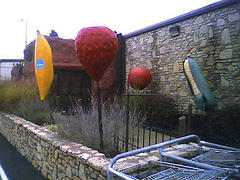
Big Fruit originally uploaded by soldierant. [At the entrance to the grocer-as-experience-design experiment known as Jungle Jim's.]
Retail as experience is more important that ever!

Case in point: the new 5th avenue Apple store. It's generating buzz and I can't wait to check it out later this week. The SoHo store was my first Apple store experience and that blew me away. The contrast between the very formal classical government post office building exterior and the ethereal Apple environment within mesmerized me. The large central glass staircase drew me in body and soul and made me desperate to chuck my Dell computer for a MacIntosh! Luckily, I didn't and having an iPod in my pocket helped me feel like I belonged in this marvelously soothing environment.

The 5th avenue store seems to represent a new prototype for Apple stores. Per this article titled Apple to unveil new store design in the 9/13/06 issue of the San Francisco Business Times by Mark Calvey, "The new design features will draw from Apple's new Fifth Avenue store, which is built in a former underground parking garage with a 32-foot glass structure above ground featuring the Apple logo. The new elements will be unveiled Sept. 23 at new stores in Providence, R.I. and Columbia, Md. The Apple Store is the nation's fastest growing retailer, opening a new store every nine days. The company expects to open 40 stores annually for the foreseeable future, Johnson said. "

David Polinchock offers his perspective in this post titled Brand Autopsy: Designing Retail Experiences – The Apple Way. He refutes a Fast Company negative review of the store as follows:

Fast Company, in their current review of customer experiences, didn't rank the Apple stores because they didn't think they delivered a good experience. After all, they say, if people are lining up at the Genius Bar, then people must be having a hard time understanding and using their products!

We, as you can imagine, don't agree. Here's what we think the Apple store is all about: They took the barriers to entry to buying an Apple product and answered those barriers with the store.


Wow! isn't that a cool way to describe a retail experience? Imagine doing that with your carpet or flooring store!

The post refers to John Moore's Designing Retail Experiences – The Apple Way which refers in turn to a ChangeThis manifesto by Jesse James Garrett titled 6 Design Lessons From the Apple Store. Moore offers a summary of the manifesto, but also strongly recommends reading the original. It is short, succinct and relevant: the lessons matter to all involved in creating retail experiences. Lesson 6 [Don't Forget the Human Element] makes critical points about the role the human element plays in delivering on an awesome retail experience. As good as everything else is, if your human element isn't completely on board, isn't completely committed to delivering the most impeccable, dedicated and passionate customer service experience, then you are just another retail environment.

Think about that.

Experience Manifesto also refers to Business Week Online's slideshow titled "Retail Wonders of the World - Today's boutiques, malls, and flagship stores seem intent on recreating old-fashioned shopping magic, but with a distinctly high-tech flair" by Kurt Soller. The introduction to the photo essay states:

From luxury brands to candy stores, companies are recognizing that their retail space is more than a distribution channel. It can be a branding opportunity, a marketing stunt, and a chance to draw in customers with an exemplary experience or to deliver a service on top of their product offerings.

This is the list of the stores showcased, many designed by high caliber architects. The visuals combined with the individual store descriptions make a strong impression.

  • In Manhattan: Hershey Store, Toys "R" Us, Apple [5th Avenue]
  • REI - Location: Seattle
  • The Dubai Mall - Location: Dubai
  • Selfridges - Location: Birmingham, England
  • Louis Vuitton - Location: Hong Kong
  • Prada Epicentre - Location: Los Angeles
  • Chanel - Location: Tokyo

If you have experienced any of these retail wonders, I welcome your perspective!

The whole notion of retail as experience becomes more important as consumers develop increasingly more options [online and offline] and the retail landscape gets more cluttered. Many manufacturers [e.g., SonyStyle] are looking to develop their own brand experience outside of their traditional distribution outlets, not necessarily to compete, but to offer consumers a level of service, of education, of branding, of experience, that they cannot otherwise control. And the consumers they are looking to appeal to - women - have responded positively.

This article Hello! This is your dryer calling ...Makers of 'smart' home products know they must appeal to women by MICHAEL PEARSON in the 9/9/06 issue of The Atlanta Journal-Constitution describes one example of the evolving brand experience. Perhaps an extreme one, it nonetheless highlights that much more effort is going into understanding how women [the target market] use products and shop for them.

These next two articles about actual shopping experiences take many of the lessons from Paco Underhill's Why We Buy [see recommended reading/Retail Trends] and describe what happens in retail environments: Just browsing at the mall? That's what you think by Mindy Fetterman and Jayne O'Donnell in the 9/1/2006 issue of USA TODAY and Enlisting Science's Lessons to Entice More Shoppers to Spend More by Kenneth Chang in the 9/19/2006 issue of The New York Times.

As you read these 2 articles, think back to the 6 Design Lessons from the Apple Store. Also, think how you react to retail environments. What works? What doesn't? Note that "narrow aisles crammed with goods are going away." Remember that "receipts show what people are buying, they do not show how people are shopping."

Finally, TREX [the Total Retail Experience conference] is coming to NYC in December. They have just made available on their website a pdf highlighting noteworthy retail stores in Manhattan as well as a downloadable podcast reviewing Apple, Babies R Us, Dean DeLuca, Lancome, Lenscrafter and LoHo stores. If you are on the lookout for sources of retail inspiration, these are the tools for you!

Technorati Tags: , , ,

Monday, December 07, 2009

The Apple Retail Experience And Your Store

Apple Store, 5th Avenue, NYC

How does the Apple - aka the New Nordstrom - retail experience affect your store?


If the Apple Store redefines the retail experience to such an extent that it has become the new Nordstrom, what does that mean for your store?

It's an interesting question to consider.

Here's my starting point: an article titled "Apple is no longer the Nordstrom of Tech , they're the New Nordstrom." It makes several interesting observations about the Apple consumer retail experience.

1. Apple stores are less about retail stores and more about community gathering place for those Apple-interested customers.

2. Apple stores and devices enable activities that people pursue: music, web-browsing, etc. And Apple has simplified many of those activities through both the retail store experience and the products.

3. Apple's customer service and retail experience have turned Apple customers into passionate fans who rave about their experiences.

[Perhaps you've read that Microsoft has decided to launch a retail presence. You can read an initial reaction in First look: Inside the Microsoft Store. I'll be interested to observe how their retail experiment and experience evolves... Can they successfully overcome the brand identity crisis that the author notes?]

Given Apple's success in selling products as means to experiences [and doing so via a memorable experience] for a wide range of consumers - not just Boomers [definitely read through Sell Experiences Not Products which, although about Boomers, applies to any selling situation. Note the reference to taking the time to listen to customers and not rush into pushing products before understanding what they want.], how would you translate that into equally successful retail experience models for other product categories?


Other Apple related posts from Flooring The Consumer...


Technorati Tags: Del.icio.us Tags:

Monday, October 16, 2006

Retail Experience and the Human Element

My previous post, Retail as Experience-More Important Than Ever, referred to Jesse James Garrett's manifesto titled 6 Design Lessons From the Apple Store. Here I focus further on lesson #6 and the role that the Human Element plays in delivering on an awesome retail experience.

The Human Element can truly make or break a retail experience. It can mean connecting in a meaningful way with consumers or completely turning them off. It is extremely powerful and the one best able to overcome shortcomings in other areas. Yet, it is also the hardest to manage, to control and to deliver consistently day in/day out. It doesn't require a degree in rocket science, but a lot of people -some of them really smart- bungle it completely because it does require common sense.

Late last week, I made it into Manhattan and 'treated' myself to several retail experiences: Toys R Us/Times Square, the Hershey Store, Zara/5th Avenue, Disney/5th Avenue, Urban Outfitters/3rd & 59th and the Apple Store/5th Avenue.

The Apple Store 5th Avenue. Ahhhh. I was so looking forward to this unbelievable experience! I pre-listened to my TREX podcast and was primed for the experience. I approached the store from the southeast side of 5th Avenue and..... caught sight of it. The cube was smaller than I had expected from the photos. No matter. It still looked really cool and I couldn't wait to go down the glass staircase and be able to absorb from on high the Apple energy below.

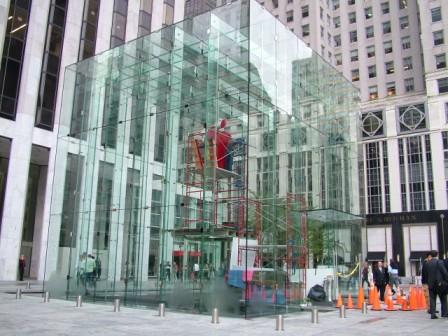
Well, it wasn't to be. Instead, I came across orange traffic cones blocking the entrance [see photo], and scaffolding inside the famous cube. Several Apple-guys directed people to a small doorway between some construction and FAO Schwartz, and down a narrow, grungy, concrete staircase. At the bottom of the staircase, 2 more Apple-guys further ushered the traffic down a hallway into the store. One in particular seemed to resent having to hear so many moronic consumers asking the same questions about the store and the construction! No humour, no enthusiasm, no attempt to welcome consumers to the store after an unpleasant stairway walk down to this Apple gem of a store.

What a missed opportunity to connect with people and continue nurturing the relationship. I anticipated experiencing Zen, Wow! and sheer joy and was I ever disappointed. I wanted to understand what was going on with the cube [the Apple was being changed from white to red? and maybe they were repairing some leaks?]. It sure seemed like the store couldn't be bothered with explaining; must have been on a need-to-know basis and consumers weren't sufficienlty worthy.... Not good.

The store was crowded [midday]. Nice bright light coming in from the cube, but I felt trapped underground from having the main staircase blocked off. I spoke with a helpful young man, but my final memory as I squeezed back up the narrow staircase was hearing those same Apple-guys sneering at another poor bumbling consumer.

Here's the irony. If it hadn't been for the construction on the cube, I wouldn't have had to interact with anyone. But I did. And it was lousy. I still want to experience entering from the cube staircase one of these days, but the SoHo store will forever remain my idyllic Apple experience.

The Hershey Store Times Square: I listened to my TREX podcast review of this store before going in and had a better appreciation for all of the details. And, they are spectacular. The store is small, but my how jammed packed with candy it is! Some unique candy, but also plenty of the tried and true. Shoppers within were really into the Hershey's experience and willing to line up to wait to pay. I found it claustrophic.

As I was leaving I asked the 2 guards stationed by the door a question. They had been talking so I expected an attitude from being interrupted. Not at all! They were both charming, helpful, courteous AND had a sense of humour. They smiled and wished me a 'sweet day'! Very nice and appropriate for a candy store. I left feeling great about stepping into HersheyLand.

Urban Outfitters 3rd Avenue/59th: I wanted to visit this store because Herman Miller's Viaro division had supplied a really neat modular ceiling infrastructure that integrates electric, musical, digital, computer cabling and wiring making it easy to modify lighting, setup, displays, etc. without a major construction overhaul. The system was so subtle and effective that if I hadn't been looking for it, I wouldn't have noticed it. The store showcased a fabulous variety of textures and construction elements [wood, brick, wrought iron, etc.] and had an Anthropologie feel to it [by the way, Urban Outfitters owns Anthropologie, and both believe strongly in the consumer selling themselves vs. the traditional hard sell approach]. It was fun, extremely engaging, inviting, whimsical and fun. I found a pleasant seating area at one end by some large windows and.... an amazing seating area in the changing room area! Sales associates were friendly, and looked like they wanted to be there. They greeted me, smiled, but didn't pursue me. I relaxed in there.

At these 3 retail stores, the Human Element played a major role in making these experiences come alive for me. In the Apple case, it made for a bad experience; with Hershey and Urban Outfitters, it made for a great experience. All 3 of these stores are gorgeous retail establishments with fabulous lighting, store design, sight lines, visual displays and sensory elements. The Human Element was the differentiator that led to a Wow! experience.

Customers Are Always lists 10 Ways to Wow Your Customers. Read the list. These are practical, actionable and valuable ways to connect with customers. Some may be more relevant for a browser, and some for a buying customer. But none are difficult or impossible to implement, although they do require common sense! They also call to mind a lot of the wisdom that Jack Mitchell shared in A Good Hug is Worth from his book Hug Your Customers.

So, how do you ensure that your Human Element is completely and passionately on board, delivering your message consistently day in/out? What do your consumers say after browsing your store? Are they wowed? Do they say that your people made their day? Do they rave about the human connections that took place and do they come back? Or was it just ho-hum?

Technorati Tags: ,

Monday, June 29, 2009

The Retail Experience Roadmap

This article, titled "The Retail Experience Roadmap," appeared in the February 9/16, 2009 issue of Floor Covering Weekly, in my column "flooring the customer."


What serves as your retail experience roadmap? Three resources ground me when I think about the retail experience: Paco Underhill’s "Why We Buy," Raymond R. Burke’s "10 Principles of Retail Shoppability," and Pamela Danziger’s "Pop! Equation: Field Guide to Shops That Pop" from her recent book Shopping.

Paco states that amenability and profitability are inextricably linked. To that end, he applies the tools of an anthropologist to retail environments, examining how shoppers behave and interact with product, displays, signage, and people in stores. The more comfortable and convenient a store, the more likely a shopper is to spend time and eventually buy. Makes sense.

Raymond R. Burke, professor of business at Indiana University’s Kelley School of Business, studies retail including marketing research, retailing, shopper behavior, and data mining. His "10 Principles of Retail Shoppability" represent the common elements he identified across a range of successful retail formats. Although the 10 principles may seem basic, they are critical and yet often aren’t addressed in the retail environment.

Show the product
Provide effective navigational aids
Simplify product organization and presentation
Minimize clutter
Maximize product affordance
Showcase new items and new ideas
Make the shopping experience convenient
Make the shopping experience enjoyable
Speak with authority
Maintain flexibility

Pamela Danziger’s "Pop! Equation: Field Guide to Shops that Pop" captures the soul or magic that great stores infuse into their retail experience. Her equation assumes that the basics have not only been covered, but also elevated to new heights to deliver more for the consumer. Such stores should:

Offer high levels of customer involvement and interaction
Excite consumer curiosity to explore & experience
Exude contagious energy & excitement
Represent a fine synergy between tangible and intangible elements
Capture an authentic concept
Offer superior value at a reasonable cost
Welcome all with an inclusive [not exclusive] attitude

Let’s take a visit to the Apple Store as an example. You position yourself first outside the store and watch to see how subjects approach the store, what they look at, how they enter. You follow. Once inside, what do they do? Where do they go? How do they interact with displays? How long do they stay? Do they buy?

Then, step back and observe the store itself. Remember that a store is about bringing people and product together, so both can interact. Successful store experiences engage the senses, as a store is about the product seducing the shopper into making a purchase.

The Apple Store is a sparse contemporary environment: plain white box; bright ethereal lights; very clean. The product, though, shines! It is available throughout the store on simple, accessible rectilinear tables. Shoppers are encouraged to play with it, interact, consult MapQuest, listen to music, ask questions, consult a Genius, obtain training. Bold graphics celebrate the beauty of the product, its stylishness, its newness.

If you need help in an Apple Store, you can easily consult the Genius Bar or an employee dressed in uniform t-shirt with an identification badge hanging from his or her neck.

Listen to the buzz of the store. It’s alive with energy, excitement, enthusiasm. Not only are shoppers involved with product, but they interact with one another. They are curious about what they don’t know and eager to share with others. It’s contagious! It also demonstrates the value associated with Apple products. An Apple product welcomes you into the Apple community. Whether you buy or not, you are invited to spend as much time in the store as you’d like.

Now, leave that Apple store. Keep that template or roadmap in mind and go back to your store. What do you now see that would improve your retail experience?


Technorati Tags: Del.icio.us Tags:

Tuesday, July 31, 2007

Don't Compete on Price!

Sushi price board originally uploaded by LimitedExpress.
The ultimate customer experience has nothing to do with price!

You don't believe me? Then listen to the experts on this BizWiseTV 30 minute program available for viewing until November at Creating the Ultimate Customer Experience link. The program pitch is as follows:

How can you succeed in today's highly competitive retail environment? Offering the lowest prices or providing unique products is no longer the answer.

Discover the surprising secrets to successful retailing from Pamela Danziger, and transform your store into an experience that shoppers will love.

Learn how you can use technology to transform the customer shopping experience from Brian Kilcourse, President and CEO of Retail Systems Alert Group.

This highly informative 30-minute video will show you:
- How to tap into customers' emotional needs
- The seven critical requirements for creating a successful retail experience
- How adding customer value enables you to charge higher prices
- How technology can help you increase your differentiation in the marketplace

You will also see case studies of Circuit City and J.J. Foods and learn about other retailers who have used technology to provide innovative and superior customer service. Finally, you will learn important store design trends from Gensler, an award-winning designer of retail environments.

It's in three parts.

In part I, Pamela Danziger, author of Shopping: Why We Love It and How Retailers Can Create the Ultimate Customer Experience, discusses the creation of a retail experience.

I've referred to Ms. Danziger before, in Why Amazing Shopping Experiences Matter and in Stores That Floor. Her book offers compelling examples and great descriptions of truly memorable customer experiences. She explores some of those concepts in this program.

For example, she touches on the 'Quantum Theory of Shopping' which consists of (need + product features + affordability) times (emotion-squared). So, a consumer may shop because she needs something, and the price/value meet her criteria, but what will trigger the actual purchase decision is the emotional quality associated with the experience. That's right. Consumers respond to the emotional thrill that successful stores consistently create.

Such stores - i.e., Shops That Pop - deliver a high level of customer interaction that affects store design, atmosphere, merchandising, etc. all converging to encourage a consumer to find her "inner diva" rather than just shop for fashion.... Sales people are essential to the delivery of the equation.

Some concepts from the book:
+ Authentic concept with long lasting value: that is about putting the customer first!
+ Make stores electric and contagious: the best example it the Apple Store [see Retail As Experience - More Important Than Ever].
+ Price/value model that favors customers: it's a matter of how they perceive value.
+ Make sure your store is accessible rather than overly pretentious and too exclusive.

[Ad Age's Create a Stage That Attracts Your Very Own Brand Posse - In-Store Details: Keep Consumers Connected With Retail Evangelists by Patrick Hanlon from 7/23/2007 makes some fascinating points about creating an accessible store: "Some retailers large and small do it right because they understand how to build communities around their brands.... It's not just shopping; it's a lifestyle." He brings up The Apple Store as well as Abercrombie & Fitch, Lego, Izzy and Intelligent Nutrients.

"Shopping is a rite filled with anticipation, expectation and fun. Shopping is release. Losers can become winners by adding energy and innovation to pieces of code. Enthusiasts are engaged by every nuance you provide in icons, rituals, lexicon and other pieces of a belief system that define the retail experience. Let others provide status quo; leaders show ingenuity." It's a good read.]

Finally, merchandise your store to stand out: display products differently, highlight them in unusual ways. Be sure to deliver inherent value that aligns with what a customer wants. Absolutely don't compete on price!

Part II examines the retail space -- the first point of contact with consumers. Stores definitely send signals to customers, so be sure to manage those signals as effectively as possible. Gensler Design - experts in retail design with 40 years experience - share tips and trends.

When the firm first kicks off a new retail design project, it starts with a visioning process. Essentially, sitting down and asking questions to develop a vision for the store. This can take a few hours, or several days.

Some tips:
+ Since retail is about newness, a retail store needs to capture that same sense. Keep it fresh: change colors, move products, generally try to create a fresh new look. Be obsessed with store - the hallmark of a great retailer!
+ Create an emotional connection between the store and the consumer. Make it a memorable experience for the customer. Connect with the 5 senses: sight, texture, light, sound, smells, tastes...
+ Create opportunities to interact with the product.
+ Never underestimate the effectiveness of great lighting in a dressing room.

Gensler discusses the importance of letting consumers interact with the product. This brings the store to life and improves the store experience. The better the experience, the more likely a consumer is to buy [e.g., the Apple Store or Bass Pro Shop].

In developing a new store design concept, Gensler builds prototypes to mimic customer experience and model consumer movement through the space. It spends considerable time understanding the store from the consumer's as well as the employee's perspectives. That means not only working the store, but also shopping it, and then explaining to employees how best to use the design features of the store to enhance the customer experience.

Exceeding customer expectations creates value and adds to the store experience. Imagine delivering that magical moment! It's completely a function of service and goes beyond the product being sold [i.e., think (emotion) squared].

Be sure to look at the store from both a visual and verbal perspective since people absorb cues differently. For example, the Northface store in Chicago translates a catalog/online environment into a retail experience while still communicating stories.

Trends:
+ Green stores that focus on using sustainable materials, decreasing energy dependence.
+ Weaving visual technology into stores, using, for example, "Now" kiosks to sell product where the store carries a limited range of product, with the full line easily seen via the kiosk.

Part III looks at technology solutions that enhance the customer experience. You'll see a nifty in-store video conferencing kiosk at Circuit City [fire dog live support] in action. This is technology to delight the customer and - as Retail Systems Alert Group explains - delivering actionable information into the consumer's hands.

Retailers must definitely do the basics first and then use technology to streamline the process, and focus resources on the selling process. Technology can be a market driver enabling retailers to provide excellent customer service and banish the focus on price!

Small and medium retailers can excel at service, offering reasonable product at reasonable prices.

Experience JJ Food, in the UK. In the food distribution business, it has differentiated itself by being the easiest to do business with. Its call center drives business and growth because of its amazing CRM systems. As a result, JJ Food sells 70,000 products via 83 telesales agents, in a variety of different languages to 20,000 customers, streamlining costs at the same time. JJ Food has successfully established relationships because of its reliability and consistency and customer service has made the difference to creating an extraordinary experience.

In case you don't yet get the point, don't compete on price!

Technorati Tags: , , , , , ,

Friday, December 28, 2007

Ultimate Retail Experience: The Apple Store

Did you see The New York Times article titled Inside Apple Stores, a Certain Aura Enchants the Faithful by Katie Hafner from 12/27/2007? It offers a fascinating glimpse into what makes Apple stores so appealing.

Were you aware that Apple retail stores generate 20% of the company's revenue?

From the article [and personal observation], here's how - by creating a Third Place around technology products. A place for connecting and gathering, for lingering and interacting with product and meeting like-minded people. It's a source of knowledge, information, help and fun. The overall effect is inclusive, extremely welcoming and filled with an amazing level of personal service.

Remember what Chris Ramey referred to in What Luxury Marketing Can Teach Us? Successful stores are extremely customer-centric. The article describes The Apple Store as the Nordstrom of technology. That says a lot.

It shouldn't surprise you that I often refer to The Apple Store in retail experience presentations. My first ever experience at the SoHo store in Manhattan radically affected my appreciation for retail environments.... the buzz, the energy, the positive vibe of the crowd. Despite a not-so-inspiring-human-element when I first visited the 5th Avenue Apple store, I remain inextricably drawn to Apple Stores where ever I go. The stores themselves echo the simplicity of the Apple product, forming a simple, bright, engaging backdrop for interaction between shoppers and products. Isn't that the ultimate goal of a store?

This 12/17/2007 article titled Retail Design For 2008: Thinking Outside The Big Box refers to several stores including Apple that have "redefined retail as sort of a playground for adults." This development is not "an anomaly.... but rather a redefinition of a retail storefront as strictly a commercial medium." Retail is becoming more emotional and a place for "creating stories around the brand that connect with people beyond merchandising or designer names" per Marc Gobé.

Paco Underhill mentions sophisticated lighting and creating intimate retail spaces to help redefine retail environments. Gobé adds: "...Apple's Fifth Avenue shop use lighting and materials to "bring forth the brand." Looking at The Apple Store from that perspective, I absolutely see it all come together.

Combine that with the impeccable and impassioned personal attention that the NYT article describes and you get a must-see-for-yourself ultimate retail experience.

Technorati Tags: Del.icio.us Tags:

Monday, July 26, 2010

Passionate Employees Differentiate Retail Experience

Apple Retail Experience where passionate employees differentiate the retail experience
The Apple Store, SoHo, learning sessions
As consumer expectations for the retail experience - and more specifically for how social it is - increase so, too, does a company's ability to attract, train and retain competent, brand enthusiastic and customer-focused employees become more critical.  Let's face it: passionate employees differentiate a retail experience.

Here are two perspectives.

First, from the perspective of an employee as described in this Fast Company article from November 2007 titled Magic Shop - Apple Employees. The author, Alex Frankel, experienced life on the retail front line at several prominent retail brands.

Only the Container Store and the Apple Store were consistent in identifying potential employees who were passionate about what they were to sell.  Apple's approach to selling consisted of "position, permission, probe."  In the author's words, "when employees become sharers of information, instead of sellers of products, customers respond."  The results at Apple: "Apple employees help sell $4,000 worth of product per square foot per month."

Highlights: Apple treats employees like adults; it teaches employees how to work together and requires that employees wear signature t-shirts and lanyards.  Employees also hand out business cards.  They enjoy working at the Apple Store.

Next, from the perspective of the retailer as described in Three Good Hires? He'll Pay More for One Who's Great from the 3/16/10 issue of The New York Times in an interview with Kip Tindell, chief executive of the Container Store.

Kip refers repeatedly to the importance of Foundation Principles for capturing the essence of the Container Store experience for employees and developing a cohesive team. "We believe in just relentlessly trying to communicate everything to every single employee at all times, and we're very open.  We share everything. We believe in total transparency."

Furthermore, "one great person would easily be as productive as three good people." They are paid 50 to 100% above the industry average. In the interview, Kip explains how destructive to the company culture and retail experience hiring people who aren't "appropriate culture fits.. We were just hiring anybody...It wasn't the same culture or the same customer service level..."

In both cases, the resulting retail experience is one that customers truly enjoy -- all because employees are passionate and genuinely care about customers.  It is differentiated.

How do you attract, train and retain talented employees so your retail experience remains truly differentiated?

PS: The Container Store Foundation Principles remind me of Zappos' Culture Book.  See Zappos: Where Happy Employees DeliverZappos Embodies Customer Service and Zappos and Service.]

Monday, November 16, 2009

Higher Calling For Retail Brick-and-Mortar Stores

Las Vegas Retail Store InspirationDid you catch the 9/28/09 article from AdAge titled Boost, Microsoft market via bricks, mortar [registration required, but here is link to pdf of the full article]? It's mostly about cell phone providers, with a dash of banking thrown in, but it includes significant insights for flooring and non-flooring retailers alike. Particularly those with brick & mortar stores!

More specifically, according to Wachovia Bank research, "brick-and-mortar investment was the single biggest contributor to customer acquisition, outpacing advertising..."

Now, that does that capture your attention? It did mine.

Why brick-and-mortar stores are so important.

They represent an effective means for communicating with customers. Particularly for complicated categories, a store represents an opportunity for a customer to get one-on-one time with a sales representative for guidance and to help make sense of the plethora of choices.

Stores are where the brand comes alive, where you can demonstrate your commitment to customer service and truly humanize your brand, where you deliver your customer retail experience and demonstrate marketing value. Stores are much more than just distribution points .

Note the five recommendations for enhancing the retail brand experience in-store:
1. "Present your merchandise in a way that helps shoppers navigate through the sea of products."
2. "Help customers feel comfortable with their choices and decisions."
3. "Train store reps to be knowledgeable."
4. "Define what customer enjoyment is for your brand and express that in your physical environment."
5. "Provide great customer service."

The Apple retail experience

One of the best retail experience stories is Apple, and one of the most disappointing - considering its entertainment heritage and its strong commitment to storytelling - Disney. What a delight, then, to learn that the two have teamed up to deliver a reinvented retail experience. Per Disney's Retail Plan Is a Theme Park in Its Stores from the New York Times, "it's time to take risks" and deliver experiences! These may include scent elements [something done in the theme parks], technology and new recreational activities. Some of the Apple touches that will be adopted include "mobile checkout, ... emphasis on community, ... focus on interactivity." The goal, "dream bigger" and turn these brick-and-mortar stores into true destinations.

Retail Customer Experience's Five things any retailer can learn from Apple lists the following to remember:

1. "Product knowledge isn't everything... and the world needs new and exciting retail experiences."
2. To get unstuck, "call in people you respect from a wide range of professional and personal backgrounds and keep an open mind."
3. Experiences represent a competitive advantage - so create a memorable one.
4. "We need to bring the joy back to shopping."
5. "Innovate in downturns."

To those, I add:
+ Don't dumb down your merchandising. Instead, create magic and stories.
+ Figure out how to simplify your processes to benefit your customers.

And, then, make sure you have people in your organization with strong passion for wanting to "make people look good, feel good" as described in Women trust Gamble's fashion tastes from the Poughkeepsie Journal. Gamble strikes me as having a higher calling. "...He connects with his clients by listening carefully to learn who they are and what they want." He's not just selling stuff, he's solving problems.

Would you like more ideas? Then read through this article Mixing It Up from Metropolis Magazine. In it, you'll learn about L.A. based firm Commune and how it combines inspiration and authenticity to create unique brick-and-mortar retail experiences with fabulous photos of three projects: the Ace Hotel in Palm Springs, Juicy Couture in London and Heath Ceramics in Los Angeles.

By the way, Commune equates being a designer to being a therapist.

Sounds like another higher calling...

So, what is your higher calling for your retail brick-and-mortar experience?


Technorati Tags: Del.icio.us Tags:

Wednesday, October 24, 2007

Reactions to the Target Store Experience

If you remember from Target Grand Opening Riverdale, NJ, my friends and I eagerly awaited the opening on our new Target.

We haven't been disappointed!

Jill went to Target with her 2 year old -Devin- in tow. She says: "FABULOUS store. VERY friendly sales people who are surprisingly knowledgeable! I asked where I could find some packs of wash cloths for the girls and a salesperson showed me 2 different locations for them (baby isle and towel section). Obviously the shelves were packed with goods for their first day. It was so great to find clothes for Sydney [her 6 year old] in her size as I never get lucky with cute stuff!

I checked out the “family bathroom” and it was clean and large. I painfully passed by the home good section which happens to be amazing at most Targets as Devin was getting a little cranky. I plan on returning when I can browse in peace and harmony.

Parking is going to be a nightmare, though. I love the store and can’t wait to get back in!"

Dina says: "I enjoyed my shopping experience at Target-not a fan of the new carts… Bumped into many a fixture. Great layout; clean, inviting-tons of great merchandise…dressing rooms very large; like the family dressing room…smells from snack bar and Starbucks pleasant. Cashiers and workers very friendly and quick…. A+."

My other friend, Lisa Contreras, has a unique take on retail establishments. You may remember her from Bloomingdales Bathroom Makeover. Her expertise is about designing retail spaces, and I treasure her perspective on the Target Store Experience.

Lisa says: "I often feel that the Target Corporation has a disconnect between their advertising, merchandising and store design. The excitement of their commercials and their ability to rethink the advertising of a "discount" store has truly revolutionized the market... In fact, many commercials look like theirs now, even Macy's. I have often wished that their stores conveyed the excitement, uniqueness, and brand identity that their commercials do. With this skepticism, I visited Target, Riverdale tonight on my way home from work.

As I drove north on Rte 23, I was excited. I exited onto the causeway that connected Rte. 23 to the store.

The parking lot was well marked and I could feel the Target brand beginning. I liked the building. Usually, the buildings are boring blocks of concrete; here, the architect used glass penetrations to see into the store, to give the customer a glimpse of what was to come... Here, the signage became the brand. The big round red balustrade balls reinforce the Target brand, as well as a large open cut out painted red to the right of the door. I had trouble determining the "in"... I think it should have been on the right. Instead, it was on the left with only a small sign saying "in".

As I entered the store, I was pleasantly surprised. The Target brand had made its way into the store. Large red graphics with the signature bullseye in neon decorated the perimeters of the store. Circulation was clean and straightforward. Toilets to the left as you entered, with customer service. Merchandise throughout the store was neat and nicely organized (it really was the first day!).


I was interested in how Target continued their brand identity throughout the customer enhancement opportunities. The fitting area is communal - men, women, kids - with a central desk where I was greeted by a friendly associate. I was happy to see that Target had implemented the "family fitting room" with larger rooms for the entire family...great idea. The individual fitting rooms were also equipped with a red mushroom shaped stool and carpeting that hinted at the Target brand. A large mirror and many "hooks" made it easy to try things on.

The toilets were simple and straight forward and, of course, clean as it was the first day. There was a family toilet, reflecting the needs of the Target Customer.

I walked the store and found the plan to be typical of that of other stores. As always, the merchandise raises the bar for discounters. I can never leave a Target without buying something. Today, I bought a herringbone brown wool skirt with a faux suede waist, a grey "wool" shirt dress with hidden accents of lime green, a gift card for a birthday party, and a cool Halloween bucket.

I wish, though, that Target would experiment more with new ideas for the store interior. There are still racks upon racks of merchandise.... I wish they would rethink their display ideas in the same way they have excited the public with their commercials. Maybe that isn't what they wish to convey? Maybe what they do now adequately speaks to all segments of the population? "Big Box" retail seems to have become the norm in the US lately and I wonder what the future evolution of this type of store will be: accessible to everyone, with just enough "savvy" to excite, without intimidating, but still able to sell toilet paper."


As you think through these various reactions - from coveted target shopper to discerning professional - keep in mind that the subtle nuances of the professional are ones that the shopper may not verbalize, but still reacts to.

I've always enjoyed how Target stores exude the Target brand, in a way not too dissimilar from The Apple Store and the Apple brand. This store doesn't disappoint. In fact, it's the best Target brand execution I've seen so far.

Given this intimate exposure to Target in my backyard, I've been paying more attention to Target's presence online. In Target Grand Opening Riverdale, NJ, I was disappointed in my poor search results. Well, did you know that Target has created a Facebook group, strongly branded as you can see in the image above, with close to 15,000 members? [Starbucks has too many to count with over 100,000 members; those look to be user created. Apple has an Apple Students site with 400,000 members.]

I learned recently that Target has a strong direct marketing heritage, having hired many former Fingerhut marketers. That explains the focus on traditional direct marketing activities to drive sales, and exploration with new venues like Facebook to promote contests. It will be interesting to see if Target's interactive marketing groups integrate efforts with corporate communications, advertising and local store activities in the future.

In the meantime, the Riverdale, NJ Target retail store experience does not disappoint, with great attention having been placed on reinforcing the iconic Target brand at every opportunity starting with the large bulls eye signaling the turn off to drivers, to parking lot symbology, to numerous examples in store. Are you as consistent with your store experience?

Technorati Tags: Del.icio.us Tags:

Wednesday, September 05, 2007

Feasting The Senses

My latest article from the July 23/30, 2007 issue of Floor Covering Weekly.


Feast (fēst) v. tr.: 1. To experience something with gratification or delight.

Idiom: To be delighted or gratified by the sight of.

What do Barnes & Noble, Starbucks, The Apple Store and Anthropologie share? They have each created havens of relaxation – environments that call out, invite visitors in and exude welcomeness. Despite that they sell relative commodities [books, electronics, coffee, clothing], they connect emotionally and sensually with consumers. They feast our senses, charging us a premium in the process, and we pay willingly.

What comes to mind with a Barnes & Noble experience? Big leather club chairs, the smell of books melded with the aroma of coffee from within? Do you hear music playing? It’s in the background, but it’s always intriguing… maybe a Samba or some Baroque?

You can always count on the children’s area. Lots of kid-sized chairs beckon, inviting young ones to discover worlds of magic and adventure in the pages of books.

And, if books aren’t totally your thing, then consider the amazing selection of book-related products: book lights, pencil pouches, greeting cards, organizing tools. The juxtapositions enchant and take ‘books’ to new levels!

Look at how Barnes & Noble then builds a community with visitors interested and passionate about books. They invite authors for book readings and signings. They host book discussion groups. They offer activities for children.

Starbucks has successfully created a place that is neither home nor work, a ‘third place’ where all are welcome, java lover or not. Notice the wonderful coffee-related artwork gracing the walls: black and white photos of coffee beans and whimsical, colorful wallpaper. Music represents such an important part of the experience that Starbucks has even formed a relationship with Hear Music, thereby extending the "music of Starbucks: to your car. Friendly baristas produce your java fix, and regardless of your purchase, you can hang out with or without your computer for as long as you’d like while the smell of coffee envelops you.

The Apple Store captures the essence of simplicity. Have you ever appreciated how totally Spartan, simple, and severe the actual stores are? And yet, there is nothing boring about these places where product and user come together. The simplicity of the setting lets the product shine. It beckons to users saying “Come, play with me. Try me. See how easy I am to interact with! Take me home!” Look at the visual cues. Listen to the buzz of people excitedly interacting with the product or with others. It’s infectious!

Anthropologie [part of the Urban Outfitters and Free People family] openly disavows the hard sell. Imagine! Even if you aren’t in the market for women’s apparel, door knobs, plates or soaps, do visit and absorb it all. The eclectic mix of products makes for eye-catching juxtapositions. No two stores are laid out the same way, leading to unexpected journeys of discovery every time. The store scents tantalize, the music relaxes, the product range enchants and the end result is a store environment that welcomes consumers and encourages them to make purchases.

What have these four distinct retail organizations created? A memorable shopping experience that people want to talk about beyond the actual physical visit.

A place where they enjoy spending time because careful attention has been paid to engaging the consumer other than through a hard, antagonistic sales approach.

A place where employees share the passion and the strong brand image extends beyond the store, to the website, printed materials, etc.

Think about your experiences with stores that connect with you. What do you see as you walk by those stores, open their doors and enter within? Are you intrigued, delighted, enchanted? What do you smell? Is it so compelling that it draws you into the store before your brain realizes your actions? What about the sounds within? Are they soothing? Energizingly toe-tapping? Or irritating?

Is there anything to taste? Maybe a few tools of hospitality like just-baked chocolate chip cookies and freshly squeezed orange juice? How do you react to these sensory delights? Does the store take on a larger-than-life dimension the minute you walk it, or does it recede from blandness and boredom?

Create a retail environment that feasts the senses and you will have a store that connects emotionally with your consumers.

Technorati Tags: , , , , ,

Wednesday, February 06, 2008

The Flooring Display Challenge - Part I

Do you remember the Flooring Display Challenge as announced in How Might Flooring Displays Tell Better Stories?? It has generated fascinating input from within the industry as well as outside the category.

I recap them here. Perhaps they will spark more ideas?

Mario Vellandi recommends visiting "DIYs and niche stores for paint, siding, and window devices [curtains, blinds], and see how they do it". Essentially, go outside the flooring category to brainstorm.

Another fascinating source of display inspiration comes from commercial [or architect/designer focused] carpet showrooms. I've seen product shown as artwork - in frames, hanging from walls, with focused lighting. It looks special and generates conversation.

He asks "What kinds of flooring materials are sold? carpet, vinyl, wood, tile... Each material has its own personality."

I love the notion of these products having distinct personalities. It makes sense. Although each should be able to interact with the other in a home, the interaction would happen remotely - as a handoff from one surface to another. Imagine a carpeted bedroom leading to a tiled bathroom, for example. Or a kitchen to a garage.

Doug Meacham shares a consumer electronics perspective. Surprisingly -- or perhaps not so surprisingly -- many consumer electronics retailers share quite a bit with flooring retailers! "CE retail competitors and virtually all pure retail operators for that matter, must partner with all of the brands they carry to offer the customer a wide array of offerings. The individual brand images are not clearly reflected in the average retail experience because the retailers 1) won't typically give preferential treatment to selected brands and 2) can't afford to set up individual brand experiences within the store. What you are left with are those bland POP displays that are provided as part of the purchasing deals with the vendors."

Which makes The Apple Store experience that much more unusual in how integrated and strongly brand focused it is.

Doug explains that "unlike Circuit City or Best Buy, Apple has the luxury of being able to design the retail experience around the Apple brand and its limited number of products. It's clean, simple and easy to incorporate the brand image into the store design." Retailers like IKEA and Pottery Barn -- and Apple -- offer a retail experience carefully controlled and orchestrated around their brand and products.

Using vignettes to "demonstrate the product in a way the customer can relate to" he explains is extremely effective, having done so succesfully in many Circuit City innovation test stores.

He offers the following ideas [Doug, you are eerily spot on!]:

1. Flooring is not something the average customer buys frequently. When it is time to replace or upgrade, customers are overwhelmed by the number of options available to them. Making the right choice comes down to striking a balance between texture, color, maintainability and cost. That can be daunting so having the right level of help in-store is critical.

Buying furniture presents a similar problem. Ethan Allen's approach of putting interior designers into the store mix has been highly successful. Can you simplify the selection process? Can you translate the tools on the Wear-Dated website to the in-store experience? Can the Wear-Dated brand support its own branded retail experience or perhaps partner with a furniture brand in a way that allows your products to be shown like you described in your dream store while at the same time, offering a high level of guidance? Lots of opportunity to show the product in vignettes with that approach.

2. In the end, customers don't want "flooring products". They want solutions to a problem or need that they have. It may be that they want a bedroom floor that feels like walking on a cloud or an entryway that makes a statement about their personal style. Find ways to present flooring products as solutions to those problems instead of just dazzling assortment of materials, textures and colors.

3. Look at placing your products in real use areas. Hotels are using their rooms to market mattresses, plumbing fixtures, linens, and electronics. Why not carpeting? Hey if it can withstand hotel traffic, imagine how well it will do in your house.

[Note: we have a successful contract carpet fiber business with our Ultron carpet fiber brand. Our nylon 6,6 fiber is the fiber type specified most often by designers and architects!]

Ryan Karpeles' suggestions include using vignettes or model rooms (similar to IKEA). What about "incorporating samples into the web site. Allow people to take photos of their existing rooms, and then swap virtual samples in and out to see what it would look like."

This idea caught my imagination: What if you asked anyone entering your store to remove shoes? Then invite your customers to walk around on your different flooring products. Carpet, in particular, is such a sensuous product and yet it is never sold as such. Walking on it barefoot would help make the point!

From the retail experience perspective, Ryan says to "make your store smell like a home, rather than carpet. Bake some cookies. Light some candles. Etc, etc. Stay meticulous. Never let the store get sloppy. Keep it neat, organized, and sharp at all times. Turn your store into a home. Allow people to envision themselves in their house - not a carpet store."

Finally, "find out exactly what people need and why. Give recommendations based on their actual situation/preferences." What a wild concept asking people! Imagine that.

Thank you, Mario, Doug and Ryan!

Next, Part II.

Technorati Tags: Del.icio.us Tags:

Monday, July 19, 2010

A Retail Experience That Doesn't Compete on Price

A retail experience that doesn't compete on priceBack in August 2007, I received an email from a flooring retailer in the midst of moving an existing floor covering store to a new location. Inspired by Don't Compete on Price, he hoped to design a space that proclaimed to customers in no uncertain terms how passionate he was about helping them feel great about their home.

He wrote: "I watched the Cisco clip on your blog and agree with Pamela Danzinger’s advice. The million dollar question is how to achieve this goal with a limited budget? I find these “big picture” ideas easy to agree with but am stumbling with how to implement them."

I recently found my email response and thought I would share it with you here.

----

I do believe you can achieve a retail experience that doesn't compete on price with a limited budget. Great retailing is a blend of common sense, a strong focus on the customer and creativity. Here are some initial ideas to react to.

STORE LAYOUTS, etc. - I would suggest thinking beyond what might be ideal for a flooring store and rather what might be ideal for a store that offers fashion solutions for a consumer's home. Your focus may be flooring, but the flooring must coordinate with all of the other elements that go into a home. And just because you don't sell those other elements doesn't mean that you can't recommend people who do [perhaps you can invite the paint store to leave swatches and concepts, and the furniture store to place furniture and.....], or that you can't show how to integrate those other decisions with what your store offers...

Look at what other stores that redefine categories have done. Take a walk through Urban Outfitters or Anthropologie [they disavow direct selling]. Also, Starbucks, Barnes/Noble and Apple Store. Observe how those stores merchandise their products, appeal to the senses, use color on the walls, create interesting juxtapositions, etc. [The July 23/30 issue of Floor Covering Weekly has my latest article "Feasting the senses"; I use some of those stores as examples.] They've created spaces where people want to linger, which is what flooring stores haven't yet done successffully. Note that no two Anthropologie stores are laid out the same -- which tells me that any layout can work.

Definitely plan on having several spaces in the store with tables/chairs where consumers/designers can sit and explore ideas [I have a blogpost in the works about the importance of having 'fitting rooms or dressing rooms' or space to try on ideas]. In those areas, try to include peg boards or bulletin boards to put up design inspiration images, color stories, fabric swatches, etc. The nice aspect of the tables/chairs is that they can be the focus of private alcoves around which you can group product displays. That prevents your showroom from looking like a sea of rows of racks.

In fact, can you come up with different 'rooms' to loosely organize your store around? Have a table/chair/inspiration board in each of those rooms. Use a different color scheme and artwork theme for each room....

Plan on leaving lots of space in the store, to get around easily, and space to showcase new ideas/products. [See A Store That Floors: Aggieland Carpet One Floor & Home.  Ron and Claudia Smith have displays on wheels; he creates trends or concept boards and rotates those on a weekly basis. Create boards that integrate soft flooring with hard surface, add some paint swatch ideas, maybe some fabric concepts.

Can you get your store associates to help create a strong design sense for the store?

Or having a contest with local design students to showcase design ideas? [That also gets you some local press attention.] If you haven't already, consider hiring salespeople with a design background. [La-Z-Boy Furniture Galleries started hiring designers and saw their average ticket increase dramatically because the designers worked/consulted with consumers to come up with solutions rather than just sell 1 item].

Check out stores like TJ Maxx, Marshalls or HomeGoods to get some dramatic pieces to put on walls, to accessorize areas, to create window displays with. Target also has fun items.

Make sure your bathrooms are nice! Definitely use them to showcase hard surface concepts, but also include delightful touches in there [nice soap, flower arrangement, etc.].

--------

What you would add to this response? How would you create a retail experience that doesn't compete on price?

Monday, August 16, 2010

Customer Retail Experience: In-Store & Online

David Polinchock exploring customer retail experience in SoHoWhat makes a customer experience successful at retail? Yes, the in-store retail experience must be impeccable, but so, too, must the related online experience.

David Polinchock from Polinchock's Ponderings and I, after several intense discussions on the subject, decided we would visit retail stores in NYC to explore and research their in-store & online experience.

[See Brand Experience Lab: Creating a Branded Retail Experience for my first meeting with David.]

This past June 21, 2010, David and I spent the day visiting retail stores in SoHo and 14th Street in New York City.  We visited:

2 Apple Stores [in SoHo and on 14th Street]

[Note: next time, I will make sure to track my retail visits with  my hiking trail marker app so you can follow in our tracks the next time you visit NYC.]

As we visited these stores, we were curious about how sales associates would interact with us, what they knew about their store online activities, how well each store integrated in-store selling with online resources. We were both armed with cameras. Some stores welcomed photos; others strongly forbid them!

We were interested in how technology was used and integrated in-store. [By the way, we came across the first ever iPads used as interactive retail displays and they looked much more effective than the more traditional computer kiosks.]

Over the next few weeks, I plan to take you through several of these stores and explore with you how each goes about creating a memorable customer retail experience not just in-store, but also online.  It's what David refers to as "Oneline".

I look forward to sharing these adventures and observations with you and encourage you do your own explorations and share them with us.

Friday, December 12, 2008

Integrate Your Retail Experience

This article, titled "Integrate Your Retail Experience!" appeared in the September 15, 2008 issue of Floor Covering Weekly.


Have you considered that what matters to your customers is what makes your retail experience distinct from anyone else’s in your marketplace? And, further, that it constitutes your value in the marketplace?

What is it that matters to your customers? Is it a store stunning in its details? Is product selection second to none? Are your installers perfection personified?

Imagine having a flooring store that resembles The Apple Store. It infuses customers with Zen vibes and relentless passion. Customers immediately relax upon entering. They like to linger, considering possibilities. They willingly and enthusiastically take the plunge and purchase from you. They expect only the best. But, then, your store representative measures your customer’s room inaccurately. To make matters worse, your installer botches the job. In fact, this is the experience most of your customers encounter once they leave your store. What will your customers say to one another? How long will you survive?

What if you offer a selection of flooring products second to none and your deals are phenomenal. Unfortunately, your store's appearance is dreadful. Samples are strewn about the floor. The carpet underfoot is worn and stained; the bathrooms are best ignored. Consumers must undergo fumigation after walking through it. Despite the amazing deals and extensive product, how impressed is this shopper with you?

Picture this: your store is attractive; your installers are good, but no one follows up with the customer to ensure that the installation has been scheduled, let alone conveniently. No one has attempted to educate her about how to maintain her carpet. Your consumer encounters problems and learns that her warranty has been voided because she didn’t care for her carpet per IICRC and CRI recommendations. How satisfied do you think your customer will be?

These scenarios are common. Ask around. If you’re lucky, someone will be honest and share them with you. They all reflect a missed opportunity to better integrate all aspects of the retail experience so customers are delighted and impressed with us, talking about us in reverential rather than disgusted tones.

My mother is one of these disappointed consumers. Her experience was good enough from the average retailer’s perspective, but not from hers. Although her three projects look great, she endured three months of missed appointments, frustration, miscommunication and aggravation. One room was measured incorrectly, resulting in a backorder and a different, more expensive final solution. She personally had to pursue store representatives for basic information [when are you coming? Are you still coming? Where is my carpet?].

So, what’s going on? Experts will tell you that the back and front ends of the store experience haven’t been adequately integrated. Rather than work together as a team, they work competitively and at cross purposes.

Whereas such an approach might have been good enough not too long ago, those days are gone. Not only are we over-stored, but the social web offers consumers the tools to research, document and investigate reputation.

That places the consumer front and center. What matters to her, matters to you. Provide her with a flawless experience, and she will reward you with her business and her loyalty. Offer her a partially satisfactory solution and not only will she take her business elsewhere, but she will let everyone know to stay away.

Welcome to the new world order, where customers call the shots!

So, let’s rethink the situation. Aren’t consumers simply looking to find a perfect flooring solution for their beautiful home and a place where the relationship extends beyond the immediate transaction?

That requires that every aspect of your retail experience work seamlessly together, that all parts be integrated. It matters to her that you facilitate internal communications, and foster cross-departmental cooperation rather than competition so everyone can be a part of delivering solutions.

It matters to your customers. That means that it matters to you.

Technorati Tags: Del.icio.us Tags:
Related Posts Plugin for WordPress, Blogger...