Flooring The Consumer on Simple Marketing Now

Please visit Flooring The Consumer's new home on SimpleMarketingNow.com where you can subscribe to receive updates to blog articles in real time!
Showing posts with label stories. Show all posts

Wednesday, February 20, 2008

Tim Girvin - Trends in Story, Brand and Experience Design

The Luxury Marketing Council of New York recently featured Tim Girvin, GIRVIN/Creative Intelligence for a presentation titled:

True Stories: Trends in Story, Brand, and Experience Design. An Exploration of Authenticity, Storytelling, and Integrated Luxury Branding.

Needless to say, I was intrigued. I left spell-bound. Here's why.

Girvin believes in stories. He communicates in terms of stories. He connects with others via stories. Stories represent the link between otherwise disconnected beings, ideas and products. Stories are reflective narrative.

We all have a story, he says. We connect with one another through story elements we have in common. After all, story captures personality. Personality attracts others. Before you know it, you have a community made up of people attracted to that personality and story.

Step beyond personal brand story to a product's brand story. Don't you find that the story connects you to the brand? It helps you remember distinct aspects of that brand's characteristics, its personality. Story is a shortcut to absorbing those characteristics and making them relevant to you. Story helps to efficiently convey those relevant aspects to others.

Story also creates conversation, leading to engagement with your brand...

Tim has a fascinating story [I encourage you to learn more about him from the link above, via Tim.Girvin.com where you will find soul-inspiring writings, photos and illuminations, his GIRVIN:D.log blog, and the Girvin company website.]; he characterizes it as evolutionary and fluid.

Powerful words. "Evolutionary" and "fluid" make me see connections all around me. So does narrative.

Fluid, liquid history helps me appreciate the past, present and future - all continuous and timeless, evolving. It includes macro themes [think myths, legends and archetypes] as well as micro details [think quips]. Yet, history also contains [vessels of memory, holding relationship] in a context relevant to me.

Nowadays, people are overwhelmed with too many messages. How to cut through that? They are knoweledgeable about what's real [i.e., authentic] and suspicious of brands that are indistinguishable one from the other - especially when logos have little meaning, and the absence of logos actually appeals more.

Our culture has embraced a new expectation of honesty and truth. Where is the heart of the brand? What is the centerpoint of the proposition? What is the legitimacy of provenance? [Is that Piaget watch special because it is made at Piaget or just carries the logo?]

Authenticity matters. Traditional brands are under pressure because so many cheaper alternatives exist. What then is the difference? What is the truth?

What is the truth that matters to that brand and brand community? Truth for an Apple lover will differ from that of a Harley-Davidson fan. What is authentic to that brand essence? Authenticity is the benchmark against which items are judged.

I look increasingly for authenticity. I think many of us do. Perhaps it's a function of ageless marketing? And also being weary of falsehoods and inconsistencies, poor quality and unsafe products. We seek the truth. If something fails, the brand loses meaning; brand integrity becomes questionable, and brand community a farce. As marketers, then, we must ensure that brands communicate authenticity consistently to our brand community.

Discovering and communicating the real, original story behind a brand becomes, then, an even more critical and effective way to connect. After all, a logo is only as valuable as the brand it represents. It manifests the story and brand.

Girvin urges going farther and deeper into the history of the brand to how it began. Every brand starts with a human being, reflecting that being. Think Apple and Steve Jobs, Nike and Bill Bowerman, both examples of the brand as "the genome of personality." The brand exudes so much passion that it develops into a cult that becomes part of culture that turns into love, committment and deep loyalty.

Brand story is made up of:
- cult and culture [the human brand genetics]
- story [captivates the community]
- premise [founding drivers that make the brand different]
- promise [the emotional gift]
- reflection [what is given and given back]

Example: Nordstrom - the story is about the holistic integration of the Nordstrom family history with the store's evolution to provide legendary Nordstrom customer service. The promise is all about the customer's delight with the Nordstrom retail experience.

Example: Yves St. Laurent - the story begins with Yves St. Laurent himself, embodying Parisian character and sensuality. But, how to ensure continuity beyond the originator? First with Tom Ford, then with Stefano Pilati? Tom Ford has moved on; he exudes strong sexuality [note: the Tom Ford website includes a warning!]. With a strong affection for the handmade and thoughtful truthfulness about true luxury, he wants to bring that sense of truly individual and unique back. Pilati seems truer to the original YSL mystique.

Example: Hermes where the legacy of Hermes products has a great deal to do with the management of the legacy over time [please read the 5 page article form Vanity Fair titled "From Hermes to Eternity..." which tells the story of the Dumas family and their amazing commitment to the integrity of the brand. It's fascinating.].

Brand story matters because it differentiates from commodity. It is highly competitive. It is uniquely positioned. It is not only relevant, but also resonant. It is human and warm, truthful and authentic, creating layers of connection.

True stories take a brand way beyond image advertising. True stories make brands authentic and engaging.

Technorati Tags: Del.icio.us Tags:

Sunday, September 10, 2006

Brand Experience Lab's Experience Manifesto

Retail Outlet originally uploaded by yendluri69.
As promised in my last post, Highlighting Blogs: Retail Experience, I am focusing here on Experience Manifesto.

Experience Manifesto is the work of David Polinchock, the founder and chairman of Brand Experience Lab in SoHo. [He also contributes to FutureLab.] David pushes the edge of the brand experience envelope and stretches the reaches of your brain. No surprise, he teaches at Carnegie Mellon University and NYU.

I first met David in May, 2005 during a seminar at the Brand Experience Lab - it included a walking tour of SoHo - on building a branded retail experience. Sponsored by POPAI [point of purchase advertising international], the session was based on the premise that of the $900+ billion spent on marketing, $18B is spent at retail because traditional advertising no longer works. With power shifting to the consumer, the consumer is responding at the point of purchase, where the brand experience becomes critical for success.

Here follows a summary of the presentation, which remains more than relevant today:

In today's marketplace, many products/services are becoming commodities. The consumer has become increasingly knowledgeable and comfortable making purchasing decisions, relying less on traditional marketing and sales efforts. As a result, it takes more effort/resources/etc. to create a compelling brand identity. The challenge becomes how to ignite passion, and inspire loyalty for your brand.

Success calls for integrating all brand elements as none can be viewed in isolation. Each represents one piece of a larger brand story that needs to be told with passion and consistency, starting with the company itself. The challenge a brand marketer faces is breaking through the visual 'war zone' [i.e., clutter], to consistently present the brand's identity and connect with consumers in a meaningful way - that recognizes that they are time stressed yet want/need to feel good about their purchase decisions.

At the same time, retailers are becoming dominant brands. In order for marketers to retain the full support of retailers [and access to valuable real estate in-store!], they must demonstrate that product and/or displays sell, match the retail identity, are easy to use, etc.

Ultimately, the overall emotional satisfaction with a brand is more important than the features, benefits, customer service or quality alone. Brands must engage and captivate with sensory, interactive, authentic and relevant elements. Brand loyalty is driven by the delivery of valuable experiences, consisting of the sum of all of the brand elements.

A compelling brand experience includes the following:

  • Culture - need to thoroughly understand cultural trends, customer needs, and knowledge of what is coming in the future
  • Creativity - need to take customers beyond a brand's features/benefits to create a visceral connection via storytelling
  • Technology - today's audience is accustomed to technology being a part of one's daily life; so can you find relevant new technology to help tell your brand story better?

Defining the brand experience: A product/service is nothing more than an artifact or an act around which customers have experiences. Over time, your brand will be defined by a total impression of those experiences rather than the products or services themselves.

The right experience set creates a strong, emotional and consistent connection with the consumer. This is the force that captivates your audience and arouses an anticipation of benefit upon recognizing the brand. The various brand elements such as advertising and marketing contribute to this group of experiences, but they are rarely the sum total of brand identity.

Expressions of the brand story include the following. Note that they must all be integrated to deliver a single consistent message.

  • Promotion and advertising
  • Retail -- lotsa breakdown here!
  • Customer service staff
  • Web
  • Brand advocate communities
  • PR & events
  • Corporate communications
  • B to B communications
  • Display and package design
  • Product Features & Benefits

Never underestimate the degree to which your customers and consumers will go out of their way for a better experience. Similarly, never underestimate the degree to which one bad experience can undo all other positive efforts. In short, develop a compelling story, and you have the basis for turning consumers into evangelists!

This certainly parallels Patrick Hanlon's comments referenced in Creation Stories, Alain Thys' comments in The Power of Stories, Customer Service Matters!, and I Can't Get No Satisfaction.

Tags: , , , ,

Sunday, August 13, 2006

Creation Stories

Once upon a time.... These are the magic words of storytelling that capture the beginnings of a story, how the story came to be, in other words -- the creation story. Creation stories capture the imagination and engage the emotions. It's the 'what's your story?' of a brand or retail experience.

Patrick Hanlon, author of "Primal Branding" [see Recommended Reading/Business & Marketing Trends], describes in the July/August 2006 issue of Advertising Age's Point in an article titled "The Code of a Brand Community" the 7 elements necessary to building a primal brand. The first element is a creation story.

Hanlon explains in the article that a primal brand is one that is so powerful that it creates brand zealots. Think of the passion that Apple, Starbucks, Nordstrom, and New York City have created in people. According to Hanlon, primal branding is necessary because of the competitive choices that companies face to succeed in today's world: "Companies today have two choices. They can be the low-cost provider (which almost no American company can achieve faced with foreign competition) or they can create sustained differentiation by surrounding themselves with a community of enthusiasts who flock to the brand and stick to it no matter what. The result is a powerful brand community that resonates outward and becomes a part of the culture at large. " He provides other fabulous examples of primal brands [e.g., the Rolling Stones, the World Cup, the Marines...] at his blog,Thinktopia.

Brand creation stories surround us. Some are made more explicit than others. La-Z-Boy, for example, has made a point to include its creation story not only on its website, but also visually within its La-Z-Boy Furniture Gallery stores. Its story captures a rich heritage and everyone buying a La-Z-Boy product be it a recliner or a stationary piece of furniture purchases some of that history. So why not explicitly share it with consumers?

Here is the Wear-Dated creation story - going back to a very different retail world in New York City:

In 1962, the Arnold Constable Department Store in New York City was going out of business. The store had a long and proud history - Eleanor Roosevelt had been one of the many rich and famous who bought her clothes there.

The store sold men's shirts with an interesting label in the collar area: if the shirt wore out before the date stamped on the label, a customer could return it and receive a full refund. The store referred to the label as its "wear-dated" guarantee. Bob Born, from Chemstrand [Monsanto's/Solutia's first wholly owned subsidiary],liked the label idea and bought the rights to it.

Thus began the Wear-Dated franchise. From apparel, it was expanded to include upholstery fabrics and carpet. Today, it is a strong carpet fiber brand known for durability.

You have a creation story. How do you share that with your customers?

Tags: , , , , , ,

Thursday, August 10, 2006

What's Your Story?

"A Story to be told" originally uploaded by Dave Pinn.
Stories also enable us to connect with one another. Aren't you often asked some version of "what's your story?"? The answer lets us tell others where we come from, what we are about, which commonalities we share and how we fit into one another's world.

Women are particularly attuned to this, starting from a very early age. Have you ever watched how girls interact? Even four year olds! They try to find links and connections to one another. You hear them complimenting one another on a hair ribbon, on what they're wearing. They'll express surprise and delight at having a similar birthday [Yours is in May??? Mine is in June!!!]. They love to discuss personal details and exchange STORIES.

My friend, Ben, says that anytime you compliment a woman on a piece of jewelry or an item of clothing she wears, you will hear the story associated with the object. That's how powerful stories are to her! They envelop her being. They give meaning to the objects in her life.

As it relates to a selling environment, not only do you need to have a compelling story to tell [see The Power of Stories], but it also means being prepared to listen to your consumer's story - particularly if she is a woman! After all, women represent our target audience, making or influencing at least 80% of purchase decisions and closer to 95% of flooring and carpeting decisions.

Your consumer's story offers a wealth of information! It lets you know what she is looking to accomplish, what matters to her and how specific products and colors might work for her. Understanding her story allows you to 'romance' your product offerings, highlight the fashion statements that they make, and generally offer aspirational solutions that are relevant to your customer's story.

Through that story, she offers you the tools you need to select the right portfolio of product options. It is also an opportunity, an invitation to connect with her. For, IF you listen carefully, you can start to establish your trustworthiness. That's the first step to developing a relationship with her. And, then the story leads to closing this sale and a multitude of additional sales with her and with all of the people she will have referred you to. If you don't respect what that story represents, she will walk away and tell everyone she knows to stay away!

Many retail experiences miss the boat by focusing too much on facts and figures and product attributes, and not enough on acknowledging how important she and her story are. Remember, the goal is to assist her, support her, advise her on how best to build her magic castle. Not to force her into doing something she isn't comfortable with.

Lisa Johnson -- co-author of "Don't Think Pink" [see recommended reading/Marketing to Women] with Andrea Learned, see Learned On Women -- published the following newsletter in April, 2006. Titled "Trade with the Insiders", it addresses the topic of Sales and Customer Service through the example of a Nordstrom personal shopper. This personal shopper asked questions to uncover the consumer's story, and listened very carefully to come up with the right solutions. According to Johnson, an Insider:
  1. Asks the right questions
  2. Offers industry intelligence
  3. Saves you time, money and hassle
  4. Wants an ongoing relationship
  5. Gives you a heads up
  6. Treats your referrals like gold
  7. Enjoys the relationship as much as you do
  8. Pushes your limits - in a good way
  9. Offers a reality check.

An Insider essentially becomes a part of a customer's story.

Tags: , , , ,

Tuesday, August 08, 2006

The Power of Stories

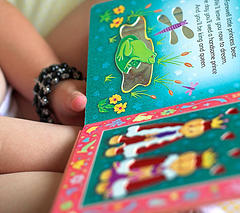
"Story time" originally uploaded by shooz
Imagine a world with no stories. Just facts and figures and no context... That would be a world of commoditized offerings and experiences.

Stories provide context. Stories are how things have meaning, and why they matter. Stories provide value.

Stories come in different types: the explicitly stated story of a brand or store which communicates directly to the customer; also, the romantic aura that has built up around a brand or product because of its history in the marketplace. Some stories capture both elements.

As I approach a Starbucks to order my venti non-fat latte, I experience a sense of calm and anticipation. When I see the Starbucks' green mermaid, I know what to expect. Starbucks tells a story of quality and consistency, in a soothing environment, with baristas who exude competence and enthusiasm.

When I reach a Target parking lot or see the red Target bullseye, I also know what to expect: a consistent, clean and fun experience that will inevitably lead to an unexpected design related discovery. The Target aura is such that every product in the store has a reason for being. It reinforces the Target story.

Each is like opening a favorite book and reading a familiar story: Starbucks and Target are distinct from one another, but each is memorable and each's aura helps me immediately make sense of the offerings within. Each one represents a powerful story that captures the imagination and becomes the basis for numerous word-of-mouth referrals! These are stories that have evolved as store and product have evolved.

Some of you may be familiar with Anthropologie. It's a retail chain, offers a catalog as well as a website. No two retail stores are laid out the same. From the website, you get a feel for its whimsical and compelling story. This is a more explicitly stated story that reflects a desire to communicate the nature of its environment directly to the consumer. Notice the language used to describe the Anthropologie retail experience:

"You relish the tales your belongings tell and delight in the unique aura they cast around you. If someone toured your home, they would encounter not just beautiful things but works of art. Not just function but ingenuity. And not just objects but stories.

You’ll find that magical spark in the clothing and objects in Anthropologie’s stores and catalogs. And in our staff, you’ll find friends who share your passion for exploring worlds other than our own.

We carefully select and design our products with an eye for craftsmanship, the small details, and that certain something special that makes each item you find more than a novelty but a personal discovery. "

Doesn't that tell an interesting story? By the way, did you know that Anthropologie has never advertised, relying instead on word-of-mouth referrals? And, it disavows direct selling, preferring instead to create the most engaging, magical and consistently memorable story possible within its stores, on its website and through its catalogs.

Futurelab's Alain Thys recently wrote a fascinating post titled "The Ten Truths of Branded Storytelling". I'll list them here: Seek the Story to Rule them All; Great Stories Come to You, If You Listen; Amplify Those Stories That Others Can Tell; Connect Your Branding Efforts to Your Unique Story Proposition; Connect your Story Efforts to Your Bottom Line; Know Your Classics [yet don't get hung up on them]; Storytelling is Not Just About Words; You Don't Need to Tell it All; Let Go of the Illusion of Control; You Cannot Fake Authenticity.

Pay particular attention to Truth #7: storytelling is not just about words! Be sure to reflect your story in everything you do.

Do you have a story? I hope so.

Tags: , , , , ,
Related Posts Plugin for WordPress, Blogger...