Flooring The Consumer on Simple Marketing Now

Please visit Flooring The Consumer's new home on SimpleMarketingNow.com where you can subscribe to receive updates to blog articles in real time!
Showing posts sorted by relevance for query obama facebook. Sort by date Show all posts

Sunday, November 16, 2008

Social Media & The Elections: What It Means for Marketing - Part II

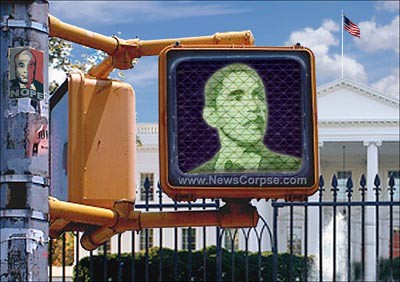
Obama Change Signal originally uploaded by News Corpse.
Continuing with thoughts around Social Media, The Elections, & What It Means For Marketing, here follows Part II.

Given my interest in social media, I was intrigued with this recent Columbia Business School Alumni Club of New York event titled "Social Media and Presidential Elections: The Paradigm Shift." Per the description, it planned to address "the unprecedented influence of social media sites such as Facebook, MySpace and YouTube on youth participation and engagement" during the elections.

Now, personally, I believe the paradigm shift goes beyond youth participation and engagement to include a much wider swath of the population. Regardless, social media has played an unprecedented role as enabler in this election process.

This discussion included a fascinating group of participants. Ellis Henican, award-winning Columnist for Newsday/am New York and Political Analyst at Fox News Channel, moderated the conversation with:

+ Sarah Bernard, President of 23/6, a political satire site offering insight into current events, from politics to pop culture;
+ Mike Germano, Founder and President of new media agency CarrotCreative, who ran his own political campaign using social media 3 years ago and won;
+ Howard Greenstein, President of The Harbrooke Group, a Social Media Consultant and advisor to WEtv for "WE Vote '08";
+ Rachel Sterne, Founder and CEO of GroundReport, one of the hottest citizen journalism sites.

Here are my takeaways from the event:

What makes the use of social media unprecedented in this election process is that the efforts connect with individuals on a personal level. "People don't do this in a passive way," says Howard. They choose to become involved and technology allows them to participate in their own individual way paving the way to a groundswell of support.

The Obama campaign was comfortable letting individuals express themselves; it didn't try to control the interpretation, the delivery or the people. If you remember from CMO 2.0 Conversation About The Fiskateers, Fiskars acted similarly, welcoming feedback - positive or negative - and trusting its customers, preferring not to try to control them. This represents an essential element of successful social media outreach, drawing active and passionate participants in the process. Furthermore, the community tells you what the rules are. The only aspect a candidate can control is the 'volume.' It's up to the candidate to provide as much information as possible to the community as Obama did by releasing his own videos on YouTube.

The election process has pushed transparency, encouraging both candidates to make things -like health records- visible.
Human connection/interaction is what makes the communication two-way. That's what ties the individual people into a network. That's also what builds trust. It's dynamic. When successful - as here - the members of the network or community become active participants in promoting the communications and message.

Technology [via social media tools like Facebook, YouTube, blogging platforms, etc.] enables members of the community to participate in creating media on behalf of the Obama campaign, thereby massively democratizing the sharing of the information. Social media also makes the personal connections very public.

Social media takes traditional politics - the process of finding people who believe in you and then motivating them to take action on your behalf - and increases its effectiveness. Information you discover about voters [i.e., your customers] allow you to forge a deeper and more relevant relationship. You can then stay in contact with them via Facebook; they can choose to follow you via Twitter or blog updates. [Note: these are techniques that Heather Gorringe uses in her business, Wiggly Wigglers, as described in BlogHer Business 2008: Hats Off To Wiggly Wigglers.]

The people you connect with choose to remain connected because of the personal relationship and shared relevance. Contrast that with a mass market, shotgun approach the consumers prefer to shut out and actively avoid.

The Obama campaign connected with an active base of online users and stayed connected with them via email, text messages, local community outreach, and videos posted online. The campaign created non-stop action. Then, My.BarackObama.com made it easy to personalize web pages, take action, connect with friends and organize via tools like meetup.com while promoting a perpetual message about the campaign and change. The human interpretation of the message added authenticity to it.

In 2004, the Republicans had access to a national database [benefiting from incumbent data] and good organization through the federal level whereas the Democrats didn't have national data in a common format. They were forced to create new social media-based tools thereby developing an effective and cost effective method for reaching voters, plus a positive message from Barack Obama.

Interestingly, the tools offered individuals the ability to go ahead and organize without being dependent on a campaign headquarters, or other hierarchical systems. They made database information available in a positive user experience that allowed campaign enthusiasts to become advocates.

What an evolution of advertising and public relations where candidates earn the right to be seen, viewed, talked with! Which means that they must then be available to interact with and talk.

How to gauge success? Given a large enough audience, you simply plant a seed. If it's the right seed, you spread the message, realizing an exponential lift. Social media represents a platform, a means to an end; it's not a business model. The message, the seed, has to be right.

How far will this go? Will it affect the Senate and Congress? Citizens can now offer immediate feedback. Is there potential for a citizen democracy? What about the editorial function? Citizen journalism means that stories can break before established media entities like The New York Times. Mainstream media tends to only love certain stories; anything outside of those parameters becomes an opportunity for citizen journalism.

For more thoughts about how far it might go, do read Josh Bernoff's Obama's YouTube speech raises the question: is there an efficient way to listen to America?

And, by the way, as much as this is about politics, it's also about business. I hope you're asking yourself how you might translate some of these tactics into ones relevant to your business.

Technorati Tags: Del.icio.us Tags:

Saturday, November 22, 2008

Social Media, The Elections & Lessons for Marketing - Part 3

[Image courtesy of Blue State Digital.]
Social media for fund raising? for organizing voters? for presidential brand building and marketing?

This series started with Social Media, The Elections, What It Means For Marketing and Social Media & The Elections: What It Means for Marketing - Part II. It continues with a look at social networks.

Have you heard about MyBarackObama.com? I recently [yes...] learned about it at the Columbia Business School Fall BRITE '08 event, during which Thomas Gensemer from Blue State Digital presented "Social Networking & Your Brand."

Thomas Gensemer is managing partner for Blue State Digital, a "market research-New Media hybrid that has played an instrumental role in fostering Obamamania" - according to Business Week's Obama's Secret Digital Weapon - and founded in 2004 by four members of Howard Dean's presidential campaign. "He and his associates wanted to use such tools to mobilize grassroots support for progressive candidates, causes, or products. "The idea has always been to engage the citizenry, make them feel part of the process," Gensemer says."

Interestingly, at the MarketingProfs Digital Mixer, Arianna Huffington stated that, without the Internet, Barack Obama would not have been successful "defeating the system." The Internet allowed him to effectively raise money online, translate viral messages to the street, and organize supporters on Facebook so they could call on unregistered voters door to door.

Given my new knowledge, I realize that she must have been referring to MyBarackObama.com.

However, MyBarackObama.com features several levels. According to Business Week, "One of Blue State's greatest contributions to the campaign has been MyBO, the social networking dimension of the candidate's Web site. MyBO allows Obama supporters to communicate directly with each other, organize their own events, and swap ideas. Obama staffers monitor the exchanges as a way to help them make their own communications with supporters as timely and personal as possible."

Very interesting.

Gensemer explained that MyBO [pronounced "my beau"] has 1.6m active profiles, 50k groups and circles, and over 250K user organized events. Overall, the social network has raised over $400m from 2.5m contributors. Impressive. [Definitely read the Obama for America 2008 case study on Blue State Digital's website written earlier on in the campaign.]

Effective social networks include simple and low involvement thresholds that aren't barriers to entry. In other words, the basic interaction is so user-friendly that it welcomes and engages rather than repels and chases away. The calls to action are simple and engaging and the content, valuable.

An important societal trend is the rise of citizen-consumers [read Citizen Consumers: towards a new marketing of politics by M. Scammell]. Not only do consumers all around have opportunity to engage online via social networks, but we also have a strong desire to do so.

Gensemer shared that:
+ 93% of Americans expect companies to have a social media presence
+ 85% expect companies to interact with them via social media
+ 2/3 or households making more than $75K feel a stronger connection to brands they interact with online.

The reasons for becoming engaged in social networks?
+ Self expression and ego [e.g., Amazon reviews and Wikipedia]
+ Utility [evites, flickr, Del.icio.us bookmarks]
+ Exhibitionism/voyeurism
+ Reputation [e.g, LinkedIn]
+ Altruism [e.g., ACTblue, Angie's List, myBo]

And the reasons for a company to create a network? Utility [e.g., YouTube, Craigslist, Yahoo Groups], Loyalty [e.g., shared affinity like dating, campaigning...] or a hybrid of the two.

What I find interesting is that, although I take part in many social networks, I don't think of them as such. Rather, I think of them in terms of what value I obtain from them. Is that true for you, too?

Gensemer brought up examples of what not to do. Why would Cartier [look for Cartier Club] or Mercedes [look for Owners Online] owners want to join a network? What is the value or shared affinity inherent to interacting with other jewelry or car owners? What call to action is there that is relevant to such a group?

On the other hand, Best Buy's employee site - Blue Shirt Nation - was created by employees for employees to develop training, offer peer-support and improve employee to employee communications. It has been effective.

Another example is "We." Al gore created the "We" campaign to solve the climate crisis. But, is it really working? It uses tools similar to those used by Obama and has gathered an email audience of 2 million. Despite having a leading voice on the issue, their social network is dead! The reason: "without effective program development and ongoing support - events, legislating lobbying or affinity marketing - what are individual supporters supposed to organize around?" [See ClickZ's 4/21/08 article titled Gore's "We" Campaign to Pack Digital Wallop.]

What about Whole Foods, which - with physical stores, a loyal clientele and unifying activities - has a blog Whole Story, but no social network. Why not?

BMW has created a presence on Facebook - Graffiti Car Contest. It's a purely marketing driven presence to encourage creativity and affect influentials. It does little else.

Gensemer's key lessons from all of this:
+ not all networks will be utilitarian; most won't
+ usually shared affinity is not enough
+ incentives and collective benefits are critical
+ low barrier "asks" and ongoing engagement tactics are necessary.

He also made the point that whatever you do offline must support online activities.

From the BSD case study, here's an interesting benefit of MyBarackObama.com: it made use of "BSD’s innovative True Match technology, a gift-matching program that brings together new donors and their matching donors personally, so that they can meet, communicate, and reinforce one another’s commitment to their common cause." Talk about social donations.

Note: The Virtual Handshake Blog posted a summary of all of the Fall Brite '08 presentations including this one.

Next: The marketing lessons associated with social media and the elections.

Technorati Tags: Del.icio.us Tags:

Tuesday, July 07, 2009

Social Flooring Index: Facebook - Beta

Social Flooring Index Wordle from Flooring The Consumer.
Social Flooring Index WordleYesterday's post - The Social Flooring Index - Beta Version: Twitter - introduced you to Flooring The Consumer's new Social Flooring Index.

Via the Social Flooring Index, I plan to capture who in flooring is doing what with social tools. And, there's plenty! In fact, I was delighted to find as much as I did. I can assure you there wasn't much happening a year ago.

This first version of the Social Flooring Index looks at Twitter, Facebook and blogs separately. The focus - at this point - is completeness. If you know of an organization in the flooring industry taking part in social media who isn't listed, would you let me know?

Facebook. Post college age people have gotten very active on Facebook in the past six months. [See Women Over the Age of 55 Are the Largest Growing Group on Facebook and 2009 Facebook Demographics and Statistics Report: 276% Growth in 35 to 54 Year Old Users.]

I originally enjoyed Facebook to stay connected with the amazing people I've met as a result of blogging and the collaborative book project, Age of Conversation. [I also created both a Wear-Dated company page and group.] Only recently have I experienced it to connect with long lost friends [the result of my high school class reunion]. It's definitely a social place. Interaction takes place among friends, via members of a group page [as I set up for my class] and among fans of a company page.

Several brands have successfully connected with fans via Facebook, including Candidate Obama.

Since Facebook is primarily about friends, fans and members, I've ranked the flooring Facebook accounts below according to those numbers. As the Social Flooring Index evolves, I may include other parameters.

What I find interesting here is the range of personal, group and company accounts. Why choose one over the other? Which has worked most effectively?

I welcome your input and suggestions as the index evolves into its final form.

As of 7/5/09


Name # of
Fans, etc.
Lowe's 881
members
Floor Leaders, Ft. Lauderdale 496
friends
Flooring By Cogdill, Columbia SC 463
members
Lowe's 375
fans
McKay Flooring Glasgow 359
friends
Home Depot 310
members
Oscars C1, NJ 246
fans
Holloway Carpet One Floor & Home 242
fans
Fans of Oscars Carpet One Floor & Home 226
members
Martin's Flooring Inc. 225
members
Kennys Carpet, Poughkeepsie NY 225
friends
Home Depot 197
fans
Tile Magazine 181
fans
Karastan 164
fans
Mannington Commercial 152
fans
Big Bog's Flooring DFW - lkng for gd people 151
members
Palmetto Carpet Company 150
members
Rhodes FA, Gulfport/Biloxi MS 144
friends
The Mohawk Group 144
members
Fans of Floor Décor Carpet One 127
members
Gold Star Carpet One Floor & Home 115
fans
Home Depot 115
members
Mannington Floors 115
fans
The Floor Trader 114
members
BuildDirect 94
fans
Johnson Carpet One Floor & Home 89
fans
Mohawk 82
fans
Carpet One Floor & Home, Panama City FL 80
fans
Abbey Carpet, Philadelphia PA 78
friends
Floor Covering Weekly 78
fans
Alexandria C1, Washington DC 75
friends
The Floor Trader - Jacksonville 74
fans
Bentley Prince Street 72
friends
Carpet One Floor & Home National Green Select Day 72
fans
Bradford Carpet One Floor & Home 69
members
Carpet One Floor & Home 68
fans
Pucci Carpet One Floor & Home 66
fans
Carpet One Floor & Home 64
members
Broadway Carpet NYC 63
friends
Flooring America Supercenter, Grand Rapids MI 60
friends
Home Depot 59
members
Florcraft Carpet One Floor & Home 54
fans
Maritime Carpet One Floor & Home 52
members
Kerns C1, Milwaukee WI 52
members
Hatloes Carpet One Floor & Home 52
members
Century Carpet One Floor & Home 44
fans
Carpet One Floor & Home Welcomes Yr Support 40
fans
Glines Carpet One Floor & Home 40
fans
Mercer Carpet One, Maryland 39
fans
Independent Carpet One Floor & Home 39
fans
Carpet One Floor & Home - Carroll 39
fans
Cramers Carpet One Floor & Home 38
fans
Interiors by Carpet One Floor & Home 34
fans
Kensington Carpet One Floor & Home 34
fans
Ramey Carpet One 34
friends
Floor Trader Indy 33
friends
Home Depot 32
members
Flooring America Supercenter 29
fans
Big Bob's Flooring Outlet Blog 29
members
Premiere Flooring America 25
fans
Berks C1 24
friends
Big Bob's Flooring Outlet Hayes, VA 23
members
Ramey Carpet One Floor & Home 21
fans
Carpet Onew Floor & Home - Ames 20
fans
Carpet One Floor & Home, Loves Park 19
fans
L&M Carpet One Floor & Home 19
fans
Carpet One Floor & Home - Spirit Lake 19
fans
Bay Carpets Flooring America 17
fans
Acadian Flooring America 17
fans
Flooring America of Rapid City, SD 16
fans
Karastan Contract 16
members
Jabro Carpet One Floor & Home 16
fans
Ultron Carpet Fiber 16
fans
Flooring America by CarpetSmart 15
fans
George's Carpet One Floor & Home 15
fans
Home Depot 15
members
Glines Carpet One Floor & Home 14
fans
Colonial Floor Covering Carpet One 14
fans
Coyle Carpet One Floor & Home 14
fans
Majestic Abbey Carpet & Floor 13
fans
SCS Carpet One Floor & Home 12
fans
ProSource Wholesale FL 12
fans
Carpet One Floor & Home Design Center 11
fans
Walkers Carpet One Floor and Home 10
fans
Baileys Carpet One Floor & Home 10
fans
Modern Carpet One Floor & Home 10
fans
Classic Interiors, Stainmaster FC, Idaho Falls, ID 8
members
ProSource of Denver 6
fans
ProSource of Phoenix 6
fans
Mazzulo & Sons Carpet One Floor & Home 5
members
Ramey Carpet One 5
members
Big Bob's Flooring Outlet 4
fans
Olson Carpet One Floor & Home 3
fans
Flooring America 2
fans
Great S.E. Flooring America 2
fans
My Flooring America 2
friends
Emerson C1, Baton Rouge LA 2
members
Cannon Carpet One Floor & Home 2
fans
Kirksville Carpet One Floor & Home 1
fans
Carpet One Floor & Home - Dallas/Ft. Worth 1
fans
Carpet Corner is… Flooring America of Bradenton 1
fans
Aggieland Carpet One Floor & Home 1
fans

Next, Blogs.


Technorati Tags: Del.icio.us Tags:

Tuesday, November 18, 2008

My Election Day Experience by Sean B. Sullivan

Imagine being literally on the other side of the globe for the most engaging election in recent history. Wouldn't you be on pins and needles waiting to hear the results? That was the case for my nephew, Sean B. Sullivan, who relocated this summer to Tokyo, Japan, for work.

We keep up with him via Skype, email, and Facebook. He intended to start a blog to capture his "Lost in Translation" experiences [I can't imagine a place more likely to generate extreme situations of foreign-ness given Sean's near pro-basketball height...], but immersion and cultural survival have taken precedence.

From the other side of the globe, Sean wrote us about his Election Day Experience. I was so taken with it that I invited him to share it here.

I imagine that expatriates (expats) around the world have developed a renewed sense of patriotism similar to what I have experienced in only a short amount of time living away from home. Admittedly, the last two elections have been largely unemotional for me – given that I was just sixteen in 2000 and that 2004 was the first post-9/11 election where I was legally eligible to vote.

That being said, I feel compelled to divulge my first impressions of what the Obama presidency means (P.S.: the name "Obama" still comes up as a misspelled word according to my version of MS Word – I wonder how long it takes to fix that hiccup).

I have had several friends and colleagues ask me what kind of reaction the Japanese have had to Obama's successful candidacy, and while I want to immediately describe some sort of overindulgent exclamation of joy, I have to resort to, "Well, they're happy it's over." What a boring and anticlimactic response to one of our country's, if not the world's, seminal moments. Ultimately, the most important thing to the Japanese is whether or not the U.S. will continue to protect its borders like its own, and whether American consumers will buy Japanese goods [see Is Japan Immune to Obamamania by Ayako Doi - free reg.]. In order to accurately describe my sustained jubilation, let me describe my Election Day experience.

First of all, it's hard enough living a day ahead (or behind, depending on how you look at it) of all the world's news. I go to bed thinking that a 200 point Nikkei 225 swing will equate to a banner day on Wall Street, only to find out that Lehman Brothers has declared bankruptcy or the US government will now be using taxpayer money for a multi-billion dollar bailout of the troubled national investment banks. To call each morning a wake-up call is an understatement. But when I woke up on November 5, 2008 at 7 AM Tokyo time, not only had I been tossing and turning in my bed for two hours (my next door apartment neighbor likes to listen to an eclectic mix of Japanese Garbage music), but I was pumped full of adrenaline. I left my newly purchased MacBook a few feet away from my bedside in order to soak in the earliest state election results. But by 8 am no states were "officially called." Deciding that the first few states were ultimately inconsequential I darted out the door and briskly walked to the Azabu Juban station.

As close as I can time it, it takes me approximately 7.5 minutes to walk to the station and an additional 2-2.5 minutes to get the actual subway platform for the Oedo Line (it's one of the newest lines in Tokyo, and therefore buried deep below the street surface as to not disturb the existing above-ground infrastructure). I get on the train at roughly 8:45 AM (Tokyo trains are on the minute) and aim for getting one of the premier cars on the train – i.e., the one with the most AC. Upon boarding, I immediately poke away on my PDA for the NY Times homepage. I grossly under-appreciated the mobile web pages while in the States, but let me tell you, the ability to refresh an election board at every Tokyo subway station is truly a blessing – thank you NY Times editorial staff. By 9 am Tokyo time (7 pm on the East Coast) I knew that Vermont was Obama and Kentucky was McCain.

As we all know, it took a couple of hours for any of the traditionally blue or red states to turn their colors. But as the only Caucasian American in the office, I was glued to my computer screen. One would think that automatic updates every two minutes would be sufficient for following an election that had lasted almost 2 years, but that was not enough for me. Having sanctimoniously gotten used to immediate election coverage via CNN, I could not handle anything but live, instantaneous results. Luckily, MSNBC. com allowed streaming coverage for users outside of the U.S., and I was able to watch Chris Matthews, Keith Olbermann, and the other talking heads bicker for about two hours before anything meaningful happened. While verbose, long-winded, and self-righteous, it was very comforting to me to hear the familiar – a spirited, heated, political discussion. And despite the alleged certainty of an Obama victory, those first couple of hours were as tense and as gut-wrenching as a Final Four basketball game with 30 seconds to go. Going 3 months without live coverage of my favorite teams, that kind of excitement has been hard to come by, but for those 3-4 hours leading up to 11 PM EST, I may as well have been watching UVA or Duke battle for the NCAA title.

So as the election results slowly start to creep in from East to West, the tension built. I've got my desktop speakers up to a "unreasonable" volume for the office, but I could have cared less – "this is history" I kept telling myself. As to not miss a beat of the action, I brushed off a couple of invitations to go out for lunch and ran around the corner of the building for a bento box lunch (only 500 JPY, quite a deal), and return to my desk. The tension immediately subsided when Pennsylvania went Obama, a big hurdle, but when Ohio turned, I knew it was within his grasp. Then it became apparent that the all important, West Coast liberal states would declare the winner. When the clock struck 1 PM Tokyo time, the fireworks went off and MSNBC declared Obama the next President of the United States.

All I could do at this point was lean back in my chair, put my hands over my head and gasp. I searched for someone to share my excitement with; all I found was a huddle of Japanese women rehashing the various Halloween costumes they had adorned their cats with. As I tried to grasp the moment, I could only worry about a challenged, Supreme Court-decided election that would devastate the country. At that point Virginia had not been declared so I was hoping my absentee ballot would get counted correctly. Then, as it became readily apparent that Obama had indeed reached the magical 270 vote threshold, my apprehension turned to astonishment. I now waited for his speech.

Maybe I'm a sap, maybe it's the first time I'm experiencing a truly American moment outside of America, but at the conclusion of his speech I felt two things. 1) This guy will do everything he can to improve this country; there are no partisan, secret agendas. 2) I want to get involved (although I'm not sure when or how the will happen). In an effort to maintain some semblance of professionalism, I did not hoot 'n holler within the office, but I certainly wanted to. I can only hope that a majority of the electorate felt the same way, but judging from the smiles and tears generated from his victory, I think we're on the right track.

---------------------------
What Sean's Election Experience captures for me is how much this election differs from past ones - not just in the tools used [see Social Media, The Elections, What It Means For Marketing and Social Media & The Elections: What It Means for Marketing - Part II], but also in the connections forged with voters. When is the last time you remember an election eliciting such strong positive emotions? It's been a while, hasn't it?

These feelings will not only affect politics going forward, but also how we do business.

Thank you, Sean.

Technorati Tags: Del.icio.us Tags:

Tuesday, November 24, 2009

Maria Palma On Bridging New & Old: Social Media Marketing Series

Maria Palma

My latest guest for Flooring The Consumer's social media marketing series: Bridging New & Old is Maria Palma.


Maria Palma is intensely passionate about customer service. It comes across throughout her many blogs [~ 13!] and touches all of her varied interests that range from music, fashion, art and creativity [she is a gifted artist], to real estate, online business & legal resources, Audis and creative inspiration. Like Terry Starbucker, Maria contributes to Joyful, Jubilant Learning.

I 'met' Maria through her CustomersAreAlways blog, where she shared invaluable customer service related wisdom [it unfortunately no longer exists, a casualty of the demise of the KnowMoreMedia blog network]. This was early on when I started blogging. I really appreciated her support and was delighted when she joined me as a fellow contributor to the first Bathroom Blogfest in 2006. She has been a faithful participant ever since!

Luckily, Maria Palma lost no time launching People2PeopleService [which is just about 1 year old!] to continue the conversation about the importance of customers and service.

C.B.: Maria, how/why did you get involved in social media?


MP: I first tapped into social media back when MySpace was big. I saw it as an opportunity to connect with friends and family, plus let people know more about my business and what I do. I started blogging back in 2004 and spent a great deal of time online, so it was only natural that I would become involved with the entire social media scene including Facebook, Twitter, LinkedIn, etc.

I saw blogging as a great way to express my thoughts and share my experiences with the world. I also viewed it as an opportunity to market my art and jewelry business. The more I blogged, the more I realized just how much I enjoy writing. My passions and interests vary...

I got started writing about customer service when I saw an opening for a customer service blogger over at KnowMoreMedia.com. They hired me to write for CustomersAreAlways.com for a couple years, then I branched off on my own and started People2PeopleService.com. I feel very passionate about customer service and learned so much about it during my 13 years of working in the retail industry. I probably learned the most about customer service while working in sales at Nordstrom.

Everything I do and everything I write about is connected to service. Before I sit down to write, I ask, "What can I do to be of service today?" Whether I'm writing about fashion or internet business, my main goal is to offer information that can either inspire or help another person.

KnowMoreMedia.com ceased operations last year, so I no longer write for their fashion blog. Because most of my experience in the retail industry was fashion-related and I understood the business side of the industry, they allowed me to write for two blogs.

Twitter, Facebook, and LinkedIn is my form of socializing and networking. Not only do I use it to connect with friends and people I know on a personal level, I use it to connect with customers and people I know on a business level.

I use Twitter and Facebook more than I use LinkedIn. Most of the time I'll share interesting articles, posts, or videos I come across. I also love to post inspiring quotes. Other times I'll share current projects I'm working on.

C.B.: What do you like most about social media?


MP: What I love about social media is that there are so many ways to share information - and anyone can do it. Media is no longer in the hands of the "elite" few such as corporations and big-time publishers. If you have something to say or share, it can be done with the click of a mouse...literally.

C.B.: What do you like least about social media?


MP: With so much information out there for people to read and share, it's easy to become bombarded with too much information. And because I love to read, I often suffer from information overload! This is especially true when you are connected to so many fascinating people. I want to read everything they have to say, but it's just not possible.

C.B.: How has social media changed how you interact with the marketplace as a consumer or customer?


MP: Social media has definitely changed how I do business with companies. It's so easy now to do an internet search and find reviews and experiences that people have with a company. I can even share my own thoughts about companies via my blogs - which I do often! I don't have to rely solely on what a company says about their products or services. I can do my own research online and make informed purchasing decisions. In addition, I can connect with those companies via social networking websites. Social media has made business more personable.

C.B.: What 5 suggestions do you have for companies to implement so they can more effectively bridge old media with new media and connect with end users?


MP:
1) Establish relationships with bloggers in your industry and give them access to information you normally offer to the regular press. Nowadays bloggers have a tremendous amount of influence in the marketplace and are able to make a more personal connection with end users.

A great example of a company who does this is Audi. They give bloggers access to their news media site which contains press releases, exclusive video, and photos. Bloggers can use this information on their blogs and share their opinions about Audi's vehicles.

2) Get active in social media. Even if you don't start a company blog, at least become active in networks such as Facebook or Twitter. Not only is it a great way to get to know who your customers, you can get valuable feedback on your company's products or services.

If you look at President Obama's campaign for the presidency, I think that new media contributed a great deal to his success. Because many young Americans are interacting online, President Obama's campaign managers saw the opportunity to connect with them. They used Twitter, Facebook, and Youtube to help spread messages and influence votes.

3) Pay attention not only to what is being said about your company in newspapers and TV, but what people are saying about you on blogs and forums. This gives you the opportunity to connect with those people who have expressed concerns or issues about your company. There's nothing more damaging to your company's reputation than to have a bad experience published on a blog go viral and shared with hundreds of thousands of people on Twitter or YouTube!

4) Let people know you're online. If most of your marketing channels are in old media such as newspapers and TV, make sure to include a website URL that people can visit online. If applicable, encourage them to visit your social networking pages as well.

5) Be transparent and honest. In old media, sometimes you were at the mercy of an editor who can twist and turn a story, but with new media you can tell people exactly what is going on with your company. People know that things won't be perfect all the time and you have the opportunity to let people see how you overcome challenges. You can tell the story from your perspective and not hear the story from a journalist's or TV reporter's perspective. Telling a story from your perspective helps establish credibility and trust with your customers.

C.B.: Any other thoughts to share about the effectiveness of social media in forging stronger relations with customers and how best to do so.


MP: Social media is not just a marketing fad and companies shouldn't ignore all the opportunities to connect with people. Social media is here to stay. I truly believe those companies that do embrace social media and build relationships with customers online will thrive no matter what the economy is doing.

Thank you, Maria!

Comments? Questions? Feedback?


Maria makes a really important point in saying that her "goal is to offer information that can either inspire or help another person." How do you go about doing the same?

What do you think about her advice to get active in social media... so you can get to know who your customers are and get feedback from them. How are you currently doing this if not through social media tools?


For additional insights from other participants in the Social Media Series: Bridging New & Old, please visit the Entire Bridging New & Old series, which includes a link to the e-book based on the first 26 interviews in the series.


Technorati Tags: Del.icio.us Tags:

Friday, November 14, 2008

Social Media, The Elections, What It Means For Marketing

Image from MyBarackObama/loveleeannwise.
Can you believe this amazing 2008 Presidential Election and all of the firsts that it represents including the role that social media played? It's sure to have implications for marketing.

The firsts are impressive.

A record number of voters participated in this year's election with turnout being between 59% [125 million] and 64% [136 million] of the voting public. [As of 11/10/08, per Wikipedia, the count stands at 126.5 million.]

According to Election by the numbers, the winning candidate - President-elect Barack Obama - received more popular votes than any other presidential candidate [current tally is 66.7 million votes or 52.7% vs. 58.2 million or or 46% for McCain per Wikipedia.]

In terms of demographics, the article refers to the groups that voted overwhelmingly for Obama: women, blacks and latinos; young people and first time voters, residents from large as well as small cities and suburbs. He also "carried majorities in all educational groups," and "a narrow majority of men."

Perhaps not a blowout, as the New York Times writes, but still a clear-cut win for a change, and also a strong mandate for all, regardless of political preference, to come together to find solutions.

The other first has to do with the extensive use of social media.  Everything leading up to and winning the election made use of social media as Josh Bernoff describes in his post Barack Obama, will you tap the groundswell?  It's even starting to look like solving many of our country's problems will also make use of social media [see Change.gov]. 

What is clear, is that social media is here to stay, with value to offer marketers and business people alike, as proven recently by politics.  Something that several recent events helped me to better understand.

Arianna Huffington put social media and the elections into perspective for me when I heard her speak at the MarketingProfs Digital Mixer. Were you aware that in 2004 -when we last had a Presidential election- neither YouTube nor Huffington Post existed, and Facebook had limited relevance?

That's very recent history.  I only became fully engaged in social media in 2006. I was aware of and monitoring it in 2005, with peripheral awareness in 2004. But, still.

Consider these stats: Blogger was launched in 1999 and purchased by Google in 2003. YouTube was started in 2005 [and acquired by Google in 2006]. Facebook began in 2004. MySpace started in 2003. These are all tools I admire and rely on for marketing, communication and community building. I had never considered them in terms of the political process.

In my next few posts, I will share with you observations from a recent Columbia Business School Alumni Club of NY event about social media and the presidential elections, a Fall BRITE '08 presentation during which we learned more about MyBo.com, and marketing lessons drawn from this Election.

Technorati Tags:    Del.icio.us Tags:  

Wednesday, December 16, 2009

BuildDirect, President & CEO Jeff Booth

BuildDirect President & CEO Jeff Booth

Are you familiar with BuildDirect and BuildDirect President & CEO Jeff Booth?


He and co-founder Rob Banks, launched BuildDirect in 1999, building it into "the world's leading online manufacturer-wholesaler of flooring & building materials." Not only have they satisfied customers in Canada, but also in every state in the U.S. plus over 60 countries around the globe.

How? With a different flooring business model and a strong commitment to customer service, transparency, authenticity and integrity.

You'll notice BuildDirect prominently featured in the Social Flooring Index. They actively participate in social media marketing tools with Twitter, Facebook and blogs and have integrated the tools into their overall business. In other words, they are Flooring It Differently with social media!

Jeff Booth, BuildDirect President & CEO, shares his insights in the following interview.

C.B.: Jeff, tell me about yourself and your company, BuildDirect.


BuildDirect is an online building materials firm, founded in 1999 by myself and my friend and business partner Rob Banks. We’re both interested in how technology impacts business, so we looked at the Internet as the best way to make the traditional international building materials supply chain more efficient, since the Internet is international by its very nature. Coupled with traditional business values of good communications and customer service, we’ve achieved a good balance between efficiency, and customer relationship management.

C.B.: How did you get involved in flooring?


I was involved in the construction industry before I started the company and had many contacts in the field. The thing that tipped me off about flooring was how much markup there was on these items, along with other building materials used in construction projects. I wanted to devise a way to get flooring products into the customer’s hands without those markups. And with my understanding the potential of Internet technology, and by developing a system to manage the logistics side of things, that really made the difference in my approach to marketing our flooring products

C.B.: How did you get involved in social media?


We’re always looking to make deeper connections with customers, to identify what their needs are and how we as a company can meet them. Early on, we incorporated unedited customer product reviews on our site, and began developing a blogging presence, too. It seemed to me at the time that we as a company needed to do more to connect with site visitors, and with our peers in the construction industry.

And in closely following how Barack Obama connected with the American people directly while using social media platforms during his Presidential campaign last year, I was inspired to follow in the spirit of that. I did so by approaching social media as a means of connecting with and learning from other people, and responding authentically. My team and I started to build a vision of success in social media based on that kind direct interaction. After that, we started a Twitter account for the company; I started my own Twitter account, and we expanded our social media presence on Facebook, on YouTube, and in many other social arenas. The results have been encouraging, and we’ve made a lot of friends, and sales, that perhaps we wouldn’t have made otherwise.

C.B.: How do you personally and your organization use social media for business?


Two key precepts with social media are transparency and authenticity. It’s about adding value, and providing practical information to an audience with these precepts at the forefront. Since many of these principles have been a part of our core values as a company since we started, getting involved in developing a social media presence along these same lines just seemed to make sense to me, and to many of our staff, too. And another aspect has been that old idea of ‘word of mouth’, which had served us very well before many of these social media platforms came along. But, with Twitter and Facebook, for instance, the potential word of mouth equity is increased exponentially.

And where we do use social media as a means of directly promoting products, we also use it as a way of forming community with our peers. This also includes some of our competitors, some of whom also do great work in providing practical value. To the customer’s benefit, it makes sense for us to get involved in that, in sharing information even if it doesn’t come from us. Many people then begin to know who we are and what we’re about on a level that wasn’t possible before. So, when it comes time to talk about buying floors from us, it’s just a natural progression that comes out of a growing relationship with them, based on how helpful we’ve been in the past without expecting a sale.

BuildDirect

C.B.: What do you like most and least about flooring?


Quality flooring represents a range of products that I believe adds value to the lives of pretty much everyone. In this, developing a way of getting the best of it to customers for less money is very rewarding. Getting that feedback from customers who tell us about how pleased they are with their orders, both in terms of the high quality and the lower price is a definite signpost that we’re doing good work.

I suppose the thing about it which is the most challenging is changing people’s perceptions about quality against price. Because there are so many factors that affect product quality across multiple product lines, it has been historically difficult for customers to get a real apples-to-apples comparison industry-wide. When customers see a ticket price, there are often a lot of hidden factors there that affect it which is kept from them, in many cases. And this can lead to rash purchases that cost them later on. The real challenge for us is to bring our customers and buyers in general into a place where they’re getting a true picture of how flooring and other building materials should be compared before a purchase is made. This is another arena where transparency is so important. In some ways, making the sale is much like conducting oneself in social media; it should be an honest dialogue about what is the best way for customers to make an investment in their flooring project that saves them money in the short term, but also leads to a good return on their investment in the long term.

C.B.: What suggestions do you have for improving the flooring retail experience?


I think vendors who really know their stuff, and who are interested in taking the time to educate their customers when needed are the real superstars in our industry. Flooring is a long-term purchase. Making sure that the customer has all of the facts, and in turn increasing the chances that the customer is going to be happy with their purchases for years to come, is the best way of proving credibility for those vendors. By extension, it proves credibility for the industry too.

C.B.: What do you like most and least about social media?


Our purpose as a company is to transform our industry, by making the products more accessible, more affordable, and with a higher standard of quality across the board. The best way to do that is direct engagement with partners and peers, with influencers in the media, and with customers and industry professionals. Social media in this respect is invaluable. It helps us to focus our purpose on creating community, dialogue, and learning opportunities in order to bring about a vision for ourselves and our industry that we set in place since we began the company. This is the kind of potential that excites me the most about the possibilities that social media platforms present.

I suppose the drawback to social media is that everyone is invited to the party, some of whom aren’t as transparent as others. Information and motives therefore must always be questioned. Yet, at the same time this is true of traditional media too, although without the chance to talk back. It’s a question of discernment. Exercising that skill is pretty important anyway, and there are many opportunities to do so in social media spaces.

C.B.: Is everyone in your business involved on social networks?


Many are, yes. Some aren’t. The real value in social media comes out of honesty and personal passion. It’s always best when people embrace social media in their own time. In our case, involvement has definitely risen over the last year, with some really getting into it, while others are just dipping their toes in the water. Both approaches are valid, as long as what is put out there remains true to personal and company values. Luckily, everyone involved understands that pretty well.

C.B.: How do you manage all of the different channels?


In some ways, the channels are really secondary to the approach. Managing them is a question of providing useful information and by engaging with others on a daily basis. A part of social media is about telling the story of our company, about how we’re getting better everyday, and about how our interactions with others affects how that story goes. And it’s about being prepared to transparently deal with situations when we don’t do a good job, or when people get upset even when we’ve done our best. In this respect, staying true to our core values of respect for others is the key tool in managing our presence online, regardless of which channel it happens to be.

C.B.: What advice do you have for others wanting to get involved with social media for their business?


I have lots of advice!

1. Be prepared to listen more than talk. After you’ve finished listening, always add value in some way – be helpful.

2. Ask questions of the experts, once you’ve used your powers of discernment to find out who those experts are (there are a lot of would-be ‘gurus’ out there).

3. Start a social media presence because you want to build relationships, not sell to customers. The relationships you foster today may result in the customers you sell to tomorrow, but it rarely works the other way around in a social media space.

4. Find out who in your organization is passionate about social media, and empower them to get involved without trying to control every little aspect of how they do it.

5. Take risks; show yourself as a person or group of people, not as a brand. Relinquish control over your brand so that your customers have a voice in determining what your brand means based on how you interact with them.

6. And above all – KEEP IT UP! Social media is a slow road to success, with no silver bullets that you can design or expect. Just stick to your ethics, your values, and to those things which are true to your personality, including passions and interests that may have nothing to do with what you’re trying to sell. Your audience will decide how successful you’ll be based on these factors, not you. That’s the scary part, and the rewarding part at the same time.

Thank you, Jeff!

Comments? Questions? Reactions?

How would you apply these insights to your flooring business?


Follow me on http://twitter.com/cbwhittemore.
Become a Facebook Fan of Simple Marketing Now.
Subscribe to my Simple News & Insights eNewsletter.
Related Posts Plugin for WordPress, Blogger...
