Flooring The Consumer on Simple Marketing Now

Please visit Flooring The Consumer's new home on SimpleMarketingNow.com where you can subscribe to receive updates to blog articles in real time!

Monday, January 15, 2007

The Problem With Too Many Choices - And The Opportunity.

Too many choices! - view LARGE originally uploaded by Luv 2 Flickr.
My previous post - Are There Too Many Choices? - touches on two points: too many choices represent a problem, yet they're also an opportunity -- especially for marketers and retailers.

Mark Hurst at Good Experience Blog posted Interview: Barry Schwartz, author, "The Paradox of Choice" on 1/20/2005 which offers additional perspective on Barry Schwartz and The Paradox of Choice: Why More Is Less. [Coincidentally, Maria Palma at Customers Are Always featured Mark Hurst in A Great Resource - Good Experience the same day I discovered him!]

This paradox of choice is particularly relevant in affluent societies where choices abound regardless of the category. Indeed, we are either paralyzed with indecision or, if we make a decision, we worry that we made the wrong choice given so many possibly better alternatives. Every decision, then, carries heavy opportunity costs.

As it relates to retail, Schwartz says the following: "If you provide sales options in a retail store or website, you might think the way to attract people is to provide as many alternatives as possible. But that's wrong. You'll attract people, but they won't buy as much as they would with fewer choices."

"A store then should be designed in such a way as to "restrict options" - though in what way depends on what you're selling." Schwartz suggests somewhere in the realm of 6 to 12 options, offering, as example, boutique stores that edit selection to "sell a certain aesthetic." Only a few products are showcased in the store, and other inventory options are available online or via special order -- without overwhelming the consumer. "First you've been seduced into wanting a couch by what appears to be the simplicity of the decision. That's the right way to design things in the modern world, where everything is too complex. " [By the way, in referring to seduction, doesn't Schwartz sound a lot like Paco Underhill?]

Schwartz offers the following suggestions to avoid the paradox of choice:
- satisfice [i.e., become satisfied with 'good enough' choices]
- learn when to choose [i.e., definitely listen to a friend's recommendations]
- don't worry about other people [David Wolfe author of Ageless Marketing explains that as people reach 40+ and Maslow's 5th level [i.e., self-actualization] in the hierarchy of needs, they care less about what others think of them and become more comfortable with themselves, as well as more practical, authentic and intuitive. A possible extrapolation from this is that as the population ages, we will be better able to deal with the paradox of choice....]
- limit the number of options to consider

As it relates to web vs. physical retail stores and Barry Schwartz, Sara Cantor from The Curious Shopper shares these insights in Stores will never die: shopping online is more about self-directed, self-edited choices whereas retail stores are particularly valuable for retail-edited searches when we aren't as self-directed.

Susan Abbott from Customer Experience Crossroads in Trendwatching: Managing the Infoglut and the Info-guilt explains that the marketer's role is to help with the infoglut. She says: "If you are a marketer, you will need to rise above this noise. You need to help people through the info-glut, not add to it. If you have a service that helps people stay on top of information or manage it more effectively, your future is bright. And watch how much choice you throw at people. It's a short trip from 'having options' to 'drowning in options'. Even better, give them only the best choices, and make it easy to be smart."

She talks about the value of advisors in helping consumers work through choices and listen to what she says about brands! "Well, brands are advisors.... We expect our favorite brands to do quite a bit of filtering for us, and only offer up choices that fit the core values of the brand." What an opportunity!

Valeria Maltoni from Conversation Agent shares these comments to Are There Too Many Choices?: "We as marketers, writers, bloggers, etc. have a moral (ethical) responsibility to filter the information so that when something is presented to the end customer/user it has been considered and transformed by it passing through our thought process (skill, talent, training, etc. play here). So, yes, providing a suggested way to navigate your store, book, body of work, interpretation is the reason why they're paying you (even attention is a form of payment) and you're serving them (customer, readers, etc.). The exchange then becomes valuable beyond experience to meaning."

The most recent Barry Schwartz citing comes from Liz Danzico at Boxes and Arrows in The Line Between Clarity and Chaos. An Interview with Barry Schwartz from 1/2/07. Indeed, all of our choices easily go from being positive to becoming problematic. [We've all experienced it. We walk purposefully into a store with one thought in mind. Faced with the dizzying array of options, we become paralyzed. Our minds go blank and we can't remember what our most basic criteria were. We simply walk out.]

Or, we manage to overcome the paralysis, but adopt a suboptimal strategy to simplify the decision process. The decision ends up being disastrous. Or at least, bad. [Schwartz uses as an example speed dating.]

Or, we make a decision, and a pretty good one at that, but we wind up dissatisfied because we worry that another might have been better.

It's a no-win situation, particularly for those intent on maximizing - or seeking and willing to accept ONLY THE BEST! Unless, one consciously adopts the suggestions Schwartz makes above.

[From a marketing to women perspective, Marti Barletta author of Marketing to Women: How to Understand, Reach, and Increase Your Share of the World's Largest Market Segment in describing how women make decisions certainly brings to mind "maximizing". Since women represent the majority of our most critical customers, what a terrific opportunity we have as marketers and retailers to provide value!]

Liz refers to this 4/27/06 Google TechTalk presentation where Barry Schwartz describes in greater detail the problem with choices: regret and anticipation of regret; opportunity costs, escalation of expecations and self-blame. Too many choices exacerbates maximizing vs. satisficing. It also leads to no choices!

Choice is both good and bad: good things satiate; bad feelings escalate. Did you realize that the context in which we make a decision stays with us as we experience the product? It colors our experience. I hadn't really thought about it, but now recognize the feeling.

With so many choices to make, consider this opportunity: the 'principle-agent' concept prevents us from regretting decisions because the agent filters the choices for us and separates the choice from the experience, thereby increasing satisfaction. Think: financial advisors, recommendations from friends and family [i.e., word of mouth recommendations], real estate brokers, retailers, brands, ..... All resources that help organize choices.

He shares these retail examples: Costco offers a limited selection, good price, and lots of surprises; Trader Joe's, Tesco, Aldi and those NYC Greek Diners which offer 1000 page menus [i.e., they present a problem]! Yet, in the front page, they offer a solution [to the problem THEY created] via 'today's specials' [4-5 items, highest margin, and they're the same every day]! [To better appreciate Costco, read Sara Cantor's Come For Deals. Stay For Treasure.]

If as marketers and retailers, we simply create a laundry list of options and expect our customers to do their own sifting, then shame on us as Valeria and Susan say. But, if we use our brand, knowledge, reputation, expertise and passion to organize all of that material, edit and make sense of it all, then we will earn our customers' eternal gratitude and loyalty. And, our brands will truly be adding value to our customers. That is the powerful opportunity associated with too many choices!

Technorati Tags: , , ,

Thursday, January 11, 2007

Are There Too Many Choices?

The following post comes from Christy Stadelmaier and addresses a topic that consumers constantly struggle with: too many choices. It is based on presentations made at Surfaces and Coverings '06. I unfortunately missed the presentation, but experienced it virtually and was overcome with the relevance of the message to help create an amazing consumer retail experience!

Christy has a rich background in interior surfacing materials -- since her first work-study design job in a floor covering store, to various design, sales and marketing roles for major manufacturers such as
Armstrong and American Olean. She currently consults in product development, marketing and merchandising of interior finish materials for an international roster of manufacturers, distributors and homebuilders. You can find Christy at Living In The Box where she shares her insights into tomorrow’s design trends and influences.

Thousands of stores, hundreds of catalogs, hundreds of thousands of choices and not a thing to wear! Whether it is fashion or finishes, the problem is the same – too many choices.

It may not be as frightening as a head-spinning horror movie, but today's proliferation of consumer choices in the home furnishings arena can bring one to mind. If your showroom is bursting at the seams, if each additional product you add brings diminishing returns, then you probably offer too many choices. If you can't afford to hire therapists with design degrees for your showroom, how do you help consumers navigate the many product choices that you offer? Therein lies the opportunity.

If you want to end the chaos, complexity and confusion over product selection for your customers, it is time to focus your product offering with a rigorous editing process that is as individual as your business. High-end boutiques in every category have always relied on editing. Pottery Barn and Crate & Barrel have done it successfully. Trader Joe’s combines the editing process with great service. The iPod is the ultimate “edited” product and research shows that it works!

First - The Research [by Sheena S. Iyengar from Columbia University and Mark R. Lepper from Stanford University titled "When Choice is Demotivating" 2000]:

Consumer research shows that the American consumer is suffering from choice fatigue. The study above found too many choices exasperated shoppers. In the research, consumers were offered either 30 choices or 6 choices of jam and then given coupons to purchase what they sampled. Of those that had the opportunity to sample 30 only 3% made a purchase, while of those given 6 choices ten times as many or 30% made a purchase. Harvard Business School followed up with a study that showed that a grocery retailer increased their revenues by 11 percent simply by reducing their assortment in various categories anywhere from 20 percent to as much as 80 percent.

To really understand how consumers react in the face of too many choices listen to this podcast with Barry Schwartz - sociology professor at Swarthmore College and author of The Paradox of Choice: Why More Is Less. In this talk, he persuasively explains how and why the abundance of choice in modern society actually makes us miserable.

Second - Shaping Factors:
In this time of both rapid and constant change, creating the perfect product mix requires more consideration than just bringing in the latest offerings from your suppliers. A variety of cultural, demographic and psychographic, as well as aesthetic trends affect what your customer will choose for their homes.

+ The overriding trend that affects consumers’ choices in their homes is the paradigm shift from the Industrial and Information ages to the Biological age. Natural materials are now the most important drivers of the aesthetics of the entire built environment. We can no longer agree on a color derived from a pigment box like “hunter green” or “burgundy,” but get our color inspiration from a wide range of natural stones.
+ Homes and home furnishings have moved from being needs based to desire driven products. The income curve is flattening creating a new mass affluent market that can afford exactly what they want.
+ Boomers are still driving the home market and will continue to do so as they build and furnish their retirement homes.
+ The “new” always engages and technology continuously creates new aesthetics that intrigue the desire driven consumer.

Third - The Solution:
There is no magic pill or potion to cure the choice fatigue of today’s consumers – it is essential that you take a holistic approach. Edit your product line for the “best of”:
1. The most compelling new products.
2. Products that offer the greatest benefit to your customers
3. Products perceived as the best value

Fourth - Editing Help for 2007: Choices driven by Change Photo courtesy of Ceramica Bardelli.
Some of these trends in interior finish aesthetics can help in editing the choices you offer customers:

+ The play of light is the new color and pattern. Light bounces off interesting textures, shimmery materials and frosted metallics.

+ The “limestone” palette remains important because limestone fits today’s lifestyles. Created by evolution’s first mobile home - the shell - it is a true natural material and the light, soft and soothing color range is an antidote to our over stimulated lives.

+ With our concern for the environment, nature greens remain in the palette.

+ Fun and decoration are returning to interiors, driven by Tord Boontje’s inspired decorative motifs and bright colors for a contemporary market.

+ Consumers expect products that can be customized. (The iPod is the ultimate example)

+ The “local” element remains important.

For further reading:
+ The Paradox of Choice: Why More Is Less by Barry Schwartz
+ Trading Up: Why Consumers Want New Luxury Goods... And How Companies Create Them (Revised and Updated) By Michael J. Silverstein and Neil Fiske
+ The Substance of Style: How the Rise of Aesthetic Value Is Remaking Commerce, Culture, and Consciousness (P.S.) by Virginia Postrel

Thank you, Christy!

Technorati Tags: , , , ,

Monday, January 08, 2007

Engaging The Consumer... Via Store Windows!

Bergdorf Goodman Christmas Displays 2006 originally uploaded by James @ mannequindisplay.com.
I've always been an admirer of beautiful store windows -- probably comes from absorbing Parisian store fronts as a child as well as my NYC Bloomingdale days -- and I found it a real treat to listen to Linda Fargo, SVP, Fashion Director and Store Store Presentation, Bergdorf Goodman on 12/6/2006.

Linda is also the author of Dreams Through the Glass: Windows from Bergdorf Goodman. No surprise, her presentation was titled "Dreams Through The Glass" and TREX described it as follows: A store window offers a glimpse into the personality of the store itself. The message it communicates can, at best, evolve the store brand or, at worst, ruin the excitement of shoppers' first-impression expectations.

Dreams, romance, and lasting impressions can be possible through window displays. Join legendary visual designer Linda Fargo, who has achieved brand-evolving reality through fantasy merchandising, as she shows you how. Let her take you to the heart of a store through the eyes of its windows. This session will inspire and motivate you as you plan your own window displays.

Linda Fargo started her presentation by quoting Tom Bebe, former visual director for Paul Stuart: "Work like you don't need money. Love like you've never been hurt. Dance like no one's watching." What a neat way to capture the essence of passion and delight in what one does! Linda's background: she has been a part of the visual display world for 20 years via the Gap, I. Magnin, and -- for the last 10 years -- Bergdorf Goodman. In that time, she has created approximately 3000 windows [and numerous in-store displays and renovations]. Bergdorf represents 5 streets of windows, that are changed every 2 to 3 weeks. [Remember Paco Underhill's comments about windows? 'Tis the Season to Cite Paco: "A store window needs to communicate beyond the people immediately in front of it. Windows should have one message, not 15. They need to change no less than every two weeks to get people coming back. People should look forward to window displays as a place to have fun."]

Early on, Fargo challenged assumptions around windows - that only 1 designer should be featured at a time; that they be sedate and pretty. She wanted to play with the fantastic closet available to her and mix designers.

She likes to think through a multitude of little details to illustrate who the person in the window is, what her life is about, including -for example- a 1 way bus ticket. Or, in a hurricane window with Halston by Randolph Duke, she included newspaper articles about 'fair weather' ahead.

Her themes are about fairytale and fiction. Innovation and contradiction. Fashion, nature, unpredictable patterns. They are always tasteful, but may include trompe l'oeuil or contradictory effects. For example, a mannequin whose hand reaches through the glass [other part of hand is attached outside of the window!]. Beautiful, elegant, but not too serious. The windows are layered with many levels of meaning; many of the details operate at several levels, engaging the viewer's curiosity. The example she referred to here was the 'millennium' window that captured a sense of time travel and featured 1000 years of cultural clutter.

Fargo draws inspiration from many art sources Jackson Pollock, Fragonard, Antoine Watteau, Flemish Painters, Frida Kahlo and the startling quality of Surrealism. One example featured a woman with handbags all draped along an impossibly loooooong arm. Another used 1000s of pieces of toast....

But, these windows are also about show biz, street level theatre, striving to become evocative; definitely inventive windows and mixing the familiar with the strange to create a dreamlike effect. They are absolutely about emotion! And - as such - affect the customer experience! These are absolutely part of the store and brand experience and must be coordinated with adjacencies, changing rooms, and product selection! They create energy and embody vitality. [Remember what Lisa Contreras from Mancini-Duffy described in Bloomingdales Bathroom Makeover about customer experience and brand identity?]

The windows of a store capture the spirit and image of the store. They create an identity and present that identity to the consumer in such a way as to benefit the brand, and engage the consumer with the brand.

This 1997 interview with Linda Fargo from http://www.lookonline.com by Laurie Schechter captures a lot of Fargo's magic and includes some nice pictures. Do check out the images in this 1998 Holiday Windows presentation. It includes many of Fargo's Bergdorf Goodman windows as well as those from a few other New York City stores. [Also check out the additional Flickr images by James @ mannequindisplay.com.]

If there's a lesson from Linda Fargo's "Dreams Through the Glass", it is to take your store windows very seriously! Not in the sense that they should be formal and proper and boring, or totally obscured with promotional sales signs, but rather that they should celebrate all of the passion that you have for your store - especially your flooring and carpet store - and all of the passion you have for your consumer. Go ahead and engage her via your store windows!

Technorati Tags: , , , ,

Thursday, January 04, 2007

Hall of Shame Inductee - LabCorp

Kathryn Ball 6293 originally uploaded by Yanov.
Are you shocked when you encounter lousy consumer experiences? I am. But, I also see them as amazing learning opportunities.

Every encounter is a source of ideas --as you can read in How To Achieve An Inspired Environment -- to capture or avoid in the environment you create. Encounters in banks, supermarkets, even car dealerships [see Audi's Human Element]. But, what about medical ones? Do you wonder how they could be better? I do.

Let's start with simple efficiencies... Why is it that the same information has to be reentered on the same forms at every first visit? What if we all maintained our own master document [on a common template] that could simply be printed out or emailed [!] for each visit? Take this to the retail level and imagine how frustrated consumers get when they have to repeat the same information over and over again. Isn't there a way to capture that information, and then refer to it throughout the relationship? Websites like Amazon have figured this out. They even build on the information!

Next, simple courtesies... Why is it that when I enter a doctor's office, more often than not, I'll come face-to-face with someone who scowls at me or ignores me as I stand stupidly at the glass window waiting to be 'processed'. Greet me. Welcome me. Direct me so I do what you need me to do! I'm entering your environment; you are my host. So, act like it.

What about creating an engaging environment... Why is it that waiting rooms are soooo boring? At least most kids' medical offices have toys. I'm so grateful for waiting rooms with frequently updated decor, showcasing local artists perhaps, or offering a variety of current and non-abused reading materials, maybe even some free samples. If you apply this a retail environment, make sure you offer chairs and tables, too! Have a kid-friendly area, and some current and appropriate reading material available in case your [woman] consumer comes in with her other constituents! And, get rid of any clutter.

Communicating... Why is it that there is so little effort to introduce oneself? To consider the patient [i.e., consumer] as a human being and not just a 'specimen'? And when there are delays, why won't anyone tell me what's going on? Take charge of the communication. Build relationship with your customers by communicating with them. Use every opportunity to make them feel involved. And, then, follow-up!

Enough with the generalizations. Here's a real life consumer experience.

My health insurance company has just changed its policy for labwork associated with my daughter's pediatrician. So, instead of being able to take care of the 2 routine lab tests during her annual examination, we now have to go to the local LabCorp office. It's not too far away [5 or 6 miles] and requires no appointment. Definitely an annoyance, but manageable.

When we get there the totally bland waiting room is a mad house - kids screaming, unhappy-looking adults. The chairs are arranged to maximize seating. No reading materials. No toys. Nothing on the wall except for a flat screen TV displaying mini-educational dramas with medical messages. [From a marketing to women perspective, they are fascinating in that they show women at a picnic interacting to talk about medical situations. These consumers credibly express empathy and share information. However, they are too full of statistics to be realistic ["75% of gonorrea infections go undetected"], and the programs go on and on and on.] I'm grateful that my daughter doesn't understand what is being discussed.... Some sensitivity to the makeup of the audience might be a really good idea -- this location is listed as a pediatric facility -- as would some acknowledgement that people forced to sit in crammed quarters for an extended period of time might not appreciate being force-fed information because someone has determined that it is for their own good - whether it is relevant or not!

No one at the glass window. I see lots of hand-written signs festooning the window directing me to sign in and sit down - and fill out another form. From a distance, I see a person and ask what the wait time is. "Two hours" she snaps. That is CRITICAL information! I have to keep my child busy for 2 hours. So why isn't there more of an effort to communicate?

We go back to the car to eat our Wendy's lunch and return 45 minutes later. NOTHING has changed. Seems that some of the lab folks might have gone out for lunch break- says the woman next to me who arrived 45 minutes before us. We wait some more, and then hear a name called out from the back. Imagine: a disembodied voice calling a first name. We assume she is calling out to a co-worker. After a bit a person appears and calls out a full name. Aha! Someone stands up and gets processed. The machinery starts up. Now, don' t you think that using a full name to begin with would not only have been more respectful, but also a more efficient way to process people?

It's finally our turn. We are told to go 'over there' to a kids' room. [Big no-no in the retail world. You walk your customer to where they need to go, right?] We sit in the kids' room for a while and finally a technician comes to get a blood sample. Nice enough woman - she has a daughter close in age to mine. She starts prepping and my daughter realizes that this will be a different experience compared to her previous ones: no prick of the finger, but rather a NEEDLE and syringue in her arm. She starts screaming. I calm her; she sits in my lap; I help immobilize her arm. More screaming. Guess what the technician tells her? "Little girl, other people are waiting for me and I don't have all day". Nice customer service touch, don't you think? Amazingly, she gets the needle in and my daughter laughingly exclaims "squirt, squirt" as she sees her blood flow into the syringue, relieved to have this over with.

We survived our experience no thanks to LabCorp. Imagine what a few small touches -- as Becky Carroll from Customers Rock! describes in It's the Little Things That Make The Difference -- could have done to make it a whole lot better. Imagine if the human element [see Retail Experience and the Human Element] in particular were improved? Maybe a few more people to handle the crowds; maybe some training on how to show respect when addressing people; maybe some kid training? And get rid of the TV with the mini-educational dramas!

As patient-consumers, we don't have as many options as we do in the retail world. We are held captive by our insurance carriers, our primary care providers, our medical relationships.... We can certainly change some aspects, but it takes effort [more forms to fill out; identifying alternate options] and time. However, many medical providers have started focusing on the overall experience of their customers. They realize that repeat business and word-of-mouth endorsements matter - as they do in retail!

Which makes LabCorp's poor and insensitive service even more unacceptable and its force-feeding of medical marketing messages intolerable. Consequently, I induct LabCorp into David Meerman Scott's Interruption Marketing Hall of Shame.

Technorati Tags: , , , ,

Wednesday, January 03, 2007

It's a Marketing [R]Evolution Carnival!

Carnival originally uploaded by kayodeok.
I've discovered an interesting celebration in the blogosphere called a Carnival. It takes place around a common topic and represents an opportunity to showcase the thoughts and contributions of bloggers you may not yet have encountered. This week Nick Rice hosts the Marketing (R)Evolution Carnival which represents an aggregation of some great future-thinking posts on Advertising, Branding, Marketing and Strategy. I invite you to read for yourselves!

Advertising
+ Valeria Maltoni presents Where’s the Benefit to me? posted at Conversation Agent.

+ Chris Houchens presents Users First posted at Shotgun Marketing BLOG, saying, “Your customers are what “monetize” a business. Stop developing short term strategies that kill long term gains.”

+ Murad Ali presents Three (3) Easy Ways to Optimize Your Blog posted at The New Marketing World.

Branding
+ Jack Yoest presents Rocky Balboa: Courage, Integrity, Faith, Victory The Movie posted at Reasoned Audacity, saying, “Your Business Blogger was in Philly recently and wondered about the Rocky statue that was briefly at the top of the 72 steps to the Philadelphia Museum of Art. Since September, the statue is now at the base of the steps. So I decided to ask the man who might know, Sylvester Stallone. Why? I asked him. Sly says, It’s better where it is — at the base of the steps. At the top was the completion — the end — but it’s not the completion that counts — it’s the journey. The Effort; The Passion.”

+ Kevin Skarritt presents Jingle all the Way posted at Nuts and Bolts of Brand.

Marketing
+ C.B. Whittemore presents Shelly Lazarus on the Future of Advertising & Marketing posted at Flooring The Consumer.

+ David Maister presents I Can’t Believe This Worked on Me! posted at Passion, People and Principles, saying, “We all love to believe that we are very rational in our own buying, but there are times when marketing and selling approaches that we would like to believe don’t work on us, well, they actually do.”

+ Kevin Skarritt presents Control Freak! posted at Nuts and Bolts of Brand.

+ Matthew Paulson presents The Problem with Quixtar & Amway posted at Getting Green.

+ Charles H. Green presents Bad Marketing 101: Trust Me! posted at Trust Matters, saying, “What are the two most trust-destroying words you can say? “Trust me!”"

+ Mike Sansone presents Is del.icio.us a Marketing Tool? posted at Converstations.

Strategy
+ Andy Nulman presents Theory 2-Intimate Goes Big posted at Pow! Right Between The Eyes! Andy Nulman’s Blog About Surprise, saying, “Happy to be at the carnival, and wondering if the rights to the cotton candy concession are still available.”

+ Tim Peter presents What Google, Yahoo, and Microsoft will buy in 2007 and why… posted at Tim Peter thinks…, saying, “This is from about a week ago, but I think it takes a broad look at media 2.0 in 2007. ” He also presents What’s the least you can do? saying, “This is an another post that you might also find useful. Enjoy.”

+ Matthew Paulson presents Gold: A Bad Investment posted at Getting Green.

Thank you, Nick! If you really enjoyed this post, you can also 'digg' it at this link.

To be part of this event next time around, simply submit your blog article to the next edition of Marketing (R)evolution Carnival using the carnival submission form. Past posts and future hosts can be found on our blog carnival index page.

Technorati Tags: marketing (r)evolution carnival, blog carnival, marketing, advertising, strategy, branding

Friday, December 29, 2006

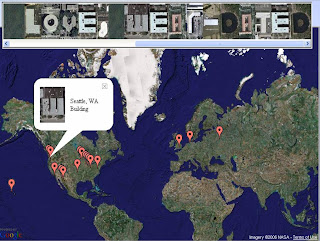
Happy 2007 from Wear-Dated!

Don't you love the web? This really cool idea comes from Experience Curve in a post titled Say It With Buildings. Talk about having the whole world available at your fingertips! Try clicking on the image, and see what happens. Try your own message!
SayitwithbuildingsWith 2007 almost upon us, I thought I would share some observations of trends to be aware of for the new year.

I refer first to "Retail Trends 2006" from G.A. Wright which I learned about from an 8/25/2007 article in NationalJeweler.com where the following statements caught my attention: "retailers in all industries can remain competitive by focusing on 'value-added' strategies, such as loyalty programs that reward customers." It went on to say that price is quickly decreasing in importance for retail purchases. Furthermore, "consumers want experiences, not just purchase transactions. They want memorable events that make them feel appreciated and create a positive emotional experience while getting something of value." Wow!

Some points from the actual report include:
+ "Smaller stores especially stand at the threshold of an ideal opportunity. Because they are best equipped to communicate one-on-one with customers, they can more easily identify their niche opportunities than larger stores."
+ Pay attention to the hispanic population [it is "younger, has larger families, has higher income, and higher education and employment rates than ever before."]
+ "Loyalty is more than rewarding shoppers for the dollars they spend in your store. It is equally about building trust and a relationship... Establishing a lasting relationship between your customers and your store is tricky, but not impossible. It is worth the effort. The benefit: you will create an emotional bond that will result in a long-term relationship."

As it relates to the future, the report makes 21 points. The following strike me as particularly critical and also familiar given recent postings!
+ Know as much as possible about your customers. Which ones are less profitable and why? [i.e., should they be on the naughty or nice list?]
+ Develop strong relationships with the good ones.
+ Is your store easily accessible and safe? Is your store comfortable to shop in? Is it fun? Can you eliminate any customer irritants? Are you kid-friendly?
+ How can you build value through service to your customer? If your products aren't unique, can you make them unique via your services?
+ Provide her with information!
+ Consider the 'social environment' that your store creates. Does it encourage people to come back, to stay, to interact with other customers and your staff?
+ Does your retail environment appeal to all of the senses?
+ Promote your store name. As with the Santa brand, it is the "symbol of your unique selling proposition."

Next, consider the 10 Marketing Trends to Watch in 2007 by By Kim T. Gordon from the 11/24/2006 issue of MSNBC.com's Entrepreneur.com. Of the 10 trends, the most relevant to us include:

+ Affluent working women - they are becoming a larger and more critical group, and best reached online.
+ Asian population growth - it is growing fast and has higher than average household income and education.
+ Word-of-mouth - driven primarily by women, working women, and affluent working women.
+ Simultaneous media usage - we are all multi-tasking! making an integrated marketing approach that much more powerful and necessary.
+ Newspapers - particularly newspaper websites - attract young affluent readers. See Shelly Lazarus on the Future of Advertising and the article Hyper-Local Hero by Chuck Salter.
+ Online research - be honest, how do you do research? Don't you google? Or do you pefer Searching for Meaning the hakia Way? Either way, don't you go online first?
+ Local search - this goes back to the local/global conversation. Be relevant to your local community base.

Tami Anderson's andHow To Reach Women in her post titled Women Figure Strong Into Key Marketing Trends for 2007 builds on Gordon's article.

I hope these readings inspire you for the year ahead of us. On behalf of Flooring The Consumer and everyone at Wear-Dated, I wish you the very best and great success for 2007!

Technorati Tags: , ,

Tuesday, December 26, 2006

Tag.. I'm It!

A game of tag originally uploaded by MobileBurn.
What a month it has been! In addition to being included in the amazing Z-List [see Extending buZZ... which Seth Godin says is NOT a Z-List but rather a list of What to read now/next], I've been 'tagged' in a game of 'blog tag'. It consists of sharing 5 things about yourself that others don't know.... and then 'tagging' 5 others with the same!

I'm in good company, as you can read here:
+ Learned On Women's Andea Learned
+ Customers Are Always' Maria Palma
+ The Marketing Excellence blog's Eric Kintz
+ Church of The Consumer's Jackie Huba
+ The Viral Garden's Mack Collier
+ MarketingProfs:DailyFix's Ann Handley

Thanks go to Derrick Daye from Branding Strategy Insider for sharing this honor with me in his post titled Blog Tag: 5 Things You Don't Know About Me. And, now, here are the five things you may not know about me:

1. I am half Parisian French and half Irish American, and one of few people actually born in Washington, D.C..

2. I have quirky idiosyncracies around color. If you remember, I am mad for color, and not for white or black, and soso on grey! That translates into specifying NO WHITE cars in my rental car profile [and no SUVs, either]. I wear white and black as accent colors only....

3. I started out in college as a math major [wanting to be an engineer] until we hit vectors [the third dimension threw me for a loop] in physics and total abstraction in diffiQ [I loved linear algebra, but differential equations just didn't resonate]. I became an art history major instead. Perfectly logical, right?

4. I have a major American cultural gap in my upbringing: we lived in West Africa from 1971 to 1975 and I missed out on major formative TV programs [can't even name them!]. My TV fare consisted instead of French dubbed versions of The Saint [Le Saint avec Roger Moore], The Avengers [especially with Emma Peel], and French 'romans-feuilleton' [soap operas]. I remember hearing in 1971 before we left that by 1975 video phones would be ubiquitous. Needless to say, I was really bummed to return to this country and find that they were nowhere to be seen.

5. I like bass fishing [when I catch fish], skeet shooting [when I hit the skeet], and pulled-pork BBQ [e.g., Big Bob Gibson]- all of which I 've experienced in Alabama. Not bad for a Yankee!

In turn, I tag:
+ Susan Abbott
+ Stephanie Weaver
+ Reshma Anand
+ Sandy Renshaw
+ Becky Carroll

The whole concept of 'blog tag' reminds me that often the hardest part of developing a relationship with customers is that initial point of connection. So, imagine enabling that connection through a non-virtual version of 'blog tag'... Think of hotels where the concierge and others wear nametags showing both city of origin and name. Don't your eyes gravitate to that information? And, don't you start a conversation with that person relating to that info? Then, don't you remember more about that person [including their name?] than you normally do? I sure do.

So, consider if everyone in your store shared with customers some other 'thing' about them in addition to their name. And, consider changing those bits of information every week. You might be surprised by the quality of the relationships that you develop.

Technorati Tags: , , , , , , ,

Saturday, December 23, 2006

It's Time to Elf Yourself!

This is it. We're down to the wire. If you have everything taken care of, then congratulations! And, if you don't, then forget the worrying and just enjoy all that you have accomplished! Enjoy family, friends and good cheer and focus on getting into the holiday spirit...

In case you need some help, though, I invite you to 'elf yourself' and get dancing. Let me be your inspiration - as you can see here . What do you think? Not bad for a seasonal elf gig, right? [Thanks go to John Winsor for this wonderful idea from his post titled Have a Viral Christmas.]

But, that's really nothing when you consider what the Top Elf - Santa - does to make all of this Christmas stuff happen. Consider this Forbes.com article from 11/29/2006 titled For a Better Brand, Think Like Santa by Mike Matheis. [The slideshow is worth watching, too.] It hits on quite a few universal points that all of us should take to heart....

Take brand loyalty. Positive loyalty towards us, our brand, our store, can only occur if we consistently deliver of the promise we make to our consumers. They have expectations about us. We must - day in and day out - meet their expectations around our retail experience, our brand positioning, our communications, our attitude.... Santa builds "the expectation of an experience through consistent images and behaviors." How consistent are your images and behaviors?

Or human resources! Santa is only as good as his elf labor pool and "pays close attention to human resources practices and policies to retain top talent." He has created a "work environment that fosters a sense of community while engaging employees with training and opportunities to develop professionally." What about your employees? Are they totally engaged in your business and committed to delivering the best possible experience to your customers? If you're not sure, consider this article by Lewis Green on MarketingProfs: DailyFix titled What Really Drives Brand Success.

Customer knowledge. That's a biggy! Both Jack Mitchell [see Ruthless Focus on the Consumer] and Paco Underhill [see Paco Sightings... and Rubber Soled Shoes] preach the criticality of knowing everything there is to know about customers. Have you identified which customers you can consistently delight, and which ones you cannot? How well do you understand your "good" customers' needs and desires? And what are you doing about those not-so-good customers?

Local vs. global. Another Paco area of opportunity. "Some things about Santa are customized to local preferences... But other aspects of Santa are universal." How well do you connect with your local constituents while offering them global products, services and standards?

Passion. To delight, to deliver, to inspire, to exude goodwill and cheer, and to not disappoint! Absolutely!

Happy, Happy Holidays! From this elf here at Flooring The Consumer and from all of us at Wear-Dated, best wishes for this holiday season!

Technorati Tags: , ,

Wednesday, December 20, 2006

Paco Sightings... and Rubber Soled Shoes

Well, not only 'Tis the Season to Cite Paco, but 'tis also the season to share sightings.

I sighted Paco Underhill earlier this year at the Science of Shopping Conference that Envirosell put on. I even shook his hand! Here's what he had to say about the current state of retail:

+ Retail innovation is happening in those places with a young affluent population base [e.g., Moscow, Dublin, Sao Paolo, Mexico City, Shanghai, Mumbai, Seoul...]. It is not happening in the US where our retail culture is overly focused on stock price rather than on what happens on the floor [or 'ground']. We are overly focused on the short term and getting results from opening new doors rather than from same store growth. We are overstored and for the most part reluctant to shed underperforming properties. Mergers [e.g., Kmart/Sears and Federated/Mays] have nothing to do with customers, and muddy the waters around the actual needs of consumers.

+ Design alone is NOT the answer. The fastest growing retail channel today consists of "anti-design" stores [e.g., dollar stores, Aldi, ...].

+ Category management perfects the status quo, and prevents category reinvention. So many aisles are at risk of gravitating to another form of distribution [e.g., the center sections of grocery stores are showing 5% loss per year. Where is it going?] and this isn't being addressed. What about new approaches to distribution? [E.g., What if you purchased a detergent plan when you bought your washer/dryer, and never had to go to a grocery store ever again for detergent?].

+ Consumers are time-poor and not willing to spend more time to accommodate larger formats. Interestingly, consumers routinely over inflate by 50% their reported time in-store vs. their actual time! Their perception of time spent is greater than reality and the ease of getting in/out matters to the overall retail experience.

+ As the 'first world', we face the following retail challenge: shopping cart use is declining as shopping missions change; for mass stores, 10-15% of customers are walking out with nothing; deep discounting is on the rise; and too often, the seminal object on the shopping list is NOT there, and consumers wind up making a decision to take EVERYTHING on the list elsewhere.

+ Failing Gender model: we live in a world owned/designed by men and expect women to participate in it. We must make our stores more woman friendly!

+ The service model is changing from one that has been nose to nose [i.e., across a counter] to hip to hip [i.e., next to one another] . This is the Sephora model [Starwood has implemented this, as well as some banks [e.g., WaMu].

+ Technology in-store: make sure it is bullet proof! The only 2 winners to date have been ATM machines and self check-in at airports. Technology that doesn't work in-store is worse than no technology at all.

+ Our relationship to consumption has changed: our symbols of success are in transition. It's no longer about gold, silver and stones which over history represented transportable wealth, particularly in times of war. What is indulgence and what is necessity?

+ It's vital to re-think the labor model, market by market. We live in a shrinking world and need to balance global vs. local identities. Shopping has strong social ramifications: people matter to the overall retail experience and if you and your staff have fun, customers probably will, too!

+ A fundamental shift is taking place with landlords becoming place makers. It's not longer just about real estate and collecting money, but also about programming good public spaces, etc., to encourage people to visit the space and interact in it and with it.

Given all of this, we must recognize that the realities of the setting [e.g., where is the real entrance? where does the experience start?] drive strategy. Amenability and profitability are inextricably linked, and operations, product, design and marketing must work together. That will drive successful innovation at the point of sale. Be sure to wear rubber soled shoes. That way you can think standing up and have a strong connection to the floor [or ground] to understand what is really happening.

Some other thoughts:
+ Windows are powerful: they both attract and repel! [e.g., Victoria's Secret] Make sure your windows create the effect you desire.
+ Aisles: respect body bubbles. Leave sufficient space.
+ Use language appropriate to customers rather than industry jargon.
+ For end caps and displays: sightlines and access are critical to success.
+ Our visual language is evolving faster than both written and spoken words. How we communicate messages is critical. We also need to understand how eyes work and age.

Paco showed us many examples of retail innovation from around the world, including Zara [see What Makes A Destination?]. Four of his other examples -- Roppongi Hills/Tokyo [which sounds a lot like a lifestyle center [see An Architect's View of Better Lifestyle Centers], Sao Paolo's Higienopolis, Three Minute Happiness/Tokyo, and Ibn Battuta/Dubai -- you can read more about in Susan Abbott's sighting of Paco Underhill during the Qualitative Research Conference: Toronto - October 2006.

One last reference from the 6/23/2006 issue of AIArchitect: an article by Russell Boniface titled I Spy A Shopper!. Not only does it feature numerous Paco pictures, but it also recaptures many of the points made in these last two Paco postings - including rubber soled shoes!

Paco refers to shoes to encourage us all to spend time observing firsthand what our consumers do and what they go through when interacting with our retail experiences. After all, how else than by Walking In Her Shoes can we ever create an environment that is more friendly to women?

Technorati Tags: , ,

Monday, December 18, 2006

'Tis The Season....To Cite Paco

Image courtesy of Envirosell.I am a Paco groupie - and proud of it! What about you?

Paco Underhill is responsible for bringing anthropology and retail together. His first book - Why We Buy [see Recommended Reading on Flooring The Consumer sidebar] - is amazing in its observations, practicality and insight. It changed my world, and my appreciation for the retail experience. [Many thanks to Peter Smallman and Doug Ehrlich from Image Zone for setting me on the Paco path!] I reread it regularly, and preach its lessons at every opportunity!

Paco is fascinating to read, projecting strong passion for the people whom he observes and what they go through as they maneuver the retail world. He wants their retail experience improved. He is amongst the first to notice signs of changing consumer habits, and, most important, his observations withstand the test of time....

Consider this 10/1999 Fast Company article titled How We Sell by Keith H. Hammonds. It gives you a flavor for how Paco's company Envirosell operates [i.e., with googles of video tapes of consumers in action!], and a firsthand feel for the "incredibly valuable facts... [that] are also significant observations about business, work, and the act of finding -- or being -- a customer."
Some extracts:
+ "Increasingly, in our time-pressured culture, retailers are recognizing the importance of purchase decisions that are made or that are heavily influenced at the point of sale."
+ "...Consumers are eminently more cynical ... more experienced. Our tempers are shorter, and our patience is thinner. As consumers, we are becoming aware of our power -- the power to pick up our toys and go home, or to go to somewhere else to play."
+ "There's still something called "retail magic," where someone is able to put something out there in a way that makes us fall in love with it and have to have it."
+ Retailers can do a better job addressing the needs of several "ignored groups": seniors, women and ethnic groups. "Often, marketers have no real sense of the ground. Where is my store?.... who's coming into [my] territory."
+ "There are a number of ... small ideas that are fundamentally clever, that cut through the clutter, and that work." [e.g., chairs -- see below]
+ In terms of the web: "it can play an important role by forming a bond between the cyberworld and the physical world so that they support each other."

Paco's Principles for Retailers encourage getting shoppers to spend more time inside a store shopping [i.e., the longer they stay, the more likely they are to buy!]; not providing too much information to shoppers within the 'transition zone' [i.e., your entry foyer], rather letting them decompress and get the lay of the land; remembering that shoppers have Two Hands, and need to use them to interact with your goods. Did you know that mirrors slow people down [and banks hurry them along]? Men like to get in/out of stores expeditiously, so help them do so! And, "by 2025, nearly one-fifth of the American people will be 65 or older." Have you considered how to meet the needs of these wealthy consumers? [Start with good contrast on your signage and make sure the font isn't too tiny!].

CBC marketplace shares this 11/7/2000 article titled Paco Underhill: Shopping Scientist summarizing comments Paco made while speaking with the Retail Association of British Columbia: "the retail industry is undergoing a fundamental shift - it's all about the consumer.... Retailers have to cater to the behaviours of the consumer in order to increase their chances of selling successfully."

"Underhill's research has shown that 70 percent of shoppers are women. It has also shown that retailers don't always make their shopping experience rewarding.... A store can do something as simple as providing a chair in a convenient location.... "A chair is not an amenity," Underhill observes. "It's a marketing tool." And, don't forget about kids! "The important role for the store is turning kids into allies." His "biggest complaint about the shopping experience, is the lack of it, in some stores." And, finally, be sure to respect the consumer!

The article includes Shopping Facts about shopping surveillance findings, what shoppers love and what they hate.

Entrepreneur's 12/2001 article titled Attention Shoppers! Paco Underhill knows what they look at, what they buy and why.... explains that "converting browsers into spenders greatly depends on store design and displays, because 60 to 70 percent of purchases are unplanned." Pay special attention to sightlines as they affect how successful a retailer is in drawing a consumer in.

My favorite: "A store window needs to communicate beyond the people immediately in front of it. Windows should have one message, not 15. They need to change no less than every two weeks to get people coming back. People should look forward to window displays as a place to have fun. MTV has shown us the importance of focusing on icons rather than words, using visual puns and symbols of having a good time."

Paco refers to the "butt-brush" factor and the importance of avoiding narrow aisles if a retailer wants to appeal to women consumers. Some other factors to consider: good lighting, strategically placed chairs [and reading material], and not forcing consumers to bend over or get on the floor to interact with product [I have had to sit on the floor, even while pregnant, just to examine merchandise -including carpet samples- and I really resented having no other option. ]

Don't forget about extending your merchandising into the register area. Can you create an opportunity for an add-on sale or a reason to extend the relationship beyond this one transaction? According to Paco "everything should be for sale in the store... even if they don't buy, you want them to walk out with a better sense of what your store offers..."

Finally, "if it isn't fun, people aren't going to come back."

Eric Mattson at MarketingBlurb posted Paco Underhill Chimes In On Branding which pointed me to Liz Danzico from Boxes and Arrows. She shares this 11/28/2006 interview with Paco Underhill titled From Data to Wisdom.

He refers to these fascinating consumer changes afoot:
+ "our visual language is evolving faster than our written and spoken word." In other words, we respond faster to symbols than we do to spoken or written words. Compounding this is the disconnect between the average age of consumers [above 40] and of those designing communications [under 30].
+ "we live in a world that even in 2006 is owned by men, designed by men, managed by men, and that we expect women to participate in." In other words, for the majority of retailers, it's critical to consider how female-friendly your store experience is, and if it isn't how can you fix things?
+ "the perception of ease is as important as the reality of ease" given how time-stressed most consumers are. Although Paco give an online example of this, it is just as relevant in-store: is your store as inviting and exciting to a new customer as it is to a repeat customer?

The challenge for retailers today is figuring out how to differentiate themselves to the consumer, how to make products relevant to each individual who comes through the doors, and reaching interested customers more efficiently than ever before.

I was particularly excited to hear that Paco is currently working on a book about "how the changing aspect of women is affecting the design community." I bet that will be an interesting read!

Experience Paco for yourselves via any of these 3 recent video clips of Paco Underhill where he encourages retailers to treat shoppers well and build a relationship with them. Also, recognize that a neophyte will have different needs vs. an expert shopper and that a successful store needs to recognize and accommodate both. Paco makes specific points relating to the Gap and Best Buy in these clips, and generally shares his fascination with retail as a dipstick for changes in our culture.

The 12/4/2006 Los Angeles Times features a really fun article titled Hunter-gatherer, bargain shopper by Janet Cromley which draws strong parallels between modern day bargain shopping and prehistoric hunting and gathering.... Remember that times are a changing and roles may be shifting! "It used to be that we celebrated what we purchased," says Paco Underhill... "Now it's a celebration of what we paid for it ... [and] how little they spent." "The prey is a sale item." And, 'extreme shopping' is an opportunity to bond.

[The other person referenced is Raymond Burke, business professor at Indiana University, whose 10 Principles of Retail Shoppability I often refer to in presentations.]

If Paco were observing your store, what would he notice? Do you have chairs in-store? How woman-friendly are you? What about the kids? How fun a retail experience have you created? When was the last time you updated your windows? The answers will determine how successful a carpet/flooring business you have and will have for years to come!

Technorati Tags: , , ,
Related Posts Plugin for WordPress, Blogger...