Flooring The Consumer on Simple Marketing Now

Please visit Flooring The Consumer's new home on SimpleMarketingNow.com where you can subscribe to receive updates to blog articles in real time!

Monday, June 08, 2009

Digital and the Retail Experience

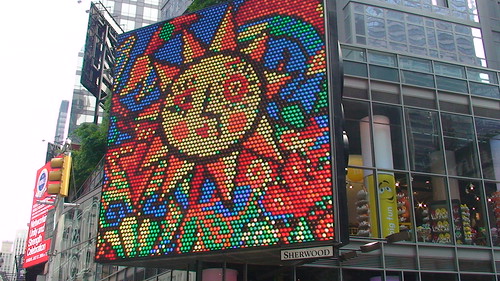
Times Square (NY City) digital signage originally uploaded by POPAItaly.
Have you considered how digital technology and signage might affect, even radically improve, your retail experience?

I recently became re-acquainted with Andy Edelman from Trimco, a New York based visual merchandising display company whose organization has enhanced the in-store experiences of many major retailers - e.g., Ann Taylor, Bloomingdale's, Harley-Davidson, Disney, JC Penney, Victoria's Secret, Macy's, etc.... - around the country. Andy and I had both been invited to sit in on Brand Experience Lab's David Polinchock's FIT class final presentation and listen to, react to and evaluate the students' retail makeover recommendations.

Andy and I got to talking -- how often do you get to interact with someone who has single-handedly 'touched' in some way just about every noteworthy retail experience? -- about retail displays and the role they play: to capture the attention of a public that expects retail to be an experience, yet has less time and wants to get in and out of stores rapidly.

Digital, you see, can radically improve a retail experience by educating, entertaining and creating a consistent and up-to-date visual environment. Digital can do that despite inconsistent in-store sales assistance.

Take mannequins. It takes a great deal of manual effort to change them and re-dress them [!] to reflect new seasonal items. Consequently, they don't change frequently. Digital mannequins, on the other hand, can be updated at the push of a button to coincide with different day parts or different shopper patterns.

Here's a frightening bit of information: only 60% of point-of-purchase materials actually ever get set up in-store. Talk about waste! Digital guarantees that updates take place.

[By the way, I can attest to the truth of that statistic. If we ever had in-store promotions planned to coincide with the launch of new Wear-Dated display programs, we had to send our Wear-Dated Representatives out ready to go into warehouses, dig out cartons, extract the display parts, get them set up and the product samples properly organized within the displays. Otherwise, the displays and associated products never saw the light of a retail store - or the inside of a consumer's home.]

To illustrate what's possible, Andy shared with me this video link to an interactive retail window. It's new technology, definitely cool and fun and brings to life how digital displays can enhance the retail experience, engaging consumers and inviting them to interact with displays at a higher level of involvement than traditional displays do.

What do you think? Pretty cool, no?

Contrast that with WSL Strategic Retail's visual virtual tour of Target's new Beauty Department concept being tested in several stores in and around Wheaton, IL. Note the oversized, visually captivating and attention getting photos and graphics. I don't see much digital technology involved here... although the visuals create an eye-catching effect. [Imagine, though, bringing in-store via digital technology the online DailyCandy experience - see Target Offers Taste of DailyCandy - to enhance the strong visual presence.]

Questions for your consideration:

How would you apply this kind of technology to your retail environment? What if a consumer could design a room on-screen or on a store window? How would you use it to enhance the value of the products and services that you offer? How might you completely redefine, re-imagine and re-value the flooring retail experience - or any other - as a result?


Technorati Tags: Del.icio.us Tags:

Friday, June 05, 2009

LMNOP: An A&D Networking Community

Back in my Wear-Dated, Ultron and Carpetology days [to think it's only been 2.5 months since those days!], I came into contact with A&D or Architecture and Design professionals. After all, Solutia [now Ascend Performance Materials] was actively engaged with that segment via the Ultron carpet fiber brand, the yearly Doc Award Competition, a permanent showroom at NeoCon and other programs. So, when I learned from a former NYC-based Ultron representative about LMNOP - Leadership, Mentoring, Networking & Opportunity for A&D Professionals and a new organization specifically for the A&D community, I was intrigued.

In A&D Professionals Form Networking Society in Interior Design magazine, you can learn more about the organization, its efforts to prevent a 'talent gap' in the architecture and design industry, and the events being offered.

The press release announcing the organization's formation is available at Contract Magazine in "Disaster Relief: Leadership, Mentoring, Networking & Opportunity for A&D Professionals (LMNOP) is Born." From that release:

"LMNOP is composed of several different factions; Jennifer Graham heads the "Leadership Group" with co-founder Stephanie Chiuminatto who is charged with setting the vision and agenda for all group events. The core unit and reason for the group's establishment is the "Opportunity Group," made up of unemployed architects and designers ranging in experience from 2 years to 20 plus years. Employed professionals are "Networkers" who can assist other members in connecting with possible employment opportunities and provide support and encouragement as well as notify members of industry events. All members can participate in the "Mentoring Group," professionals that donate their professional expertise to the group either individually or in a workshop setting.

Workshops are regularly held for Opportunity members and include topics such as "The Job Search Checklist" and "Your Personal Professional Brand." Topics are chosen based on the timeliness of the subject. Accessibility to similar workshops in professional development and leadership training may only occur in a handful of the largest architecture and design firms, and similar business workshops are not specifically tailored to the A+D community. All workshops are held as small round-table discussions at various showrooms around New York City. Because of the intimate and interactive nature of the workshops, the Opportunity Group is kept small; new members are referred in by existing members. Networking events are open to all LMNOP members and often double as fundraisers in the group's overall objective to develop into a fully-realized non-profit organization."

I really like the notion of employed networkers and unemployed opportunity group members interacting. Imagine the knowledge exchange and learning opportunities possible for both groups!

I reached out to co-founder Stephanie Chiuminatto, Associate IIDA, LEED AP. She explained to me that membership has been coming primarily through word of mouth. Leadership members are actively networking, and oftentimes people approach members at events asking how they can get involved.

She expects the LMNOP website to be up and running in the next month or so.

In the meantime, if you have questions or know of NYC architect and designers - employed or not - wanting to get involved, please contact Stephanie directly at schiuminatto [at] gmail [dot] come.

On a related note, I learned that The Mohawk Group has established Re:work program. Per FloorDaily.com "Mohawk's Re:work seminar series designed to provide unemployed designers and architects help in securing future employment. In this 10 city tour, Mohawk, the IIDA and Interior Design Magazine have teamed up to provide A&D professionals with outplacement assistance that includes portfolio evaluation, financial planning, resume writing assistance and job opportunity networking services."

You can learn more from an 8 minute interview with Al Kabus, president of The Mohawk Group, who discusses The Mohawk Group's Re:work Program with Kemp Harr from FloorDaily.

Given these terrific programs and organizations, have you considered how you might support networking in your community? Could you host events in-store? What about sharing meeting space or even offering your own expertise? I bet you will be pleasantly surprised at what develops.

I've been sharing my expertise in networking groups and am astounded at what I'm learning.

Technorati Tags: Del.icio.us Tags:

Wednesday, June 03, 2009

Valeria Maltoni on Bridging New & Old - Social Media Series

This week's guest for Flooring The Consumer's Social Media Series: Bridging New & Old is Valeria Maltoni.

Valeria Maltoni - aka Conversation Agent - redefines conversation and community by connecting ideas and people. She carries those conversations over to a multitude of venues, both online and offline, further nurturing and developing them. Read her biography and you'll understand. Better yet, read her blog, Conversation Agent, learn What does Conversation Agent do? and you'll realize what an amazing Renaissance woman she is.

"How do You Say "Just Do It" in Marketing 2.0?" represents Valeria's chapter in The Age of Conversation 2 - Why Don't They Get It? - the book that 237 authors from around the world collaborated on to benefit Variety, the children's charity. [Per a previous post, The Age of Conversation 2 - Why Don't They Get It? is now available on Amazon for purchase.] The advice she shares in her chapter captures the essence of bridging new and old: "The one thing you can definitely control is how you relate to your customers and what actions you take to respond to their needs. That is Marketing 2.0."

Valeria brings an unique perspective to conversation -- not just because of her bi-cultural experiences -- but also because she is both corporate marketer and active in Marketing 2.0, epitomizing what bridging new & old is about.

C.B.: Valeria, how and why did you get involved in social media?

Valeria: I didn't really or specifically think bout the media part, to me it was about getting social and online was a way to do that. At the time I was working in Northern New Jersey and had this long commute to and from where I would have plenty of time to think about organizing my day's activities. Since I was driving the 80 or so miles each way, I would also listen to fiction books on tape. Remember this was almost 10 years ago.

I'd discovered Fast Company magazine through my managing director who then became CEO and is still my mentor. When it comes to learning I'm a sponge, and having so much actionable information was ideal to me. FC was also the first publication I read that really believed in the power of helping people make connections with each other. It was probably the work of a team, but Heath Row became the living proof that it could be done and the main contact for the community.

I got involved because to me learning is about putting skin in the game and growing up in a culture that values and encourages (at least at that time) conversation and the free exchange of ideas (have you ever talked to an Italian?) that was a natural step. Fast Company was new media in beta since 1995.

The rest, so to speak, is history. The social network I helped develop and then curate in Philadelphia grew to 500 people and 98 free events. Roundtables with idea people on technology and innovation, networking boot camps, conversations with authors like Ben McConnell, Dan Pink, Bill Taylor and Polly LaBarre, in depth visits with CEOs like Pernille Lopez of IKEA or Glenn Senk of Anthropologie kept things interesting. We partnered with local business schools - Villanova, The Fox School of Business at Temple U., LeBow College of Business at Drexel U., and even Wharton.

That's how I also developed an understanding of digital group dynamics, and learned about facilitating discussions with an online community. Starting my blog was a natural outcome of all of these activities. I wanted to share more information and content, and I love writing while I learn. The blog also allowed me to distribute what I know more widely so that more people can (hopefully) find what they are looking for - a connection to someone else, or to an idea that helps them execute on theirs.

C.B.: What do you like most about social media?

Valeria: In many ways social media has made it easier for us to be social, to share, learn, find information, communicate with each other, connect, etc. without boundaries. The freedom it gives us, which comes with some fundamental responsibilities, is liberating (no pun intended).

As a native Italian, relationships are very important to me - and they are for life. I'd also like to stress that it's not about the tools. I can give you lots of tips about how to use Twitter or LinkedIn but I cannot teach you how to bring the best out of people, or how to change your attitude if you want to or feel the need to adjust it. Those are decisions and choices you need to make.

That is also part of the beauty of the social Web. It brings out the potential of human kind and often the best way online is the best way offline - leading brands just lead.

C.B.: What do you like least about social media?

Valeria: Well, these are permanent digital records, and sometimes people forget that there are consequences to their actions. In the same way as positive gestures are amplified, so are negative ones. Peer pressure, or general dissatisfaction can manifest themselves in unpleasant ways online.

Lack of critical thinking, or not allowing fair discussion bother me. Then again, it's not my place to try and change others, all I can do is improve my own attitude and behavior.

C.B.: How has social media changed how you interact with the marketplace as a consumer or customer?

Valeria: I've become more frugal, actually. Maybe I'm going back to my roots. In Europe we have so much less of everything, or maybe it's that way in my family. And we don't resent it, we feel we have enough. I've always sought connections with people and with ideas and having more of those thanks to the social Web has made me realize I already have all I need.

As a marketer, I pay attention to how people like to receive information, when they seek to be educated or entertained, where they see value, which is not necessarily where the company projects it. I was always the odd duck in school and in corporate America - the one asking more whys than teachers and teams were willing or able to respond to. It's natural curiosity and I bring that to my job. So I question the official role and let relationships and what I learn in conversations with customers guide me on better approaches.

Then again, I was not trained as a traditional marketer. I come to the profession from communications, linguistics to be exact. The Liberal Arts education I received is worth gold today. Think about it - sociology, history of language and communications, philosophy, even anthropology and ethnographics and psychology all teach us about people, us.

Those companies that get my business long term are available to interaction. Period. You may not tweet or blog, like Apple, but if your product rocks and your customer support is superb I don't care. I think many companies are confusing the tools with the business they're in. If your business is to provide a product or service, then that is your starting point for interaction with customers. Social media is the cherry on the top, it's not going to make a product or service that is lacking better.

C.B.: What 5 suggestions do you have for companies to implement so they can more effectively bridge old media with new media and connect with end users?

Valeria: I should have held my advice for this question.

1. Start with your product or service - what do you need to do to make it a valuable use of your customers' budgets and time? If you feel you need to improve it, but do not know where to begin or what, do open up the communication lines with your customers. This is the same deal as the employee suggestion box, it cannot be just lip service, you'll need to walk the talk.

The main difference between old media and new media is the filter - with new media you have none. That can be really good, or really bad for you. You decide.

2. Integrate CRM with social to build long term relationships - the fundamental shift between your CRM system and the social Web to build relationships is that CRM is really a process where you capture and manage customer information. The social Web allows you to act publicly on that information to benefit your customers as well and not just you. Big shift in thinking.

If you want to connect with end users, begin by not seeing them as something you can use and broaden that definition to include how they can use your content to become smarter, do their job better, look good with their boss, etc.

3. Educate your company on new media - don't take for granted that just because everyone's on Facebook they know how to put these tools to good use for business. Set up training classes for your authors and content owners to help them see the possibilities. We're doing that in my organization as part of the media training program we offer. We share information on how we talk about what we do, our stories, what we've published in traditional media, what resonates with our audience (their readers). That kind of intelligence allows subject matter experts to build on existing conversations.

Teach people how to write for the Web and you'll be able to publish more content that is of value to your customer community. It's the old adage of teaching people how to fish. All those who are in customer-facing jobs should be empowered to assist customers wherever they choose to communicate with you.

4. Listen, test, adjust frequently - don't wait until you have the perfect answer. Start testing small initiatives by integrating them to existing programs and keeping them modest. What you want to do is set up realistic objectives, communicate them to your team, and measure against them. Keep listening for changes in behavior and adjust your tactics or strategies accordingly.

This may feel a bit squeamish for those who are classically trained in marketing. They tend to have very specific ideas of what needs to be done. Yes, gone are the days of perfect mass marketing campaigns. Today it's more about micro interactions - personal, relevant, and meaningful exchanges of value. You capture someone's attention when you stop thinking of them as eyeballs and start thinking in terms of exchange.

5. Know where your customers are and why they're there - you may think that having an ad on Facebook is a good idea, after all many of your customers are there. Before you go ahead and find a new way for them to ignore you or piss them off, do take the time to find out why they're there, what they do. Many of the customers I talked with say they signed up to share photos with their grandchildren and find old college room mates. That is a very personal reason and although personal and professional are bleeding into each other more and more, they are in the driver seat here, they decide.

Digital and online media by its very nature feels more personal. People have come to expect interaction and exchange. Instead of ignoring you, like they did off line when you interrupted them last, they may tell you what they think about your ad and they may tell all their friends, too.

C.B.: Any other thoughts to share about the effectiveness of social media in forging stronger relations with customers and how best to do so.

Valeria: Make things easier for your customers. Give them more ways to reach a human being at your company. Especially now that things are tight, whether you're in B2B or B2C, be responsive, get the whole organization on the same page on delivering superb customer experiences, wherever your customers decide they want to talk with you.

Social media is the modern version of the telephone. You've still got to deliver on your promises.

Thank you, Valeria!

Comments, questions, reactions?

I love Valeria's recommendations for educating your company on new media. Are you doing anything along those lines? How is your company using the information to improve the customer experience you offer?

For additional insights from participants in the Social Media Series: Bridging New & Old, please visit The Entire Bridging New & Old Series.

Technorati Tags: Del.icio.us Tags:

Monday, June 01, 2009

Retail Innovation and Urban Outfitters

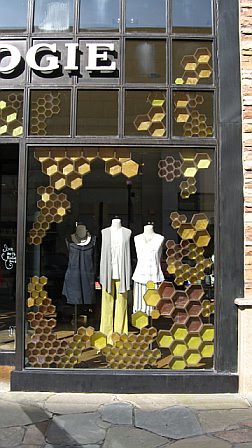
[Anthropologie] Salt Lake City Utah store window for bees
originally uploaded by Anthro_Creative.
When you think 'retail innovation,' what comes to mind? I immediately think of Urban Outfitters. I routinely refer to them in presentations about the retail experience and strongly encourage retailers to spend time visiting any of their stores - Urban Outfitters, Anthropologie, Free People, Leifsdottir, Terrain... - for inspiration.

Inspiration of all sorts. In terms of how to create a retail experience within a store, how to be truly customer-centric, and how to celebrate events both locally and nationally.

Take Anthropologie and Earth Day and marvelous displays calling attention to honey bees across Anthropologie stores around the country. In San Jose, CA, in Boise, ID, Rockefeller Center, NY, Salt Lake City, UT, Georgetown, DC, San Francisco, CA, ...

[Note: Imagine having a store concept so engaging that photos of your windows get posted and viewed online.]

You see, as is typical of Anthropologie and Urban Outfitters stores, no two stores or store windows look the same, nor are they laid out the same. And, yet, the commonality of theme in a variety of interpretations only strengthens the message, drawing visitors into stores.

This WSJ.com article titled "Urban Outfitters Fashions Growth Plan" by Jennifer Saranow from 8/27/2008 highlights what differentiates Urban Outfitters from a plethora of mostly colorless retailers.

Per the article "... employees create their own displays."

Urban Outfitters' CEO, Glen Senk, intends to "cap growth for each division at approximately 250 stores... rather than saturate the market with cookie-cutter stores." Additional expansion would result from new retail concepts instead.

Concepts like We The Free as described in DDI Magazine's "Urban Outfitters launches We The Free" from February 2009, or Terrain [see August 2008 DDI Magazine's "Retail offshoots abound despite tough economic environment"] the goal of which is to "transform the local garden center into an experience that celebrates the beauty and abundance of nature while offering an eclectic mix of garden-inspired products tailored for the contemporary consumer." [Note: digital copies of articles no longer available. Check out PSFK's Store Visit: Return To Terrain from 3/26/2009].

[Another PSFK article - Urban Outfitters gives artists a window for a message - further describes the company's commitment to creativity and community.]

This Fast Company interview with Melinda Davis and Glen Senk: Do You Offer Your Customers What They Really Want? further puts Urban Outfitters into perspective. Senk considers his organization 'customer experts' rather than 'category experts.' What a major difference. He refers to his stores as offering a sensorial experience and telling a story. His stores are like a community where people come to connect.

Customer experts.

Stores are places where people come to connect.

Wow! I consider that not only inspiring, but really unusual. Imagine if flooring stores became customer experts rather than flooring experts. If people came to connect in these flooring customer stores, how would that look?

------------------------
For additional perspective on CEO Glen Senk, read Vignette on Urban Outfitters' CEO Glen Senk from Effortless Anthropologie; 1stdibs Introspective - Style Compass on Glen Senk and Keith Johnson; and from Conversation Agent Valeria Maltoni, No Advertising... and Thriving, Retail Style.

For historic perspective on Urban Outfitters, read Forbes' Urban Cowboy by Heidi Brown from 11.01.04; it refers to Glen Senk's appointment as CEO. Finally, Metropolis Magazine published "A Stitch in Time" in the May 2007 issue describing the company's new headquarters in Philadelphia's decommissioned navy yard.

Technorati Tags: Del.icio.us Tags:

Sunday, May 31, 2009

A Simple Marketing Now Update - May 2009

Have you had a chance to explore my other blog, Simple Marketing Blog? It's the blog and newsroom for Simple Marketing Now and it's where I explore marketing strategy and creative, practical, even simple marketing approaches -- often with social media.

Would you consider subscribing to it, too?

Here's a snapshot of what I wrote about during the month of May 2009.

Given that the site is also my company Newsroom, I posted my latest Press Release: Whittemore Re-Appointed to SURFACES '10 Education Advisory Council.

That release generated an email from my friend and former Solutia boss and colleague, Gary Petersen. His comments led to What About The Consumer of the Future? Do read it and let me know -- what are your thoughts about consumers of the future?

The news release refers to an upcoming marketing strategy workshop taking place at Surfaces 2010 that Paul Friederichsen - BrandBiz Inc., Scott Perron - Big Bob's of America, and I will present. I guarantee that this will be a memorable session. We've already started working on it as you can read from Connecting With Retail Consumers - Marketing Strategy Series. In fact, I'll be documenting our entire planning process. You don't want to miss any of it, right? Plus, I might need your help...

Simplicity In Communication focuses on the core questions that effective communications must focus on. Do other questions come to mind?

I'm fascinated with the ideas in Marketing Effectively During An Information Revolution. Imagine that we are marketing in the equivalent of the 1500s when the Gutenberg press made its appearance. It kind of puts things into perspective, doesn't it?

The Humble News or Press Release discusses what I appreciate about press releases: they are vehicles for content creation. What's exciting, though, is to encounter a company that no only believes in press releases, but has developed a creation solution for enhancing that content. Read Press Releases, Newsletters and OtterBox.

Don't miss the wisdom in Links of Note: Practical Marketing Lessons. You Can No Longer Ignore Social Media offers additional perspective on how to make sense of social media for your business. For practical perspective, read How Marketers Grow Their Business With Social Media; it's based on an industry research report.

Thanks for reading and subscribing - you will consider subscribing, right?


Technorati Tags: Del.icio.us Tags:

Friday, May 29, 2009

BitBriefs For Bits of Fascinating Research Data

I love research data. And, when Joshua Dreller, director, media technology & analytics at Fuor Digital LLC contacted me asking if he could submit research data for Flooring The Consumer, I felt strong interest.

But, I had questions.

Josh's note explained that his agency 'clips' great stats and charts on the marketing industry that might be useful research or supporting data for blogposts.

Very interesting. But, how does it work? I checked out the site he referred me to - BitBriefs - and wondered how best to use the site.

By the way, the site bills itself a "clog" or 'clipping log' made possible by Amplify [i.e., web clips for Twitter] , "a new service from the company that created Clipmarks [this from the Amplify About page] to share not just links, but the exact parts of web pages that matter most and the conversation that surrounds each of them".

Josh responded as follows to my questions.

How does BitBriefs work?

Josh: Well, BitBriefs started as an internal “knowledge base” tool for our agency. Each of us “clips” interesting stats/graphs/charts/etc from sources we want to share with each other. We try to clip as little as possible to keep them brief (thus, “BitBriefs”) and to not blatantly “scrape” content from other sites. Over time, we started telling our partners and clients about it and started getting some solid SEO traffic. We figured bloggers like you would be interested in finding supporting data for their posts, reporting on interesting stats, or even browsing through for story starter ideas.

What's the best way to use BitBriefs?

Josh: I think the best way to use us is to subscribe to our Twitter feed as you’ll get the headlines and can dig deeper if interested.

In addition to following BitBriefs on Twitter @bitbriefs, you can also enter search terms.

For example, enter the search term "women" and you'll discover [majority of results will appear on left sidebar]:

+ Older Female Demographic Dropping on Facebook

+ 20% of Online Population are ‘Power Moms’

+ US Affluent Internet Users by Gender, Age, Region

+ Women over 55 on Facebook Grows by 175.3% in 5 Months

+ Demographics of Americans With Social Networking Profile

You can click the “Older” link at the bottom and delve even deeper.

What's the value of BitBriefs?

Josh: BitBriefs is a simple way to stay abreast of the industry. There’s so much content out there it can be tough for marketers to read everything. The value of BitBriefs is you can read 5-10 posts in a few minutes and dig deeper to the source material/case studies if it has a direct interest to you. We try to make sure to get “coverage” on all major studies so our users don’t miss anything important.

I'm definitely intrigued! What about you? Have you tried BitBriefs? How do you integrate this data stream with Twitter? How do you use these fascinating bits of research data in what you do?

Thanks, Josh!

Technorati Tags: Del.icio.us Tags:

Wednesday, May 27, 2009

Doug Meacham on Bridging New & Old - Social Media Series

This week's guest for Flooring The Consumer's Social Media Series: Bridging New & Old is Doug Meacham.

Doug Meacham has a passion for the customer experience, innovation, brand engagement and social media. That's what his blog - NextUp - is about, and it's something he has considerable experience in given his current role as Multi-Channel Retail Consultant for IBM and a rich history with Circuit City Stores.

I love how practical and relevant Doug's advice is. Take the retail experience wisdom he shares in The Flooring Display Challenge - Part I. Or his post, Your Blog is a Cabin in the Woods which gives you a feel for how best to use social media to create a worthy customer experience and bridge the old with the new.

Doug contributed "The Digital Playground" to The Age of Conversation 2 - Why Don't They Get It? - the book that 237 authors from around the world collaborated on to benefit Variety, the children's charity. [Per a previous post, The Age of Conversation 2 - Why Don't They Get It? is now available on Amazon. Would you consider purchasing it, if you haven't already?] His chapter explores how social interaction on the web comes naturally to millennials...

For those of you in the Richmond, VA area, I have wonderful news for you! Doug has been busy since February launching a local Social Media Club chapter for Richmond, VA. The group is on http://twitter.com/SMCRVA and Facebook with a website coming as soon as socialmediaclub.org rolls out its new web platform.

As Doug explains "the first event took place last month. It was more of a mixer to introduce the local chapter to the attendees and to provide information about what we were planning to do with the club over the coming months. Around 140 people attended. The next event takes place on June 9 and will feature a panel of local journalists from a variety of media channels to discuss the impact of social media on the news business. It sold out (150 seats) in 6 hours! Lots of demand for social media guidance in Richmond!"

C.B.: Doug, how/why did you get involved in social media?

Doug: I first got involved while at Circuit City in 2006. I was working on developing a strategy for getting the organization more engaged in idea creation. I saw social media tools as a great way to engage 36,000 employees across a highly distributed organization. The tools were primarily used for insight sharing and idea generation.

This was a bit of a skunkworks project. Initially sanctioned as part of a larger innovation team effort to try to make the organization more adaptive, I proposed a series of "Insight Sharing" initiatives, all of which involved some sort of social media or collaboration tool. The innovation was subsequently shut down, but I went ahead with building in internal blogging platform using Wordpress and recruiting people across the organization to participate. It was strictly a word of mouth thing flying under the radar to avoid pushback from management. The idea was to generate interest and create value before showing it to decision makers. Unfortunately, my position was eliminated before we could reach that level.

C.B.: What do you like most about social media?

Doug: From a personal standpoint, social media has allowed me to tap into a network of amazing people. I learn from them every day and often apply those those insights in my day to day work. From a business standpoint, I am a bit obsessed with great customer experiences. Social media, when used in the right way, gives organizations powerful tools to engage with and get feedback from both customers and internal associates.

C.B.: What do you like least about social media?

Doug: Unlike traditional media that tends to be controlled and managed, social media is in the hands of people. As more people are getting involved, the volume of content being produced keeps growing making it increasingly difficult to find the really valuable content in the noise. I am also a big fan of Twitter. As its popularity has increased, so have the spammers.

C.B.: How has social media changed how you interact with the marketplace as a consumer or customer?

Doug: I often look to Twitter first to get product recommendations or to discuss an issue directly with a representative of the business. I don't usually read company blogs. I haven't found any companies that offer content which is compelling enough to get me to add them to my read list. For many retailers, the company blog looks a lot like a promotional email telling me about products and services that they offer.

C.B.: What 5 suggestions do you have for companies to implement so they can more effectively bridge old media with new media and connect with end users?

Doug:
1. Whether you have started using social media or not, the first thing companies must do is determine what social media channel (if any) is going to help them connect with their customers. A denture adhesive doesn't need to establish a presence on Facebook, at least not yet. Go where your customers are.

2. Listen

3. Listen some more. What do you hear. Are people talking about your brand? If not, then why? If they are, then what are they saying? Do they love you? Do they hate you? Are they helping you to increase your customer base or lose it? There is a lot of value in those conversations. Use it to your advantage.

4. Offer something of value. Companies often make the mistake of treating social media like another advertising channel. Remember, these are places where your customers spend time with friends. Imagine if it was a physical place. Would you go in shouting your latest offer? Would you plaster your ads all over their walls? I don't think so. Instead, look for ways to add value for your customers. Find opportunities to turn bad experiences into good ones, but then take it one step further and look for ways to address the sources of problems your customers are talking about. Engage with people who are singing your praises; they are your biggest cheerleaders.

5. Lower your expectations. Social media is not a magic bullet. ROI is difficult to evaluate and for that reason, it may be a difficult sell to the C-level execs. Don't expect to see material results immediately. Your 3000 Twitter followers are not going to raise you stock price next quarter. You're talking about a cultural change for your organization and that takes time.

C.B.: Any other thoughts to share about the effectiveness of social media in forging stronger relations with customers and how best to do so.

Doug: Active participation in social media is rapidly growing across key demographics. Your customers are forging on-line relationships with each other and sharing stories about their experiences with you. Company participation in social media is no longer optional. Its effectiveness at forging stronger relationships is highly dependent on who your customers are and how you engage in the space. Leveraging social media to add value for you customers and to promote transparency is the best place to start.

Thank you, Doug!

Comments? Questions? Feedback?

Are you participating? If not, how are you experimenting? What's working? What's not?

How do you offer your customers value?

For additional insights from participants in the Social Media Series: Bridging New & Old, please visit The Entire Bridging New & Old Social Media Series.

Technorati Tags: Del.icio.us Tags:

Monday, May 25, 2009

MyVetwork - The Veterans Networking Site

My friends, John R. Campbell and Susan W. Bird, are actively involved in MyVetwork, a social networking site for Veterans. John is the founder of the site; I spent time with both during last year's Blogger Social.

The site's goal is - per the About Us page:

"1) To provide our US military and those who care about them with a means to interact with and support each other in ways that range from the lighthearted and entertaining to deep and meaningful connections that they wish to sustain.

2) To create an interactive exchange where a broad variety of experts – including veterans of earlier conflicts – provide timely news of particular interest to military personnel, distributed in sophisticated, graphically exciting format; job and career advice; information about educational opportunities, advice regarding health care, access to coaching and mentoring services, and a variety of other resources valuable to recently separated veterans demobilizing from the military, whether they are recuperating from injury, moving on to further their education, or planning careers in public or private sectors."

Listen to this Good News Broadcast where John explains the benefits that MyVetwork offers. You'll be amazed at the vision, scope and matching capabilities of this network. I certainly am.

My Vetwork needs our help. I share with you this message in case it sparks ideas and possibilities...

"MyVetwork needs to graduate to its own office space....

MyVetwork's dream is to find an individual or organization that wants to do something special for the US Military and their families, and will trade unused office space in Manhattan in exchange for recognition as a MyVetwork sponsor (priceless!). MyVetwork is a 501 (c) (3), in case that's helpful. An alternative could be space available on a short term sublease basis. Either way, I'm hoping you may have a thought for the MyVetwork folks. They're doing great stuff for our vets. In case you want to see for yourself why we're so fired up about MyVetwork's progress, check out their latest exec summary here."

Could you help get the word out?

Thank you.

Happy Memorial Day!

Technorati Tags: Del.icio.us Tags:

Friday, May 22, 2009

MarketingProfs B2B Forum 2009: Boston June 8-9

I am excited beyond belief: I will be attending MarketingProfs Business-to-Business Forum 2009 taking place June 8-9 in Boston, MA. What about you?

If you're still on the fence, will you join me? If you use discount code EPRT9, I can offer you - on behalf of MarketingProfs - a $200 discount. Not bad, eh? Now, you have no excuse. Please come!

As is the norm for MarketingProfs events, this one will be chock full of valuable learnings, insights, interactions and inspiration.

For one thing, we get to hear Barry Schwartz [remember the The Paradox of Choice: Why More Is Less ? I've only addressed that topic a few times here... in Are There Too Many Choices?, The Problem With Too Many Choices - And The Opportunities,A Transcultural Perspective On The Retail Experience, Musings on Choice, Culture and the Retail Experience, and Lost in the Supermarket] and learn about The New Model of Innovation from Steven Berlin Johnson.

The B2B Forum will focus on three key areas - all equally relevant given the environment, the state of business and the rapid pace of change we are living with:

1. Integrating your marketing programs for better results,
2. Measuring and evaluating your marketing programs to prove ROI, and
3. Keeping your customers and prospects engaged.

Check out the program for yourself
. As usual, I will have to make some tough decisions....

But, if you join me we can make the tough decisions together and divide and conquer so we don't miss out on a single aspect of this amazing event.

MarketingProfs, here I come and I can't wait!

Are you with me?

Technorati Tags: Del.icio.us Tags:

Wednesday, May 20, 2009

Social Media Series: Rich Nadworny On Bridging New & Old

This week's guest for Flooring The Consumer's Social Media Series: Bridging New & Old is Rich Nadworny.

Rich Nadworny writes the Digital Strategy Blog for Digalicious, the company he founded, which offers "delicious digital marketing strategy." In other words, strategies that provide customers, prospects and employees with reasons to become engaged in what we create. Once engaged, they are more likely to interact with us.

The reasons shouldn't come as a surprise to any of us at this point: the consumer is in control and one-way shouting no longer works. Digital, on the other hand, creates opportunities for dialogue, as Rich explains in Social Media Makes One-Way Media Two-Way.

By the way, if you are in the Burlington, VT area on June 1, 2009, consider attending the Burlington Social Media Breakfast that Digalicious and The Communication and Creative Media Division at Champlain College have organized. For more information and to register, visit the Burlington Social Media Breakfast site.

You can find Rich on Twitter @RNadworny. That's where I met him. His post about being a hybrid, renaissance person or even polymath beautifully captures why bridging new and old matters...

C.B.: Rich, how and why did you get involved in social media?

Rich: I would say I've been involved in social media a long time. Back in the early 90s social media was Usenet News groups, one of the best social tools of the early Internet. One thing I've noticed is that the new tools do a lot of what Usenet did, they just do it much better and much more personally. I've been involved in developing online marketing and Web sites since 1996. I remember creating one program in 2000 for an anti-smoking campaign where we developed something we called MySpace to let teens create their own space and connect with other teens! Should've taken out a patent on that one.

For current social media, I've been playing with it for the past 4 or 5 years, although I have to say that I haven't gotten into any of them (Second Life, MySpace, Facebook, LinkedIn etc.) to the extent I've gotten into Twitter. For the past 8 months I've been totally obsessed with it and I think it's the best thing to happen to the Internet since Free Shipping!

[Note: read Rich's post Is Twittter the New Usenet?]

C.B.: What do you like most about social media?

Rich: I love the fact that I can connect with people I've followed and admired for a long time and build a two-way relationship with them. In general, that's one of the best things with social media: It's an amazing way of turning one-way, broadcast media (TV, radio, news) into a two-way discussion.

C.B.: What do you like least about social media?

Rich: 1. It takes up too much time 2. There's a lot of noise and chatter which can ultimately make some good channels not so good. This is what happened to MySpace and the risk is that it's going to happen to Facebook and Twitter soon, too.

I think, though, that while the names may change, there will always be innovators to take the tools to the next level. They're not going away anytime soon.

C.B.: How has social media changed how you interact with the marketplace as a consumer or customer?

Rich: As a consumer, I totally rely on strangers' opinions for almost everything I buy, from electronics, to household goods, to cars and vacations. It's kind of crazy when I say it like that, but it's true. Social media has started the undeniable shift in marketing control from the producers, or brands, to the consumers. And thank God for that! It's about time.

[Note: check out Rich's post How Do You Buy?]

C.B.: What 5 suggestions do you have for companies to implement so they can more effectively bridge old media with new media and connect with end users?

Rich:
1. Listen. Most companies are pretty bad at this anyway, but they have to start being very good at it. It will make them much better at what they do.

2. Use social media to solve problems. This is, I think, the silver bullet. If you listen to the complaints and use social media to help fix things, you win. It shows that you take people seriously, that you connect with them personally, and that you care about them. Companies who do this will find that their word-of-mouth marketing will grow substantially.

3. Be generous. Most companies have content that people are interested in. Share it without asking for something in return. The return will come, but it's hard for companies to get in the habit of giving something away, even if it has little value in the company's eyes.

4. Connect social media to the rest of your outbound marketing. See above about making one way two way. Integrate this into everything (print, TV, direct and online).

5. Tap into existing constellations rather than building your own. It's easier, cheaper and more authentic. You may have to give up control, but that's what it's all about these days. If you build it, they probably won't come.

Extra Credit 6. You have to connect social media with both the marketing and customer service groups in your company. It can't survive without support of the other two groups. The other two groups will also become much better themselves when they're connected with social media.

C.B.: Rich, any other thoughts to share about the effectiveness of social media in forging stronger relations with customers and how best to do so.

Rich: Think of the best person you know, and then use that persona as your social marketing model. It works.

Thank you, Rich!

Comments? Questions? Reactions?

What about using social media to solve problems? Have you considered doing that? What about tapping into 'existing constellations rather than building your own?' Is that scary to you?

I love the notion of connecting social media with marketing and customer service. That to me is what makes social media tools so very powerful...

For additional insights from participants in the Social Media Series: Bridging New & Old, please visit The Entire Bridging New & Old Social Media Series.


Technorati Tags: Del.icio.us Tags:

Related Posts Plugin for WordPress, Blogger...