Flooring The Consumer on Simple Marketing Now

Please visit Flooring The Consumer's new home on SimpleMarketingNow.com where you can subscribe to receive updates to blog articles in real time!

Saturday, November 22, 2008

Social Media, The Elections & Lessons for Marketing - Part 3

[Image courtesy of Blue State Digital.]
Social media for fund raising? for organizing voters? for presidential brand building and marketing?

This series started with Social Media, The Elections, What It Means For Marketing and Social Media & The Elections: What It Means for Marketing - Part II. It continues with a look at social networks.

Have you heard about MyBarackObama.com? I recently [yes...] learned about it at the Columbia Business School Fall BRITE '08 event, during which Thomas Gensemer from Blue State Digital presented "Social Networking & Your Brand."

Thomas Gensemer is managing partner for Blue State Digital, a "market research-New Media hybrid that has played an instrumental role in fostering Obamamania" - according to Business Week's Obama's Secret Digital Weapon - and founded in 2004 by four members of Howard Dean's presidential campaign. "He and his associates wanted to use such tools to mobilize grassroots support for progressive candidates, causes, or products. "The idea has always been to engage the citizenry, make them feel part of the process," Gensemer says."

Interestingly, at the MarketingProfs Digital Mixer, Arianna Huffington stated that, without the Internet, Barack Obama would not have been successful "defeating the system." The Internet allowed him to effectively raise money online, translate viral messages to the street, and organize supporters on Facebook so they could call on unregistered voters door to door.

Given my new knowledge, I realize that she must have been referring to MyBarackObama.com.

However, MyBarackObama.com features several levels. According to Business Week, "One of Blue State's greatest contributions to the campaign has been MyBO, the social networking dimension of the candidate's Web site. MyBO allows Obama supporters to communicate directly with each other, organize their own events, and swap ideas. Obama staffers monitor the exchanges as a way to help them make their own communications with supporters as timely and personal as possible."

Very interesting.

Gensemer explained that MyBO [pronounced "my beau"] has 1.6m active profiles, 50k groups and circles, and over 250K user organized events. Overall, the social network has raised over $400m from 2.5m contributors. Impressive. [Definitely read the Obama for America 2008 case study on Blue State Digital's website written earlier on in the campaign.]

Effective social networks include simple and low involvement thresholds that aren't barriers to entry. In other words, the basic interaction is so user-friendly that it welcomes and engages rather than repels and chases away. The calls to action are simple and engaging and the content, valuable.

An important societal trend is the rise of citizen-consumers [read Citizen Consumers: towards a new marketing of politics by M. Scammell]. Not only do consumers all around have opportunity to engage online via social networks, but we also have a strong desire to do so.

Gensemer shared that:
+ 93% of Americans expect companies to have a social media presence
+ 85% expect companies to interact with them via social media
+ 2/3 or households making more than $75K feel a stronger connection to brands they interact with online.

The reasons for becoming engaged in social networks?
+ Self expression and ego [e.g., Amazon reviews and Wikipedia]
+ Utility [evites, flickr, Del.icio.us bookmarks]
+ Exhibitionism/voyeurism
+ Reputation [e.g, LinkedIn]
+ Altruism [e.g., ACTblue, Angie's List, myBo]

And the reasons for a company to create a network? Utility [e.g., YouTube, Craigslist, Yahoo Groups], Loyalty [e.g., shared affinity like dating, campaigning...] or a hybrid of the two.

What I find interesting is that, although I take part in many social networks, I don't think of them as such. Rather, I think of them in terms of what value I obtain from them. Is that true for you, too?

Gensemer brought up examples of what not to do. Why would Cartier [look for Cartier Club] or Mercedes [look for Owners Online] owners want to join a network? What is the value or shared affinity inherent to interacting with other jewelry or car owners? What call to action is there that is relevant to such a group?

On the other hand, Best Buy's employee site - Blue Shirt Nation - was created by employees for employees to develop training, offer peer-support and improve employee to employee communications. It has been effective.

Another example is "We." Al gore created the "We" campaign to solve the climate crisis. But, is it really working? It uses tools similar to those used by Obama and has gathered an email audience of 2 million. Despite having a leading voice on the issue, their social network is dead! The reason: "without effective program development and ongoing support - events, legislating lobbying or affinity marketing - what are individual supporters supposed to organize around?" [See ClickZ's 4/21/08 article titled Gore's "We" Campaign to Pack Digital Wallop.]

What about Whole Foods, which - with physical stores, a loyal clientele and unifying activities - has a blog Whole Story, but no social network. Why not?

BMW has created a presence on Facebook - Graffiti Car Contest. It's a purely marketing driven presence to encourage creativity and affect influentials. It does little else.

Gensemer's key lessons from all of this:
+ not all networks will be utilitarian; most won't
+ usually shared affinity is not enough
+ incentives and collective benefits are critical
+ low barrier "asks" and ongoing engagement tactics are necessary.

He also made the point that whatever you do offline must support online activities.

From the BSD case study, here's an interesting benefit of MyBarackObama.com: it made use of "BSD’s innovative True Match technology, a gift-matching program that brings together new donors and their matching donors personally, so that they can meet, communicate, and reinforce one another’s commitment to their common cause." Talk about social donations.

Note: The Virtual Handshake Blog posted a summary of all of the Fall Brite '08 presentations including this one.

Next: The marketing lessons associated with social media and the elections.

Technorati Tags: Del.icio.us Tags:

Tuesday, November 18, 2008

My Election Day Experience by Sean B. Sullivan

Imagine being literally on the other side of the globe for the most engaging election in recent history. Wouldn't you be on pins and needles waiting to hear the results? That was the case for my nephew, Sean B. Sullivan, who relocated this summer to Tokyo, Japan, for work.

We keep up with him via Skype, email, and Facebook. He intended to start a blog to capture his "Lost in Translation" experiences [I can't imagine a place more likely to generate extreme situations of foreign-ness given Sean's near pro-basketball height...], but immersion and cultural survival have taken precedence.

From the other side of the globe, Sean wrote us about his Election Day Experience. I was so taken with it that I invited him to share it here.

I imagine that expatriates (expats) around the world have developed a renewed sense of patriotism similar to what I have experienced in only a short amount of time living away from home. Admittedly, the last two elections have been largely unemotional for me – given that I was just sixteen in 2000 and that 2004 was the first post-9/11 election where I was legally eligible to vote.

That being said, I feel compelled to divulge my first impressions of what the Obama presidency means (P.S.: the name "Obama" still comes up as a misspelled word according to my version of MS Word – I wonder how long it takes to fix that hiccup).

I have had several friends and colleagues ask me what kind of reaction the Japanese have had to Obama's successful candidacy, and while I want to immediately describe some sort of overindulgent exclamation of joy, I have to resort to, "Well, they're happy it's over." What a boring and anticlimactic response to one of our country's, if not the world's, seminal moments. Ultimately, the most important thing to the Japanese is whether or not the U.S. will continue to protect its borders like its own, and whether American consumers will buy Japanese goods [see Is Japan Immune to Obamamania by Ayako Doi - free reg.]. In order to accurately describe my sustained jubilation, let me describe my Election Day experience.

First of all, it's hard enough living a day ahead (or behind, depending on how you look at it) of all the world's news. I go to bed thinking that a 200 point Nikkei 225 swing will equate to a banner day on Wall Street, only to find out that Lehman Brothers has declared bankruptcy or the US government will now be using taxpayer money for a multi-billion dollar bailout of the troubled national investment banks. To call each morning a wake-up call is an understatement. But when I woke up on November 5, 2008 at 7 AM Tokyo time, not only had I been tossing and turning in my bed for two hours (my next door apartment neighbor likes to listen to an eclectic mix of Japanese Garbage music), but I was pumped full of adrenaline. I left my newly purchased MacBook a few feet away from my bedside in order to soak in the earliest state election results. But by 8 am no states were "officially called." Deciding that the first few states were ultimately inconsequential I darted out the door and briskly walked to the Azabu Juban station.

As close as I can time it, it takes me approximately 7.5 minutes to walk to the station and an additional 2-2.5 minutes to get the actual subway platform for the Oedo Line (it's one of the newest lines in Tokyo, and therefore buried deep below the street surface as to not disturb the existing above-ground infrastructure). I get on the train at roughly 8:45 AM (Tokyo trains are on the minute) and aim for getting one of the premier cars on the train – i.e., the one with the most AC. Upon boarding, I immediately poke away on my PDA for the NY Times homepage. I grossly under-appreciated the mobile web pages while in the States, but let me tell you, the ability to refresh an election board at every Tokyo subway station is truly a blessing – thank you NY Times editorial staff. By 9 am Tokyo time (7 pm on the East Coast) I knew that Vermont was Obama and Kentucky was McCain.

As we all know, it took a couple of hours for any of the traditionally blue or red states to turn their colors. But as the only Caucasian American in the office, I was glued to my computer screen. One would think that automatic updates every two minutes would be sufficient for following an election that had lasted almost 2 years, but that was not enough for me. Having sanctimoniously gotten used to immediate election coverage via CNN, I could not handle anything but live, instantaneous results. Luckily, MSNBC. com allowed streaming coverage for users outside of the U.S., and I was able to watch Chris Matthews, Keith Olbermann, and the other talking heads bicker for about two hours before anything meaningful happened. While verbose, long-winded, and self-righteous, it was very comforting to me to hear the familiar – a spirited, heated, political discussion. And despite the alleged certainty of an Obama victory, those first couple of hours were as tense and as gut-wrenching as a Final Four basketball game with 30 seconds to go. Going 3 months without live coverage of my favorite teams, that kind of excitement has been hard to come by, but for those 3-4 hours leading up to 11 PM EST, I may as well have been watching UVA or Duke battle for the NCAA title.

So as the election results slowly start to creep in from East to West, the tension built. I've got my desktop speakers up to a "unreasonable" volume for the office, but I could have cared less – "this is history" I kept telling myself. As to not miss a beat of the action, I brushed off a couple of invitations to go out for lunch and ran around the corner of the building for a bento box lunch (only 500 JPY, quite a deal), and return to my desk. The tension immediately subsided when Pennsylvania went Obama, a big hurdle, but when Ohio turned, I knew it was within his grasp. Then it became apparent that the all important, West Coast liberal states would declare the winner. When the clock struck 1 PM Tokyo time, the fireworks went off and MSNBC declared Obama the next President of the United States.

All I could do at this point was lean back in my chair, put my hands over my head and gasp. I searched for someone to share my excitement with; all I found was a huddle of Japanese women rehashing the various Halloween costumes they had adorned their cats with. As I tried to grasp the moment, I could only worry about a challenged, Supreme Court-decided election that would devastate the country. At that point Virginia had not been declared so I was hoping my absentee ballot would get counted correctly. Then, as it became readily apparent that Obama had indeed reached the magical 270 vote threshold, my apprehension turned to astonishment. I now waited for his speech.

Maybe I'm a sap, maybe it's the first time I'm experiencing a truly American moment outside of America, but at the conclusion of his speech I felt two things. 1) This guy will do everything he can to improve this country; there are no partisan, secret agendas. 2) I want to get involved (although I'm not sure when or how the will happen). In an effort to maintain some semblance of professionalism, I did not hoot 'n holler within the office, but I certainly wanted to. I can only hope that a majority of the electorate felt the same way, but judging from the smiles and tears generated from his victory, I think we're on the right track.

---------------------------
What Sean's Election Experience captures for me is how much this election differs from past ones - not just in the tools used [see Social Media, The Elections, What It Means For Marketing and Social Media & The Elections: What It Means for Marketing - Part II], but also in the connections forged with voters. When is the last time you remember an election eliciting such strong positive emotions? It's been a while, hasn't it?

These feelings will not only affect politics going forward, but also how we do business.

Thank you, Sean.

Technorati Tags: Del.icio.us Tags:

Monday, November 17, 2008

Will You Vote For CNN Hero Liz McCartney?

There's still time left to vote for the CNN Hero of 2008. In fact, you have until 6am EST on Thursday, November 20th to do so. If you haven't yet voted, or want to vote again, would you consider voting for Liz McCartney, community crusader dedicated to helping the survivors of Hurricane Katrina in St. Bernard Parish in New Orleans?

It's easy. Just click on the image where it says "vote now."

I featured her story in my Blog Action Day - Poverty post. She's an amazing Hero making a difference in our world through the St. Bernard Project.

Thank you!

Sunday, November 16, 2008

Social Media & The Elections: What It Means for Marketing - Part II

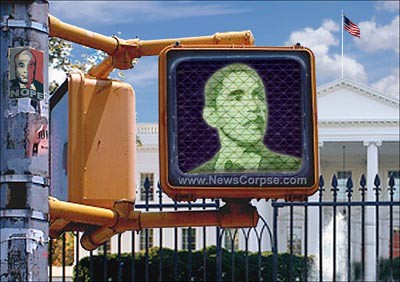
Obama Change Signal originally uploaded by News Corpse.
Continuing with thoughts around Social Media, The Elections, & What It Means For Marketing, here follows Part II.

Given my interest in social media, I was intrigued with this recent Columbia Business School Alumni Club of New York event titled "Social Media and Presidential Elections: The Paradigm Shift." Per the description, it planned to address "the unprecedented influence of social media sites such as Facebook, MySpace and YouTube on youth participation and engagement" during the elections.

Now, personally, I believe the paradigm shift goes beyond youth participation and engagement to include a much wider swath of the population. Regardless, social media has played an unprecedented role as enabler in this election process.

This discussion included a fascinating group of participants. Ellis Henican, award-winning Columnist for Newsday/am New York and Political Analyst at Fox News Channel, moderated the conversation with:

+ Sarah Bernard, President of 23/6, a political satire site offering insight into current events, from politics to pop culture;
+ Mike Germano, Founder and President of new media agency CarrotCreative, who ran his own political campaign using social media 3 years ago and won;
+ Howard Greenstein, President of The Harbrooke Group, a Social Media Consultant and advisor to WEtv for "WE Vote '08";
+ Rachel Sterne, Founder and CEO of GroundReport, one of the hottest citizen journalism sites.

Here are my takeaways from the event:

What makes the use of social media unprecedented in this election process is that the efforts connect with individuals on a personal level. "People don't do this in a passive way," says Howard. They choose to become involved and technology allows them to participate in their own individual way paving the way to a groundswell of support.

The Obama campaign was comfortable letting individuals express themselves; it didn't try to control the interpretation, the delivery or the people. If you remember from CMO 2.0 Conversation About The Fiskateers, Fiskars acted similarly, welcoming feedback - positive or negative - and trusting its customers, preferring not to try to control them. This represents an essential element of successful social media outreach, drawing active and passionate participants in the process. Furthermore, the community tells you what the rules are. The only aspect a candidate can control is the 'volume.' It's up to the candidate to provide as much information as possible to the community as Obama did by releasing his own videos on YouTube.

The election process has pushed transparency, encouraging both candidates to make things -like health records- visible.
Human connection/interaction is what makes the communication two-way. That's what ties the individual people into a network. That's also what builds trust. It's dynamic. When successful - as here - the members of the network or community become active participants in promoting the communications and message.

Technology [via social media tools like Facebook, YouTube, blogging platforms, etc.] enables members of the community to participate in creating media on behalf of the Obama campaign, thereby massively democratizing the sharing of the information. Social media also makes the personal connections very public.

Social media takes traditional politics - the process of finding people who believe in you and then motivating them to take action on your behalf - and increases its effectiveness. Information you discover about voters [i.e., your customers] allow you to forge a deeper and more relevant relationship. You can then stay in contact with them via Facebook; they can choose to follow you via Twitter or blog updates. [Note: these are techniques that Heather Gorringe uses in her business, Wiggly Wigglers, as described in BlogHer Business 2008: Hats Off To Wiggly Wigglers.]

The people you connect with choose to remain connected because of the personal relationship and shared relevance. Contrast that with a mass market, shotgun approach the consumers prefer to shut out and actively avoid.

The Obama campaign connected with an active base of online users and stayed connected with them via email, text messages, local community outreach, and videos posted online. The campaign created non-stop action. Then, My.BarackObama.com made it easy to personalize web pages, take action, connect with friends and organize via tools like meetup.com while promoting a perpetual message about the campaign and change. The human interpretation of the message added authenticity to it.

In 2004, the Republicans had access to a national database [benefiting from incumbent data] and good organization through the federal level whereas the Democrats didn't have national data in a common format. They were forced to create new social media-based tools thereby developing an effective and cost effective method for reaching voters, plus a positive message from Barack Obama.

Interestingly, the tools offered individuals the ability to go ahead and organize without being dependent on a campaign headquarters, or other hierarchical systems. They made database information available in a positive user experience that allowed campaign enthusiasts to become advocates.

What an evolution of advertising and public relations where candidates earn the right to be seen, viewed, talked with! Which means that they must then be available to interact with and talk.

How to gauge success? Given a large enough audience, you simply plant a seed. If it's the right seed, you spread the message, realizing an exponential lift. Social media represents a platform, a means to an end; it's not a business model. The message, the seed, has to be right.

How far will this go? Will it affect the Senate and Congress? Citizens can now offer immediate feedback. Is there potential for a citizen democracy? What about the editorial function? Citizen journalism means that stories can break before established media entities like The New York Times. Mainstream media tends to only love certain stories; anything outside of those parameters becomes an opportunity for citizen journalism.

For more thoughts about how far it might go, do read Josh Bernoff's Obama's YouTube speech raises the question: is there an efficient way to listen to America?

And, by the way, as much as this is about politics, it's also about business. I hope you're asking yourself how you might translate some of these tactics into ones relevant to your business.

Technorati Tags: Del.icio.us Tags:

Friday, November 14, 2008

Social Media, The Elections, What It Means For Marketing

Image from MyBarackObama/loveleeannwise.
Can you believe this amazing 2008 Presidential Election and all of the firsts that it represents including the role that social media played? It's sure to have implications for marketing.

The firsts are impressive.

A record number of voters participated in this year's election with turnout being between 59% [125 million] and 64% [136 million] of the voting public. [As of 11/10/08, per Wikipedia, the count stands at 126.5 million.]

According to Election by the numbers, the winning candidate - President-elect Barack Obama - received more popular votes than any other presidential candidate [current tally is 66.7 million votes or 52.7% vs. 58.2 million or or 46% for McCain per Wikipedia.]

In terms of demographics, the article refers to the groups that voted overwhelmingly for Obama: women, blacks and latinos; young people and first time voters, residents from large as well as small cities and suburbs. He also "carried majorities in all educational groups," and "a narrow majority of men."

Perhaps not a blowout, as the New York Times writes, but still a clear-cut win for a change, and also a strong mandate for all, regardless of political preference, to come together to find solutions.

The other first has to do with the extensive use of social media.  Everything leading up to and winning the election made use of social media as Josh Bernoff describes in his post Barack Obama, will you tap the groundswell?  It's even starting to look like solving many of our country's problems will also make use of social media [see Change.gov]. 

What is clear, is that social media is here to stay, with value to offer marketers and business people alike, as proven recently by politics.  Something that several recent events helped me to better understand.

Arianna Huffington put social media and the elections into perspective for me when I heard her speak at the MarketingProfs Digital Mixer. Were you aware that in 2004 -when we last had a Presidential election- neither YouTube nor Huffington Post existed, and Facebook had limited relevance?

That's very recent history.  I only became fully engaged in social media in 2006. I was aware of and monitoring it in 2005, with peripheral awareness in 2004. But, still.

Consider these stats: Blogger was launched in 1999 and purchased by Google in 2003. YouTube was started in 2005 [and acquired by Google in 2006]. Facebook began in 2004. MySpace started in 2003. These are all tools I admire and rely on for marketing, communication and community building. I had never considered them in terms of the political process.

In my next few posts, I will share with you observations from a recent Columbia Business School Alumni Club of NY event about social media and the presidential elections, a Fall BRITE '08 presentation during which we learned more about MyBo.com, and marketing lessons drawn from this Election.

Technorati Tags:    Del.icio.us Tags:  

Thursday, November 06, 2008

CMO 2.0 Conversation About The Fiskateers

The second CMO 2.0 Conversation took place on 10/9/2008. It involved Jay Gillespie, VP of Marketing, and Suzanne Fanning, Director of Corporate Communications, from Fiskars, and Geno Church, WOM Inspiration Officer, from Brains On Fire. It addressed Word-of-Mouth Marketing that Goes Beyond Tactics. Front and center throughout the conversation was the Fiskateer community.

[Listen to the recording of the Interview with the people who brought us the Fiskateers community.]

I've heard a lot about the Fiskateers. The Viral Garden's Mack Collier discussed them in A Lesson in How to Empower Your Community: Fiskateers as did Brand Autopsy's John Moore in Fiskars Crafting Ambassadors. Both of those posts were written in 2006. And, in March 2007, B.L. Ochman published a MarketingProfs Case study titled Fiskateers: How a Social Community Became a Veritable Sales Force [Premium Member content].

I'm also quite partial to my own orange Fiskars scissors and the memories I associate with them from years of sewing.

Needless to say, I was all ears for this conversation.

The impetus for taking such an unusual approach for getting the word out about Fiskars came about approximately three years ago [i.e., 2006] when Fiskars asked itself how to engage in conversation with customers. That's when it invited Brains on Fire to Madison, WI to better understand the scrapbooking lifestyle. This coincided with the transition of the school/office/craft division from products/rational positioning to an emotion-based, enthusiast position.

Geno, whose wife is a Fiskateer, expressed surprise at how much transparency he observed from Fiskars. From the beginning, he never heard concern over negative reactions or feedback, or fear about what might happen. From the outset, Fiskars trusted its customers, preferring not to try to control them -- an unusual corporate attitude, to say the least! Fiskars was genuinely excited about learning what customers had to say. Jackie Huba, from Church of the Customer, was a part of the original Madison onboarding meeting with the original 4 Fiskateers. Her reaction: "These are true fans." Fanaticism runs deep in the corporation. Engineers, for example, consider themselves "Fiskaneers".

The movement started with the first conversation. Brains on Fire and Fiskars purposely reached out to crafting influencers and discovered a passionate community. They carefully selected the first four brand ambassadors, meeting with all of the candidates to understand what they were doing [i.e., scrapping their lives]. They looked for those who told the best stories about what they did and why, and who wanted to be brand ambassadors for scrapbooking.

[Per BL's case study, the 4 lead Fiskateers are paid for 15 hours a week of brand ambassador time, going into retail stores. NOTE: only the lead Fiskateers are paid, and they now number 5. Also, per Francois Gossieaux's Business community results can be game-changing when done properly, the program is now fully funded by Big Box craft stores.]

Fiskars invited the four lead Fiskateers to Madison to teach them about the Fiskars brand and get to know them. It provided them with tools and a forum/website to express their passion, and then got out of the way to let them get started.

Jay explained the the Fiskateers program includes a built-in barrier, adding to the specialness of the program. Not just anyone can join. You must be invited, and certified to become a member. Once invited, new Fiskateers receive a welcome kit [including numbered Fiskars scissors] and begin to experience the Fiskars magic.

From that point on, Fiskars corporate sat back and started learning from the conversation. The original goal of 200 volunteers joining in 6 months was reached in 48 hours! Now, there are over 5000 Fiskateers! And they represent an active, passionate community that feels engaged in Fiskars' success. R&D speaks with the community directly for product insight.

Originally, the Fiskateer program was a communications program. Then, it was brought into the full marketing mix and has now taken on a larger part of the budget and mix.

The Fiskateers program has been hugely successful:
+ These passionate brand advocates now number 5000+, with one in every state and in 70 countries.

+ Lead Fiskateers become involved with craft stores, walking in with their signature orange/green Fiskars scissors, and easily spreading the message. Store sales have increased significantly [sales 3x greater than non Fiskateer stores].

+ Online, Fiskars has seen chatter relating to Fiskars increase 10x in the blogosphere [hired Umbria to monitor conversation]. In the first year, it saw a 300% increase; and 600% increase in the second year [not including Fiskateer site traffic]. This is a big deal, per Geno who says that 92% of word-of-mouth for scrapbooking happens off-line; it's a very social activity. To hear so much engagement online attests to the strength of the Fiskateers community. Gen X and Gen Y are driving the online conversation, bringing in new voices to the brand.

Fiskars listens carefully to what the community says. When it noticed that that community was forming its own groups to meet face-to-face, it decided last year to invite 50 Fiskateers to San Antonio, TX for a Fiskateer Roundup weekend all about crafting. This year, it decided to hold 5 little get-togethers over the next 2 months, including more in the events [i.e., 400].

What's Next? Preserving and keeping the community authentic; guarding against trying too hard to convert this kind of stuff to bottom line profit and losing the quality of it; keeping it engaging, and fun. Fiskateers are inspiring Fiskars to go in new directions and Fiskars is determined to preserve this.

Fiskateers represent a different way of doing business for Fiskars; members must remain at the center of the community, which means that Fiskars must listen carefully to the community, respond as best as it can and remain fully accountable to the community rather than to the company. Fiskateers are fans!

Others are trying hard to emulate the community concept, but it's difficult to replicate a vibrant brand community. It's a competitive advantages as long as Fiskars continues to respect it, listen carefully to it, and be accountable to it.

To better appreciate what makes a community like that of the Fiskateers so uniquely special, I suggest you read:

+ Josh Bernoff's Ad Age article titled Social Networking Needs CMO Lead [subscription required] from 4/28/2008.

+ From the Brains on Fire blog, The Life of a Brand Ambassador…

+ From Virginia Miracle's Marketing Environmentalism, Fiskateers “Energizing” Sales through Social Media


Technorati Tags: Del.icio.us Tags:

Tuesday, November 04, 2008

Bathroom Blogfest '08 - Final Recap of Cleaned Up Spaces

Bathroom Blogfest '08 - Cleaning Up Forgotten Spaces Around Us has come to an end. Have you enjoyed it? Has it made you reconsider some or all of the spaces that relate to the customer experience that you've perhaps forgotten about?

In my Bathroom Blogfest '08 posts, beyond Announcing Bathroom Blogfest '08: Cleaning Up Forgotten Spaces Around Us, I addressed quite a range of topics. Which resonated the most with you?

Possibly Bathroom Blogfest 2008: Trends in Bathrooms? Or, perhaps Bathroom Blogfest '08 - A Place For Luxury? Interesting to realize that what constitutes true luxury also helps alleviate Bathroom Blogfest '08 - Fear and the Bathroom.

I particularly enjoyed discussing Bathroom Blogfest '08: Dressing Rooms as I frequently refer to changing rooms when I discuss the retail buying experience.


Of course, there's also the creative side of it all as we saw in Bathroom Blogfest '08 - Art & Shoppertainment and also in Bathroom Blogfest '08 - Advertising.

There's another bathroom aspect that I admire greatly. Have you noticed how bathrooms that aren't forgotten places fully reflect the owner's full awareness and appreciation for the statement they make? These are places that shout out that they aren't forgotten, that they represent a vital aspect of the store experience. They create subtle - and not-so-subtle - statements that remind you of where you are and reinforce the store brand.

Take these photos from Target Grand Opening - Riverdale, NJ. Given the red stripes and the futuristic wash basins, are you in any way surprised that these are Target bathrooms?

They are clean, utilitarian, but also whimsical.

Every aspect of the bathroom relates to the overall Target brand experience. It's effective. It matches other Reactions to the Target Store Experience.

Target bathrooms are not an after-thought.

Take this next example from the new Bloomingdale's store in Chevy Chase, MD. These bathrooms, too, make a statement. Different from the Target one, but true to the Bloomingdale's brand experience.


[In fact, I suggest that you re-read Lisa Contreras' post about Bloomingdale's Bathroom Makeover re: the NYC Third Avenue store.]

Notice how all of the details work together to state 'Bloomingdale's.'

This, too, is hugely effective.

As important an element of the retail experience as these spaces are, it's not just retail stores that benefit from so much attention to otherwise forgotten spaces. It's also effective for museums.

For example, the photos below are of the Menil Museum in Houston, TX. It's a modern, no-frills kind of place that focuses attention on the artwork and the art experience.

Notice how the bathrooms replicate the architecture.

All of these spaces exist to fulfill a utilitarian purpose, but they support the experience of which they are a part. They haven't been forgotten, and they have been accorded spotless attention.

As you consider the relevance of the Bathroom Blogfest '08 - Cleaning Out Forgotten Spaces Around Us to your retail experience, your business, your brand experience, and your customers, I hope your realize the potential for improving customer loyalty and making your overall customer experience truly memorable.

If you haven't already, please read through the posts that the Bathroom Blogfest '08 Community contributed. I detail them below:


Stephanie Weaver offered visual examples of Forgotten Spaces in Forgotten Spaces: The 2008 Bathroom Blogfest continues, Forgotten Spaces Day 2, Forgotten Spaces Day 3 and Forgotten Spaces Day 4.

Maria Palma described Bathroom Blogfest 2008: Creative Public Restrooms.

Pay attention to Claudia Schiepers who detailed 3 American toilet things to hate.

Especially since Carolyn Townes offered an American perspective on Italian bathrooms in Bathroom Blogfest '08: Toilets and WCs.


Becky Carroll shared excellent visuals in Bathroom Blogfest '08: Hawaiian and Venetian [sort of].

What about Katia Adams' example? Blogfest '08 - Cleaning Up Forgotten Spaces Around Us gave new meaning to 'through the looking glass.'

Were you impressed with all of the sound advice the Blogfest generated? Shannon Bilby, after posting Floor Talk Invited to Participate in Bathroom Blogfest with WearDated, shared invaluable advice in Bathroom Blogfest ‘08 - Cleaning Up Forgotten Spaces Around Us, great water saving tips in “Bathroom Blogfest ‘08 - Cleaning Up Forgotten Spaces Around Us”, and Quick Tips for Cleaning Bathrooms.

Julie Hirt, Christine Loose and Jo Brown at Kohler Talks also offered tips [see Wine Corks to Clean Cast Iron Sinks] and historic perspective [see The Clean Look of a White Bathroom and The "Other" Jo The Plumber.]

Marianna Hayes made the Bathroom Blogfest relevent to small businesses in What would momma say if she knew I was participating in "Bathroom Blogfest '08 - Cleaning Up Forgotten Spaces Around Us"?, Reading Material anyone? and The "Family Restroom" Experience.

Elizabeth Hise and I got into the act at The Carpetology Blog. After Bathroom Blogfest '08 - Cleaning Up Forgotten Spaces Around Us [our introduction], we described subjects like Bathroom Blogfest '08 - Potty Parity, Bathroom Blogfest '08 - How Hotels Inspire Me, Bathroom Blogfest '08: Great Flooring Store Examples and Bathroom Blogfest '08 - Art of Living -- all recapped in Bathroom Blogfest '08 - Recap.

Susan Abbott added her perspective with Customer Experience Crossroads: Forgotten Space Blogfest - 2008 version. Sometimes, the simplest solution is the most thoughtful and effective one.

Sandy Renshaw asked Can you believe it? It's time for Bathroom Blogfest '08, and showed us small, thoughtful details that make all the difference.

Iris Shreve Garrott offered Bathroom Blogfest 2008 Best Tips, When You Care Enough to Clean the Very Best and Hidden Behind Forgotten Customer Spaces. She included many gems, so don't miss them!

Lolly Borel promoted the event with Bathroom Blogfest ‘08 - Cleaning Up Forgotten Spaces Around. She then described forgotten shopping spaces in Shop till you drop! (but don’t drop when you shop…).

In addition to the BBC, many thanks to those who amplified the conversation and contributed their perspectives:

+ David Reich who said to Put the Seat Down.
+ Darryl Orht who provocatively posted blog while you lay a log.
+ David Polinchock who got the word out in Facebook The 2008 Bathroom Blogfest - Cleaning Up Forgotten Spaces All Around Us and contributed Thrillist : SitOrSquat.

Thank you to Kate Rutter for having such relevant photos available on Flickr.

And, Thank You all for a resoundingly successful Bathroom Blogfest '08 - Cleaning Up Forgotten Spaces Around Us!

For the record, although we used Facebook in 2007, we promoted this Bathroom Blogfest more heavily in 2008 via a Facebook event. In fact, I added links to all of this year's posts there as well as to Twitter using the #ladiesrooms08 tag.

I've also updated BathroomBlogfest site to reflect this year's event.

Here are the members of the Bathroom Blogfest Community [BBC] for Bathroom Blogfest ’08:

Susan Abbott at Customer Experience Crossroads
Katia Adams at Transcultural Marketing
Shannon Bilby at Floor Talk!
Laurence Borel at Blog Till You Drop
Jo Brown and the blogging team at Kohler Talk
Lisbeth Calandrino at Lisbeth Calandrino
Sara Cantor at The Curious Shopper
Becky Carroll at Customers Rock!
Katie Clark at Practical Katie
Iris Shreve Garrott at Circulating
Ann Handley at Annarchy
Marianna Hayes at Results Revolution
Elizabeth Hise and C.B. Whittemore at The Carpetology Blog
Maria Palma at Customers Are Always
Sandra Renshaw at Purple Wren
Kate Rutter at Adaptive Path
Claudia Schiepers at Life and its little pleasures
Carolyn Townes at Becoming a Woman of Purpose
Stephanie Weaver at Experienceology
C.B. Whittemore at Flooring The Consumer

Technorati Tags: Del.icio.us Tags:

Monday, November 03, 2008

The Carpetology Roundup - October 2008

What a month October 2008 has been! And because of Bathroom Blogfest '08 - Cleaning Out Forgotten Spaces Around Us, what a week!

Time, then, for The Carpetology Blog Roundup for October, 2008!

[If you are new to Flooring The Consumer, The Carpetology Blog is the official Wear-Dated blog about all things carpet... design, inspiration, care and stories carpet-related. Please do check it out and let me know what you think... ]

During October, here's what happened at The Carpetology Blog...

First, Bathroom Blogfest '08. This marks the first year that The Carpetology Blog has participated. Many thanks to Elizabeth Hise for being so actively involved with me.

+ Bathroom Blogfest '08 - Cleaning Up Forgotten Spaces Around Us
+ Bathroom Blogfest '08 - Potty Parity
+ Bathroom Blogfest '08 - How Hotels Inspire Me
+ Bathroom Blogfest '08 - Great Flooring Store Examples
+ Bathroom Blogfest '08 - Art of Living
+ Bathroom Blogfest '08 - Critical Resources For When You're On The Go [Carpet Shopping?]
+ For the sake of completeness, Bathroom Blogfest '08 - Recap

We also both took part in Blog Action Day 2008 - Poverty.

Here's practical advice about taking care of carpet stains and maintaining carpet:
+ Spooktacular Stains - Removing the Remnants of Halloween
+ A Foot's Perspective - Episode 15: How To Remove Carpet Stains
+ Annette's Carpet Corner: Carpet Patches vs. Redyeing

There's definitely renewed interest in the fashionability of carpet. Did you see the October issue of Domino Magazine Decorating Mini Guide: Carpet? We certainly believe in beautiful carpet styles and enjoy writing about them as you can read in Karastan Carpet Styles Featured on WearDated.com. We also like to share carpet design ideas as we come across them. For example, in A Foot's Perspective - Episode 14, I show you how my Mom does it. And, in Design Reviews from the Floor Up: Apartment Therapy, Elizabeth shares inspiration from another of her favorite design sites.

Stay with me here, but perhaps you would consider Carpet: The Solution for Uncertain Economic Times? particularly if some of those carpet styles feature Wear-Dated, Scotchgard™ Protector & Advanced Protection for Carpet? I think it's worth mulling over.

Finally, we encourage customers in the Suwanee, GA vicinity to visit Atlanta Flooring Design Centers: Passionate About Customers. I really enjoyed my visit there, and believe you would, too.

Thanks for reading. Have a wonderful November!

Previous Updates:
+ The Carpetology Blog Roundup - September 2008
+ The Carpetology Blog Roundup - August 2008
+ The Carpetology Blog Roundup: July 2008
+ The Carpetology Blog RoundUp - June 2008
+ May Carpetology Update
+ Carpetology Update - April 2008
+ The Carpetology Blog Update for March
+ The Carpetology Blog Update
+ Big News: The Carpetology Blog

Technorati Tags: Del.icio.us Tags:

Sunday, November 02, 2008

Next Stop On The Great Round The World Envelope Race: Australia

Here's the latest on the The Great Round The World Envelope Race...  Although I got sidetracked reporting on my progress with the Bathroom Blogfest '08, I did take action.

I got back from Arizona and found Team Power Tac's envelope awaiting me. What a rush!  Finally, after the announcement that the Great Round The World Envelope Race has begun... it was my turn to experience the envelope and its marvels.

Here's what surprised me the most about this experience:  it fully engaged my senses.

First, the envelope itself.  It had traveled and bore some of the marks.  It was inscribed with vital details:  addresses and postal directions.  It had postage, Air Mail and registration stickers from the Royal Mail, as well as a green customs sticker.

To open the envelope, I had to use physical effort - beyond double-clicking to open an email. My hands interacted with the envelope and my brain assisted, advising how best to slice it open without damaging the contents.

And, then, I had to reach in to remove the contents: multiple envelopes [each subsequent stage of this race occurs with a smaller sized envelope], a log sheet, something representing the country from where the envelope came [notice the UK postcard], and a surprise.

The surprise definitely surprised... in the intensity of its olfactory presence.  Close your eyes and imagine smelling tea leaves - a little mint and a bit of green tea.  I was transported elsewhere.

I was also stunned as I anticipated a tactile envelope experience, but not one that incorporated smell in such a delightful manner.  This, then, is how the analog envelope experience surpassed the digital equivalent.

The opportunity, then, in using envelopes to communicate with customers is to include what can't be captured digitally.  Make it more about more than words.  Make it about engaging the senses and touching the heart.  Have it express humanity and personality...  thereby making it memorable.

As I prepared my envelope for its next stage, I rethought my original ideas on what to include for Jodi.  I hope the experience transforms her as much as it did me.

Here, I include a photo of my local post office from which I sent the envelope off to Jodi in Australia.

Notice how adorned my envelope is with stickers and stamps, postage and barcodes and customs forms.

I look forward to hearing how my other Power Tac Team members enjoy their memorable envelope experience.

And I hope that my experience helps you re- appreciate the potential of an envelope for creating a memorable experience for your retail customers.

By the way, some background.  We compete against Team Manila.  We're involved in this Great Round The World Envelope Race because New Guardian - a British envelope company - believes passionately in the envelope and its importance.  In conjunction with Pushing the Envelope, they decided to organize an international cultural envelope race with the help of bloggers from around the world to challenge the perception that envelopes are boring.

My envelope came from the UK - with details posted on the Pushing the Envelope blog.  From the USA, the envelope heads toward Australia, and then Italy, France and Belgium before returning to the UK!

Saturday, November 01, 2008

Bathroom Blogfest '08 - Advertising

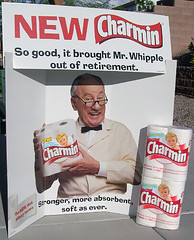
P&G Charmin Toilet Paper 1957-2007 originally uploaded by
Roadsidepictures. Do check out the photo's commentary.
Bathroom Blogfest '08 - Cleaning Forgotten Spaces Around Us is coming to an end. My last topic is Advertising. It's a rich one!

Particularly as it relates to toilet paper.

Did you know that there exists a website dedicated to the History of Toilet Paper filled with fascinating detail and trivia? I hadn't.

More than in the past, I've noticed this year many advertising and public relations campaigns relating to toilet paper. Brands like Charmin, Cottonelle and Scott....

Take the Charmin PottyPalooza in Times Square, NYC. Did you know that in 2007, this was the site for a wedding? And, that the bride wore a toilet paper wedding dress? Here's the winner of the 2008 cheap-chic-weddings.com toilet paper wedding dress contest - which took two years to create. Amazing what's possible!

From PRWeek, the results of the Charmin Wedding [login required] consisted of the following: "The press was absorbed by the wedding, with 350 million impressions over two days.." and amazing online visibility. "On a larger scale, in 2007, more than 400,000 people flushed Charmin's toilets" [note that they included Kohler water-conserving toilets and faucets] for "...820 million media hits over six weeks." Not bad!

I hope that Plush Potties return to NYC for the 2008 Holiday season. In the meantime, there's a national tour taking place...

This all makes a bit more sense when you realize, as USA Today explains in a 1/9/2008 article titled Marketers take toilet paper to luxurious new levels by Laura Petrecca, that toilet paper sales in 2007 generated over $3.7 billion. No wonder that the different brands have decided to roll out marketing campaigns promoting benefits ranging from super-soft comfort, strength and absorbency, to extra cleaning and kids products.

Cottonelle, for example, has launched "be kind to your behind" this past March, complete with fuzzy, puppy-like touring bus. For a full appreciation of the campaign, do read Leigh Duncan-Durst's Cottonelle On Crack (Literally!). I think you'll agree that this one went overboard... The website irritated me with its puppy dog voice commentary.

Scott Tissue has gotten into the act with the Scott Tissue Clog Clinic to "make the issue of toilet paper dissolvability a newsworthy issue while elevating it as an important purchase consideration." The program earned an Honorable Mention / Ketchum and Kimberly-Clark: SCOTT Flushability from PR Week for developing a "strong campaign drawing awareness around a subject not often talked about."

While on the topic of toilet paper, I couldn't help but notice Dan Schawbel's Personal Branding Blog posting titled Become a Top Brand Using a Single Roll of Toilet Paper in reference to Mike Michalowicz's new book, The Toilet Paper Entrepreneur. Practical, down-to-earth, actionable, and very focused. Who would have thought?

Although not directly related to toilet paper, Kris Hoet shares a brilliant example using public toilets in a Hamburg nightclub to promote exclusive thriller films on the 13th street channel. See his post titled 13th Street. What do you think?

Finally, AdAges' Ken Wheaton refers to an Extended Stay America Hotels viral marketing campaign promoting the cleanliness of its facilities in Extended Stay ad toilet-licking good! (And totally gross). Yikes! Yes, memorable, but frightening it its associations.

Whatever your subject and area of expertise and passion, make sure your communications are consistent with what you represent in the marketplace. Be memorable, but be true to your brand position. Tackle difficult subjects in a way relevant to your customers. And, always remember that your customer's experience matters more than anything else.

If you can't, then your advertising is best forgotten and cleaned out.

The latest posts include:
+ Can you believe it? It's time for Bathroom Blogfest '08 from Sandy Renshaw
+ From Julie Hirt at Kohler Talks, learn about The "Other" Jo The Plumber
+ From Christine Loose at Kohler Talks, Wine Corks to Clean Cast Iron Sinks
+ From Iris, Bathroom Blogfest 2008 Best Tips
+ From the Carpetology Blog, Bathroom Blogfest '08 - Recap

Visit the Bathroom Blogfest Community [BBC] for Bathroom Blogfest ’08 updates:
Susan Abbott at Customer Experience Crossroads
Katia Adams at Transcultural Marketing
Shannon Bilby at Floor Talk!
Laurence Borel at Blog Till You Drop
Jo Brown and the blogging team at Kohler Talk
Lisbeth Calandrino at Lisbeth Calandrino
Sara Cantor at The Curious Shopper
Becky Carroll at Customers Rock!
Katie Clark at Practical Katie
Iris Shreve Garrott at Circulating
Ann Handley at Annarchy
Marianna Hayes at Results Revolution
Elizabeth Hise and C.B. Whittemore at The Carpetology Blog
Maria Palma at Customers Are Always
Sandra Renshaw at Purple Wren
Kate Rutter at Adaptive Path
Claudia Schiepers at Life and its little pleasures
Carolyn Townes at Becoming a Woman of Purpose
Stephanie Weaver at Experienceology
C.B. Whittemore at Flooring The Consumer

Technorati Tags: Del.icio.us Tags:

Related Posts Plugin for WordPress, Blogger...